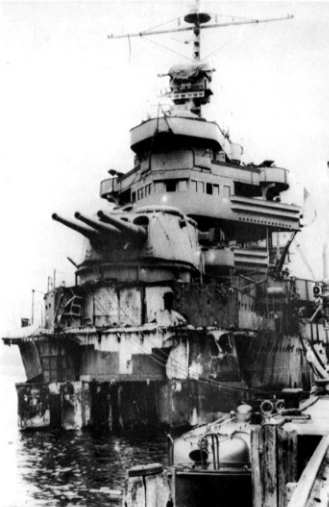
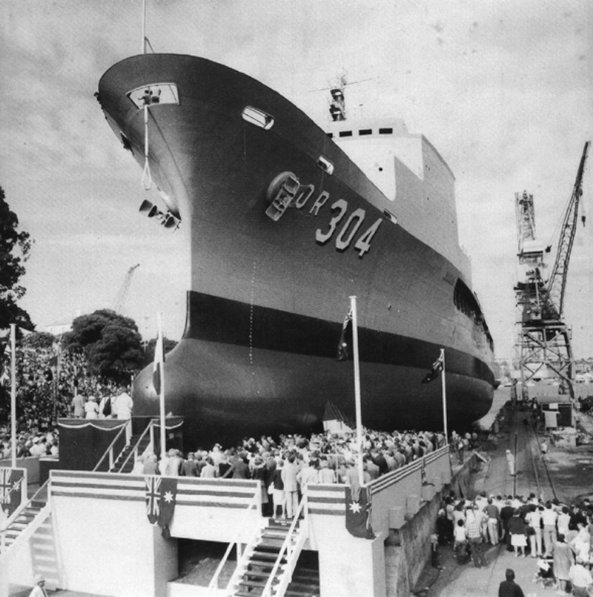
Sydney Harbour Federation Trust
Management Plan – Cockatoo Island
23 June 2010
The Sydney Harbour Federation Trust acknowledges the development of this Cockatoo Island Management Plan by staff at the Sydney Harbour Federation Trust, and is grateful to all those organisations and individuals who have contributed. A special thankyou is given to the members of the Community Advisory Committee and Friends of Cockatoo Island for assisting with the development of the Plan and for their invaluable comments and suggestions throughout the drafting period. Thank you also to the members of the community who attended information sessions or provided comment, and to the staff of the Department of Environment, Water, Heritage, and the Arts, who made a valuable contribution to the preparation of the Plan.
Authors:
Staff of the Sydney Harbour Federation Trust
Main Consultant Providers:
Government Architect’s Office, NSW Department of Commerce
Godden Mackay Logan Pty Ltd
John Jeremy
For full list of consultants see Related Studies section of Plan
Copyright © Sydney Harbour Federation Trust 2010.
This work is copyright. Apart from any use as permitted under the
Copyright Act 1968, no part may be reproduced by any process without
written permission from the Sydney Harbour Federation Trust. Requests
and enquiries concerning reproduction and rights should be addressed to
the Director Communications, Sydney Harbour Federation Trust PO Box
607, Mosman, NSW 2088 or email to info@harbourtrust.gov.au
For more information about the Sydney Harbour Federation Trust or to
view this publication online, visit the website at:
http://www.harbourtrust.gov.au
Table of Contents
Introduction
Aims of this Plan
Planning Framework
Relationship with the Trust’s Comprehensive Plan
Related Trust Policies and Guidelines
Statutory Planning Context
Non Statutory Planning Strategies
Plans Prepared for Neighbouring Lands
Site Description
Site History
Analysis and Assessment
Heritage Listings
Conservation Management Plans
Archaeological Assessments
Cultural Landscape
Natural Values
Site Contamination
Remediation and Decontamination Works to Date
Compliance with the Building Code of Australia
Structural Condition of Buildings
Condition of Services
Transport Management
Noise Impact Assessment
Heritage Values
Cockatoo Island’s Character
Summary Statement of Significance, Convict Buildings and Remains CMP
Summary Statement of Significance, Cockatoo Island Dockyard CMP
National and Commonwealth Heritage Values
World Heritage Listing Nomination
Potential World Heritage Values
World Heritage Listing - draft Summary Statement of Significance
Condition of Values
Management Requirements and Goals
Conservation Policies
Outcomes
Vision
Design Outcomes
Precinct Outcomes
Accessibility
Noise
Water Sensitive Urban Design
Remediation and Management Strategy
Ecologically Sustainable Development
Interpretation
Implementation
Monitoring and Review of the Plan
Images Acknowledgements
Related Studies
Appendices
On 21st August 2003 the Minister for the Environment and Heritage approved a Comprehensive Plan for the harbour sites managed by the Sydney Harbour Federation Trust (the Trust). The plan, which was prepared in accordance with the requirements of the Sydney Harbour Federation Trust Act 2001, sets out the Trust’s vision for the sites under its control.
A requirement of the Trust’s Comprehensive Plan is that more detailed management plans are prepared for specific precincts, places or buildings. In addition to this the Environment Protection and Biodiversity Conservation (EPBC) Act 1999 requires the Trust to make plans to protect and manage the National Heritage values and Commonwealth Heritage values of National and Commonwealth Heritage Places. Cockatoo Island is identified on both the National and the Commonwealth Heritage Lists.
Cockatoo Island is also one of eleven sites that will form a proposed serial nomination of Australian Convict Sites for World Heritage listing. This plan includes measures to protect the potential World Heritage values of Cockatoo Island.
Accordingly, the purpose of this Management Plan is to guide the outcomes proposed in the Trust’s Comprehensive Plan, to satisfy the requirements of Schedules 5A and 7A of the EPBC Act Regulations, 2000 and to be consistent with the National and Commonwealth Heritage management principles.
The Comprehensive Plan proposes the revival of Cockatoo Island as a working maritime site and as a functioning, active part of Sydney’s cultural life. Its heritage values are to be protected and the island is to be freely accessible to the general public. The island’s rich history will be recognised and will inspire its revival.
The island will become home to an array of complementary uses and activities, ranging from those which tap into the island’s past, such as maritime and related industries, to entirely new uses such as cultural events, short-stay accommodation and restaurants.
In keeping with tradition, existing buildings and structures will be adaptively reused. Significant heritage artefacts will be conserved and will form an important aspect of the island’s attractions as well as facilitating people’s understanding of its past. Parkland and vantage points will provide opportunities for people to enjoy the island and the harbour.
The island’s future has generated great public interest and passion. However, its planning is also recognised by many as challenging. This is due to the:
- Difficulties of transporting materials and passengers to and from it;
- Number, variety and condition of the buildings;
- Complex heritage overlays;
- Size of the island;
- Contamination; and
- Hazardous conditions (public safety).
Having regard for these complexities and the length of time during which this plan will be implemented, the Trust concluded that it is not desirable to attempt to identify detailed outcomes for the whole island. Accordingly, this plan aims to provide a long-term vision and a framework for decision making that is sufficiently flexible to accommodate new ideas and change and that is consistent with and does not adversely impact on the statutory heritage values of the place. The Sydney Harbour Federation Trust is committed to the conservation of the National and Commonwealth Heritage values of its places, and this commitment is reflected in its Act, its corporate planning documents and processes. This Management Plan, which satisfies sections 341V and 341S and of the EPBC Act 1999, provides the framework and basis for the conservation and management of Cockatoo Island in recognition of its heritage values.
The Trusts’ Heritage Strategy, which details the Trusts’ objectives and strategic approach for the conservation of heritage values, was prepared under section 341ZA of the EPBC Act 1999 and accepted by the Minister. The policies in this plan support the directions of the Heritage Strategy, and indicate the objectives for identification, protection, conservation, presentation and transmission to all generations of the Commonwealth and National Heritage values of the place.
Commencement Date
The land covered by the Management Plan is shown by broken black edging on the plan at Figure 1. All of the land including the bed of the harbour is within Lot 1 DP 549630 and is in the ownership of the Sydney Harbour Federation Trust.
To achieve the Trust’s vision for the island this Management Plan aims to:
- Conserve, protect and manage the National, Commonwealth, and potential World Heritage values of the island as an historic place within Sydney Harbour and facilitate its interpretation, appreciation and adaptive reuse;
- Be consistent with the National and Commonwealth Heritage management principles;
- Provide general public access to the island;
- Facilitate the transport of people and goods to and from the island by providing appropriate waterfront infrastructure;
- Revive the island by reintroducing maritime and related industry as well as a range of complementary uses including cultural, entertainment, dining, education, recreation, retail, offices and studios;
- Establish Cockatoo Island as a place of public enjoyment by providing public open space and the creation of venues for cultural events; and
- Apply the principles of Ecologically Sustainable Development to the revitalisation of the island.

In doing this, it also aims to:
- Provide opportunities for visitors to understand and appreciate the rich and varied history of the island by providing for site interpretation, education and appropriate uses;
- Provide visitor facilities and amenities including safe pedestrian paths, viewing areas, lookouts and access to the convict precinct, the docks, tunnels, cranes and other historic structures;
- Realise the potential for easy access including access for the disabled;
- Enhance views to and from the island;
- Manage the flora and fauna remaining on the site and interpret the original harbour landscape;
- Improve the quality of stormwater runoff in order to reverse adverse impacts on the harbour; and
- Apply remediation strategies consistent with the range of proposed land uses while reducing any adverse environmental impact on the harbour.
This Management Plan is the middle level of a three tiered comprehensive planning system developed to guide the future of the Trust’s lands.
The other levels are:
- The Trust’s Comprehensive Plan - this is an overarching plan that provides a process for the preparation of Management Plans; and
- Specific projects or actions - actions are defined in the EPBC Act 1999 and are similar to the concept of development in NSW planning legislation.
This Management Plan has to be interpreted in conjunction with the Trust’s Comprehensive Plan, in particular the Outcomes identified in Part 5 of the Trust’s Comprehensive Plan and the Objectives and Policies in Part 3.
The Outcomes diagram in Part 5 of the Trust’s Comprehensive Plan for Cockatoo Island is reproduced at Figure 2. Conservation policies in this plan provide guidance on how these outcomes can be managed in a way that protects, conserves, presents and transmits to all generations the National and Commonwealth Heritage values.
The Objectives and Policies most relevant to this Management Plan are those relating to working harbour, tourism, contamination, water quality and catchment protection, cultural heritage, adaptive re-use of places and buildings, access, open space and recreation, and education. These Objectives and Policies were addressed during the assessment of the site and are discussed in more detail in the relevant sections of this plan.
There are a number of overarching Policies and Guidelines foreshadowed in the Trust’s Comprehensive Plan that will be developed over the lifetime of the Trust and that will also guide the conservation and adaptive reuse of the island. Current relevant policies are:
- The Trust’s Leasing of Land and Buildings Policy;
- The Trust’s policy for the Leasing of Land and Buildings to Community Users;
- The Trust Event Policy;
- The Trust’s Heritage Strategy; and
- The Trust Interpretation Strategy for Cockatoo Island
This Management Plan has regard for these existing policies. If or when other Trust Policies and Guidelines are developed this plan will be reviewed to ensure that they do not impact adversely on the National and Commonwealth heritage values.
Commonwealth Legislation
State Legislation
Sydney Regional Environmental Plan- Sydney Harbour Catchment 2005
This SREP applies to the whole of Sydney Harbour’s waterways, the foreshores and entire harbour catchment. It provides a framework for future planning, development and management of the waterway, heritage items, islands, wetland protection areas and foreshores of Sydney Harbour. Under the SREP, Cockatoo Island is included in the catchment area of Sydney Harbour, as a foreshores and waterways area and is also listed as a strategic foreshore site. The planning principles of the SREP relevant to the island include:
- Development that is visible from the waterways or foreshores is to maintain, protect and enhance the unique visual qualities of Sydney Harbour;
- Development is to protect and, if practicable, rehabilitate watercourses, wetlands, riparian corridors, remnant native vegetation and ecological connectivity within the catchment;
- The number of publicly accessible vantage points for viewing Sydney Harbour should be increased;
- Public access to and along the foreshore and waterways should be increased, maintained and improved;
- Public access along foreshore land should be provided on land used for industrial or commercial maritime purposes where such access does not interfere with the use of the land for those purposes;
- The use of foreshore land adjacent to land used for industrial or commercial maritime purposes should be compatible with those purposes;
- Water-based public transport (such as ferries) should be encouraged to link with land-based public transport (such as buses and trains) at appropriate public spaces along the waterfront;
- The provision and use of public boating facilities along the waterfront should be encouraged;
- Sydney Harbour and its islands and foreshores should be recognised and protected as places of exceptional heritage significance;
- An appreciation of the role of Sydney Harbour in the history of the Aboriginal and European settlement should be encouraged;
- Significant fabric, settings, relics and views associated with the heritage significance of heritage items should be conserved; and
- Archaeological sites and places of Aboriginal heritage significance should be conserved.
Local Government
Sharing Sydney Harbour Access Plan
In addition to its statutory plans, the State Government has prepared the Sharing Sydney Harbour Access Plan (SSHAP). This Plan identifies a network of new and improved public access ways for pedestrians and cyclists, and waterway facilities for recreational watercraft.
Cockatoo Island is identified as a site of cultural interest, which presents new opportunities for public access.
Plans and policies prepared by neighbouring land managers provide a context for this Management plan. The following are particularly relevant:
New South Wales Maritime Authority
The NSW Maritime Authority is responsible for the bed of the harbour and its tributaries, including the conservation and protection of the marine environment. The Authority is also responsible for approving (or requiring the demolition of) wharves or other structures that extend beyond the boundary of the Trust land. To assist in these processes it has prepared a number of policies that it considers when deciding whether to grant approval or not. These include:
- Obtaining permission to lodge a development application;
- Engineering Standards and Guidelines for Maritime Structures; and
- Marine Habitat Survey Guidelines.
The island is characterised by a diversity derived from its incremental development over a long period of time. This diversity, combined with the topography make it difficult to perceive the island as a unified entity.
The island has been vacant since 1992 and many of the buildings have deteriorated during this time. Some areas also contain contamination and industrial hazards resulting from over a century of shipbuilding. The lower area of the island still accommodates a range of industrial buildings, concrete pads from demolished buildings, cranes, dry docks and wharf related structures. However, many buildings and wharves were demolished after the closure of the dockyard, and this has resulted in large open areas on the northern and eastern foreshores.


Figure 4 - Precinct Areas identifies the areas referred to in this management plan as the Southern, Northern and Eastern aprons and the Plateau. Appendix 1 identifies all of the locations and building numbers of existing and previous buildings and their uses.
The Plateau or upper area of the Island includes three distinct areas. At its western end there is the convict gaol and associated sandstone buildings and walls. The central area includes a row of multi-storey workshops that were built on the sites of the former convict water tanks and quarry yard. The eastern end is characterised by a group of houses whose backyards meet, forming an arrangement of lawns, garden beds, and exotic trees. Also included in this area are the convict grain silos, the WW II searchlight tower and the landmark water tower
Surrounding Lands
Cockatoo Island is the largest of the three islands that were known in the 1820s as the ‘Hen and Chickens’. The other two are Snapper which is also a Trust site, and Spectacle, which is occupied by the Australian Navy. See Figure 5- Local Area Context.
The island also has a relationship with the surrounding mainland areas, including Woolwich, Birchgrove, Balmain, Rozelle, Drummoyne and Birkenhead.
The Parramatta River foreshores of Woolwich face directly onto the Island. This includes the recreational areas of Clarkes Point Reserve and the Horse Paddock, the Hunters Hill Sailing Club and Woolwich Marina. Further up the slope the land is zoned for residential purposes and is characterised by low to medium density housing. There are also a number of restaurants and cafes and the Woolwich Pier Hotel located at the top of the ridge.
For all of these residential areas, the impacts on amenity of noise, light, traffic and parking are important. Accordingly the Trust has been careful to address these issues during the preparation of this Management Plan. See the Analysis and Assessment and the Outcomes sections of this plan.


Aboriginal Heritage
European Heritage
Arrival of the Convicts


A Dockyard and Prison
Convict labour was also used to build the fine sandstone Engineers’ and Blacksmiths’ Shop (Building 138), which still stands near the dock. This is one of the first buildings associated with the operation of the Fitzroy Dock and was built to a Royal Engineers’ design, with the Portsmouth Steam Factory in England used as the prototype. The machinery in the workshop was operated by steam until 1901 and some evidence of the original equipment remains.
Reformatory and Training
At the same time as the reformatory and industrial school were accommodated on the island, an old ship, the Vernon, was anchored off its northeast corner and was used to house delinquent and orphaned boys. In 1890 the Vernon was replaced by the Sobraon, which remained there until 1911. The Sobraon was a much larger ship and was able to accommodate 500 boys.
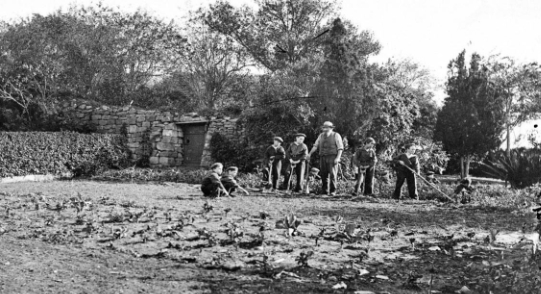
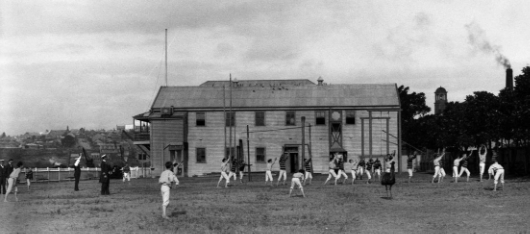
The boys were segregated from the girls, and, later, from the prisoners at Biloela Gaol. They were taught trades such as tailoring, carpentry, shoe and sail making and space was made available on the island for them to grow vegetables. A patch of land on the apron east of Biloela House (Building 22) was used as their recreation area (see Figure 12) and a swimming enclosure was later added. However, subsequent development on the island has removed all visible evidence of their existence.
A Gaol Again
Dockyard and Shipbuilding
 Figure 15: HMS Galatea in the Fitzroy Dock, 1870. The Galatea was visiting Australia as part of an around the world tour undertaken by Prince Alfred, Duke of Edinburgh. The elegant stone building to the right of the dock is the Engineers’ and Blacksmiths’ Shop (Building 138), which was Figure 15: HMS Galatea in the Fitzroy Dock, 1870. The Galatea was visiting Australia as part of an around the world tour undertaken by Prince Alfred, Duke of Edinburgh. The elegant stone building to the right of the dock is the Engineers’ and Blacksmiths’ Shop (Building 138), which was
built by convict labour in various stages. This photograph shows the first two stages including the bell tower. The building was subsequently altered in the early 20th century by the addition of a second floor to accommodate the brass finishing shop and is now obscured by new buildings that have been erected in front of it. |
Commonwealth Naval Dockyard 1913-1933
Wartime
Privatisation
World War II
Peacetime

The Last Ships
Closure
In 2004 the Government Architect’s Office (GAO) of the NSW Department of Commerce were engaged to prepare a Conservation Management Plan (CMP) for Convict Buildings and Remains.
In the same year Godden Mackay Logan (GML) was engaged to prepare a CMP for the dockyard and industrial aspects of the island’s history. Its scope included the whole island as it relates to the history of the dockyard and related uses.
Also commissioned were CMPs for the following individual buildings:
- Building 58 (Powerhouse) - Godden Mackay Logan 2005
- Buildings 6, 12 and 13 - Conybeare Morrison Pty Ltd 2004
- Buildings 10, 21, 23, and 24 - Robertson and Hindmarsh 2003
The methodology used in the CMPs to assess significance generally follows the format set out in James Semple Kerr’s The Conservation Plan. The CMPs assessed the cultural significance of the island by examining the way in which its extant fabric demonstrates its function, associations and aesthetic qualities.
The National and Commonwealth Heritage values included in this plan were taken from the statutory listings. However, summary statements of significance from the CMPs have also been included and these assist in describing the National and Commonwealth Heritage values of Cockatoo Island.
The assessment found that evidence of many additional buildings and features from the convict and institutional era are likely to be present as an archaeological resource below the current ground level. The natural rock of the island is often very close to the surface, thus evidence of features that have been cut down into the rock, like trenches, wells and pits, are likely to survive.
The draft GML CMP also included an archaeological assessment which summarises the potential and known key dockyard and industrial archaeological resources on Cockatoo Island and identifies their archaeological and heritage significance. The report determined that subsurface archaeological features and deposits relating to the dockyard and industrial uses may be present throughout Cockatoo Island, although most of the island has been subject to disturbance.
Both consultants combined to produce the ‘Cockatoo Island Archaeological Management Principles’ in May 2007 as a guideline for all future work on the Island.
In those areas identified as having archaeological potential, a monitoring program will be carried out during any sub surface exposure or removal of superficial layers. A qualified archaeologist will undertake this monitoring.
The draft GML and GAO CMPs describe Cockatoo Island’s cultural landscape as follows:
The cultural landscape of Cockatoo Island is a continuing landscape, and many of the earlier convict-built components of the site have vanished to make way for additional dockyard facilities. The industrial character of the cultural landscape of the island has developed from the interaction of maritime and prison activity and is articulated by man made cliffs, stone walls and steps, docks, cranes, slipways and built forms. The changing pattern of use of the island was to facilitate industrial production, as technology changed and as demand increased. The cessation of shipbuilding activities on the island and the clearing of buildings that occurred resulted in substantial evidence of the cultural landscape being removed, particularly to the aprons. Most of the significant vegetation on the island comprises planted ornamentals on the central sandstone area, although there are also elements such as the banks of ferns growing on the sandstone cutting beside the Turbine Hall.
The draft CMPs recommend that the cultural landscape be conserved by:
- retaining remnant natural topography, indigenous vegetation and fauna;
- retaining remnant evidence of gardens and significant tree plantings, which demonstrate different cultural expectations and aspirations in different periods and social contexts;
- Limiting vehicles on the island; and
- Retaining major land form modifications, including reclaimed foreshore areas, cuttings, walls, excavated docks, tunnels and roadways which express significant developments and events on the island.
In 2003 GIS Environmental Consultants were engaged to undertake a flora and fauna study of Cockatoo Island. See Figure 24-Environmental Considerations.
The study found that the:
- Original flora and fauna on Cockatoo Island would have been an unusual mixture of species due to an absence of fire, isolation caused by the surrounding seawater, the lack of reliable source of fresh water and the strong marine influence;
- Island would never have had a high diversity of species;
- Island is highly developed and does not provide much quality habitat for native fauna;
- Grassed areas on the lower levels provide foraging habitat for lapwing plovers, herons and starlings, but there is little cover for bush birds;
- Hard covered surfaces on the south and west sides of the island provide basking areas for skinks;
- Grey-headed Flying foxes, listed as a Vulnerable Species, forage on Port Jackson Figs on the northern slope. These figs are also a potential food source for the Superb Fruit-Dove;
- Vacant buildings provide shelter for birds, skinks and rats;
- Vegetative layers support a range of invertebrate prey suitable for insectivorous birds, mammals, and reptiles;
- Island is considered to be ideal habitat for several species of insectivorous microbats, many of which are identified as threatened species under the NSW Threatened Species Conservation Act, 1999. However, no microbats were detected;
- Pilings and piers extending from the south side of the island provide roosting habitat for seabirds such as Pied Cormorant, Little Pied Cormorant and Little Black Cormorant; and
- Rocky foreshore provides potential habitat for Water rats and a wide variety of marine animals and plants. In particular, the foreshore on the northern side of the island provides habitat for a colony of Silver Gulls.
The report also identified:
- Two tree species listed as Vulnerable in the NSW Threatened Species Conservation Act 1995 and the Environment Protection and Biodiversity Act 1999. These are the Narrow-leaved Black Peppermint (Eucalyptus nicholii) and the Magenta Lilly Pilly (Syzygium paniculatum). Both of these trees were planted as ornamental specimens; and
- Two uncommon species of fern allies, the Scrambling Club moss (Lycopodium cernuum) and the Skeleton Fork Fern (Psilotum nudum). The Skeleton Fork Fern appears in small patches along the cliff face between the Parramatta Wharf and the Turbine Work Shop (Building 150) and the Scrambling Club moss occurs near the entrance to Tunnel No 3.
The report recommended that:
- The large Port Jackson figs should be protected to provide foraging habitat for the vulnerable Grey-headed Flying Fox and the Superb Fruit-Dove;
- The Narrow-leaved Peppermint and the Magenta Lilly Pilly should be protected;
- The fern allies should be protected by ensuring spraying or clearing of plants on the cliff edge does not occur;
- The fern allies be identified with appropriate interpretive signage;
- Bush regeneration should be carried out on the weedy areas on the sides and top of the plateau;
- The maintenance of gardens should ensure that exotic species are not allowed to invade the regenerated areas;
- A vegetation management plan may be appropriate to ensure suitable species are planted in the correct locations, to ensure weeds are controlled and bushland areas will becomes self sustaining;
- Fire should not be used as a bush regeneration technique;
- A nesting area at the western corner of the Northern apron should be dedicated for a limited population of Silver Gulls to ensure the viability of the Silver Gull colony; and
- Insect killing lights (bug zappers) should not be used on the island so that a food supply for bat species is maintained.
Cockatoo Island is one of many sites in Sydney Harbour that serves as a nesting point for Silver Gulls. The population of gulls on the island are aggressive and in some areas their excrement – which is acidic- is causing damage to the building fabric. The Trust will investigate ways of controlling the population of gulls and will liaise with other relevant stakeholders in relation to this.
Understanding the history of ship building and engineering on Cockatoo Island provides a key to understanding the environmental condition of the island. Contamination on the island has resulted from the previous land filling and waste disposal practices as well as the spillage and release of chemicals and materials. Consequently, various types of contaminants have been reported in soils, surface-water, groundwater and near shore sediments. Hazardous materials are also associated with the various buildings and structures, some pavements and other building surfaces.

Extensive assessment of contamination was carried out from 1991 to 1998. The Cockatoo Island Environmental Characterisation report, prepared by the Cockatoo Island Rehabilitation Consortium (CIRC) provides a useful review of contamination on the island at that time. Since assuming ownership of the island, the Trust has commissioned Sinclair Knight Merz to conduct an independent environmental audit, and prepare a draft Site Audit Report (SAR). A remediation and environmental management strategy has also been developed based on the previous assessment reports, and the recommendations provided by the audit. The remediation strategy and other environmental requirements are to be documented in the Environmental Management Plan (EMP) for the island. A summary of this strategy is provided in the ‘Outcomes’ section of this plan. The Trust has also undertaken some building decontamination, remediation, assessment and monitoring projects, as discussed later in this section.
The following summary of site contamination is based on the previous reports:
Soils and fill
In its original state, Cockatoo Island was a heavily timbered knoll occupying approximately 13 hectares. Filling occurred from the early development of the site, increasing the island’s area to the current 17.9 hectares. From the establishment of the penal settlement, cut fill and trade wastes were disposed by addition to the Island’s foreshores. After the Fitzroy Dock was completed in 1857, the industrial component of the fill is likely to have increased. From 1910 industrial trade wastes were transported out to sea for disposal, however the disposal of building rubble and other solid wastes continued along the shorelines. By 1917, all but the north-western shoreline was completed to the present extent.
Barge disposal at sea ceased in 1940 and trade wastes were added to the rubble used for shoreline advancement up to 1960. Shoreline development was taking place only in the northwest part of the Island at that time. As a result, the fill in this area is very mixed, including sandstone, demolition rubble, slag, ash, coke, scrap metal, fibro cement and general rubbish. Contamination in these materials is predominantly heavy metals, Polyaromatic Hydrocarbons (PAHs) and asbestos. Historical evidence also suggests that process wastes were routinely disposed in this area. These wastes have included electroplating sludge (heavy metals, cyanides) and anti-foul wastes (mainly Tributyltin - TBT).
Studies have shown that fill in other areas of the island have a higher component of natural materials, being mainly sandstone, marine sands and silt with some building rubble and process wastes. However, in addition to filling, there were other sources of contamination (or laydown mechanisms) at Cockatoo Island. The Sinclair Knight Merz draft report has listed the main types:
- Localised dumping and / or spillage of wastes associated with former operations, examples include:
- The former pipe laundry (Buildings 32 and 33) area, located at the north eastern corner of the site where chlorinated solvents were used and stored;
- Grit blast wastes containing heavy metals that remain on the surface of the southern apron and in the power house/ coal bunker area;
- Leakage of chemicals or fuels from above and below ground storage tanks, pits and associated pipe work;
- Atmospheric fallout from operations that may have impacted the exposed near-surface soils across the site, such as from the boiler house chimney, incinerator, furnace stacks etc. Atmospheric fallout is likely to have been responsible for contamination of the grassed areas of the plateau, where there were no recorded industrial operations;
- Leakage, outflows and accumulation of contaminated sediments and wastes in the sewerage and stormwater systems, including disused septic tanks;
- Discharge to soils from hazardous building materials, including lead based paints, asbestos sheeting and lagging, PCB electrical fittings and coal tar based bitumen pavements;
- Pesticide/ herbicide treatments for control of rodents and weeds;
- Contamination associated with special processes, such as the X-Ray laboratory, weapons stores etc, and;
- Migration of contaminants into the Docks and sediments in surrounding waterways.
The main contaminants of concern in soils and fill are considered to be metals and metalloids, polycyclic aromatic hydrocarbons, organotin compounds and asbestos. However, other contaminants such as petroleum hydrocarbons, cyanides, solvent chemicals or polychlorinated bi-phenyl compounds may occur in localised areas.
In 2004 the Trust commissioned HLA Envirosciences to conduct the following soil assessments to address information deficiencies identified by the auditor:
- Supplementary soil assessment of the plateau area, and
- An asbestos in soils survey covering the island
The supplementary assessment of the plateau area was carried out so that remediation requirements could be defined for this area, particularly with respect to PAHs and depth of contamination. This assessment confirmed that metals (mainly lead) and PAHs exceed the relevant health-based criteria for the proposed uses of the site.
The asbestos in soils survey was carried out to map the distribution of asbestos based materials within surface soils, which had not been adequately addressed in previous assessments. Asbestos materials were observed and detected in various areas, mainly on the northern apron, southern apron and plateau. All visible bonded asbestos fragments identified by this assessment were removed by hand in February 2005, although some individual fibres remain. Remaining asbestos fibres are not considered to present a significant risk to users of the site as long as the soils in these areas are stable and remain undisturbed. This has been achieved in the short term in the plateau area by laying down temporary clean surface cover in priority areas consisting of topsoil/ grass or gravel. Long-term requirements will need to be considered in the remediation of each area.
There is sufficient data to indicate that soils in all areas of Cockatoo Island contain contamination exceeding one or more of the health-based criteria applicable for the land uses being considered by the Trust.
Stormwater and Sewerage System
Contaminated wastes from site operations were either disposed or washed into the stormwater and sewerage systems over the years. Much of these systems are in poor condition, with sludge and grit remaining in pits, lines and tanks. Assessment of wastes in these systems has shown elevated levels of heavy metals and PAHs, however other contaminants may also be present. This represents a potential source of ground contamination, which may become mobile under high flow conditions and migrate into the surrounding aquatic environment.
Currently, stormwater either flows directly to the harbour, or via the remaining system of pits and pipes. Some ponding and ground infiltration also occurs, particularly in areas where buildings have been demolished and ground slabs remain. The island’s sewerage system, which is no longer in use, was comprised of:
- Sewerage treatment plant (Building 56), located on the western side of the island adjacent to the Power House and Pumping Station;
- A sewerage transfer station (Building 149), and
- At least 9 septic tanks located around the site
The Trust has installed a small temporary sewerage treatment plant to meet the needs of visitors and the workforce engaged for rehabilitation of the island.
Surface and Groundwater
A number of surface water and groundwater investigations were undertaken on Cockatoo Island in the 1990s. In 2001, the Trust also carried out a program of water quality monitoring in harbour waters surrounding the island (PPK, 2001). In summary:
- Dissolved copper, zinc, mercury and organotin compounds are considered to be the main contaminants of concern in groundwater, as they have been recorded as elevated with respect to the Australian and New Zealand Guidelines for Fresh and Marine Water Quality, 2000 (ANZECC). Groundwater quality has been noted to vary significantly within fill material over short distances;
- Surface water investigations carried out in 2001 identified that copper, zinc and tributyltin were the main contaminants of concern for surface waters surrounding the site. However, only zinc may be having a marginal impact on harbour water quality as copper and tributyltin were not elevated with respect to background water quality, and;
- Hydrocarbons, including volatile chlorinated compounds have been identified in groundwater (and soils) in the region of the former pipe laundry.
In 2004, the Trust commissioned the following studies, based on the auditor’s recommendations:
- Soil vapour and groundwater assessment in the Pipe Laundry area; and
- Ground and surface water monitoring program.
The Pipe Laundry assessment was carried out to determine the current extent of hydrocarbon contamination in the area. While hydrocarbon contamination had been identified in groundwater and soil vapour in this area in the past, this assessment identified that this was now not the case, and that concentrations appear to have naturally attenuated. Importantly, hydrocarbon was also not found in groundwater down gradient of the Pipe Laundry area.
Initial results (December 2004) of the ground and surface water monitoring program confirmed the previous results, with the following exceptions:
- Cadmium was recorded in ground water exceeding the relevant trigger level in the northern part of the site;
- Elevated concentrations of organotin compounds exceeding the relevant trigger levels were detected in all eight surface water locations around the site; and
- No heavy metals, PCBs or free cyanide concentrations were detected in any surface water samples.
As these waters are not currently utilised for drinking or recreation, there is limited opportunity for exposure to this contamination. However, there is potential for impact on the local harbour environment, particularly as background levels within the harbour decrease due to the removal of other sources of this contamination in the harbour. The Trust will continue ground and surface water monitoring on an initial quarterly basis, as remediation and management of the island progresses.
Near Shore Sediments
Previous assessment has shown that sub-surface sediments surrounding Cockatoo island and in the Sutherland and Fitzroy docks are contaminated with respect to the ‘Interim’ Sediment Quality Guidelines from ANZECC (2000), which the NSW Department of Environment and Conversation (DEC) has endorsed. The principal contaminants exceeding these guidelines are copper, lead, mercury, zinc and tributyltin.
CIRC (1998) carried out a review of sediment quality data immediately surrounding the island, as well as in the surrounding region of the harbour. The CIRC concluded that while elevated concentrations of contaminants were present both within the island’s boundary and nearby, contaminants in sediments remote from the island were also at elevated concentrations, and that any further investigations would need to consider the sediment data in the context of the surrounding environment.
Potential human health risks from sediment contamination may arise from the consumption of fish, or by direct contact during swimming or wading. CIRC (1998) considered that this risk was low, based on available fish tissue analytical data and the low potential for contact with sediments. CIRC (1998) did not recommend any specific remediation or management requirements for the sediments. This was largely due to the absence of a regulatory framework at that time.
The Site Auditor (SKM, 2003) also reviewed the sediment data around Cockatoo Island, and considered that:
- There was an adequate level of chemical information for most contaminants of concern in sediments, both surrounding the island and in the docks, with the exception of Tributyltin;
- This information indicated that concentrations of copper, lead, mercury, zinc and tributyltin in sediments within the docks and around the island exceeded the relevant criteria from ANZECC (2000) and background concentrations;
- Available information indicated that sediment contamination is also present in large areas of the waterways surrounding the island, and;
- It was not yet possible to assess the risks to human health and the environment from contaminated sediments around Cockatoo Island, and that further action would be required before an appropriate management and or remediation strategy could be defined.
The auditor recommended that additional information be gathered to assess the bioavailability of contaminated sediments in accordance with ANZECC 2000. The Trust’s response to these recommendations, as well as an interim sediment management strategy is discussed in the Outcomes section of this plan.
Hazardous Materials
Residual hazardous materials associated with buildings and structures may present health hazards for future use of the site, and may be a source of soil and surface contamination in all areas. These materials mainly include asbestos and asbestos containing materials, Synthetic Mineral Fibre (SMF), deteriorating lead paint systems, poly-chlorinated biphenyls (PCBs), and dusts and sediments on building surfaces containing lead and other inorganic and organic contaminants.
In October 1998 Woodward-Clyde and CMPS&F undertook an environmental characterisation study of Cockatoo Island for the Department of Defence. As part of this study, a hazardous materials survey of materials associated with buildings, structures and machinery was conducted. The Trust has also conducted further detailed surveys of buildings in order to prepare hazardous materials abatement plans for implementation prior to building refurbishment, demolition or lease. In summary:
- Small amounts of friable asbestos materials remained on the site at the start of the Trust’s occupation. These include asbestos insulation on small furnaces, boilers and pipes, asbestos seals and gaskets, asbestos cored fire doors and globe supports. Most of these materials have or are being removed. The majority of the remaining asbestos materials are in the form of asbestos cement products, such as corrugated asbestos cement (AC), and flat AC sheet walls and ceilings. Other minor materials include asbestos backing boards and arc shields in electrical cabinets and AC fragments in some locations. Materials have been found to be in generally good to fair condition, and do not provide an unacceptable immediate health risk while they are undisturbed.
- SMF exists in several buildings in the form of roof insulation batts and insulation around hot water pipes. These materials are generally in good condition, and do not pose a health risk while they are undisturbed.
- More than 50% of the sample capacitors associated with light fittings contained elevated levels of PCBs, which will require management as Scheduled PCB wastes. Electrical transformers remaining on the island may also contain PCB contaminated oil.
- Paint samples collected from building surfaces have shown generally all paint systems on the island may be considered to contain lead, ranging up to 26% w/w, plus other heavy metals. The majority of the lead-based paint systems identified show signs of deterioration and in many areas, paint systems were blistering and peeling. During any refurbishment of buildings, paint debris should be handled and disposed of according to applicable standards and guidelines. Demolition of buildings does not require removal of paints from surfaces.
- Samples collected from the interior of buildings reported elevated lead concentrations, which may be attributable to deteriorating paint surfaces. Dust samples collected from the Powerhouse contain elevated concentrations of mercury, which are likely to be due to past spillages. Accessible dusts are to be removed from within the buildings to be retained prior to permitting public access.
- Other miscellaneous hazardous materials include small volume chemicals, oily and aqueous liquid wastes in tanks and pits, electrical wastes (batteries, transformers and switch boards), metal swarf and general rubbish.
It is the Trust’s policy to undertake hazardous materials survey, removal and abatement programs prior to building refurbishment or demolition. To date this has been carried out for southern apron buildings, eastern apron buildings (including the turbine and machine halls buildings) as well as the plateau workshops and convict precinct. Any remaining hazardous materials in these areas, such as AC sheeting in good condition, is to be managed in accordance with hazardous materials register and management plan prepared for the site.
It is understood that the metal trades and fabrication shops on the northern apron were demolished in 1978. The remaining trades’ shops were demolished some time later, but before 1992. Buildings on the northern apron, including the plate shop, offices and amenities were also demolished in this period. Most of the machinery, equipment and wastes associated with the Co-Dock operation were removed with the decommissioning of the island. However some significant machinery remains. Most significant of these are the 38 cranes (11 external) from various periods of the island’s development.
In 1999/ 2000 Thiess Environmental Services carried out the following works for the Department of Defence, under the direction of the CIRC:
- Decontamination of Building 117 in ground pit associated with the electroplating facility;
- Demolition of Building 117 - electrical assembly building in December 1998;
- Demolition of Building 121 – Laggers Shop in January 1999;
- Demolition of Building 89 – Camber Wharf muster station
- Removal and disposal of eight known underground storage tanks;
- Demolition of Wharf crane C301;
- Demolition and removal of the Old Plate Wharf, Cruiser Wharf, Destroyer Wharf, Ruby Wharf and steps and the Camber Wharf. Timber from this activity was piled in the Turbine Hall (Building 150); and
- Sea wall reconstruction in selected areas.
Concrete material stockpiles on the northern apron were recycled from clean building demolition materials generated during this period.
In 2002, the Harbour Trust carried out rehabilitation of the eastern apron and entry plaza areas, incorporating the area between the Parramatta Wharf and Buildings 137/124, to allow for public open space and short term events uses. This work included:
- Installation of new electricity and services infrastructure;
- Minor demolition of concrete footings, bolts etc. to provide an even surface in existing hardstand areas;
- Management of excavated clean and contaminated materials;
- Installation of new concrete of bitumen hardstand in localised areas;
- Placement of a clean separation layer over modified unsealed areas. This has generally comprised of a geofabric marker under clean crushed concrete, topsoil and turf;
- Preparation of an environmental completion report for this work;
- Survey, removal or abatement of hazardous materials to allow for building conservation and repairs on the southern and eastern aprons; and
- Decontamination of the stores tunnel to allow for public access.
In 2004, the Trust completed the decontamination of the Turbine and Machine Shops, and carried out a project for recycling and disposal (where appropriate) of mixed wastes on the northern apron.
In 2005, as part of preparations for the Cockatoo Island Festival, the Trust carried out:
- Decontamination of the plateau area workshops and convict buildings;
- Removal and disposal of visible asbestos fragments and other gross wastes across all surfaces;
- Non-sealed areas of the plateau were stabilised with clean topsoil and grass or rolled VENM (Virgin Excavated Natural Material) gravels, considered protective for short-term visitation;
- Surfacing of part of the northern apron with clean materials as a commencement to capping of these areas; and
- Further recycling and removal of wastes from around the island.
Many aspects of the buildings on Cockatoo Island have a range of features that do not comply with the current Building Code of Australia (BCA). Principal among these are stairs, handrails and balustrades but there are also issues of access and mobility for people with disabilities. The existing buildings and structures on the site are to be upgraded or refurbished, to enable occupation.
Preliminary BCA assessments have been undertaken to facilitate public access for specific events such as the Cockatoo Island Festival. The key aims of these assessments were to:
- Identify potential risks for example occupational health and safety, structural, fire;
- Assess the relevant buildings in relation to the Building Code of Australia;
- Ensure that any recommendations do not compromise the heritage and aesthetic values of the island; and
- Minimise the need for the removal or adaptation of the existing fabric.
Identification of more specific building compliance issues will be carried out once individual building uses have been determined. The heritage values of the site will need to be recognised throughout the assessment process and will be an important consideration in the development of appropriate solutions.
The buildings on the island have been disused since 1992 and there had been no repairs or maintenance carried out until the Trust began undertaking repair and stabilisation works in 2001. Work undertaken by the Trust includes:
- Repairs to the Parramatta Wharf to allow safe ferry and assisted disabled access;
- Renovation to the Administration building (Building 30) to accommodate a temporary educational facility;
- Provision of toilets and essential services;
- General building repairs including painting, decontamination, waterproofing; and
- Grounds maintenance and garden restoration.
Notwithstanding this there is still a considerable amount of basic repair and maintenance necessary. The current condition of the wharves, sea-walls and related structures is similar to the condition of the buildings on the island. The majority have been disused since 1992, with little or no maintenance being carried out until the Trust began undertaking repair and stabilisation works in 2001.
In 2002, the Trust commissioned PPK Consulting to undertake a detailed survey in order to establish the extent and condition of site services. The study looked at electricity, telephone, water, fire, sewerage and stormwater services and made a number of recommendations to rationalise and upgrade the services. The study concluded that most of the services require significant repair and upgrading.
Stormwater
Currently all stormwater from Cockatoo Island discharges directly into the harbour and floor drainage from many of the buildings has historically drained into the stormwater system. Surface run-off from other potentially contaminated areas also enters the stormwater system.
It has been recommended that the existing drains should be either sealed off or cleaned of contaminated sediments to prevent future discharge into the harbour. Where future activities such as boat building will produce industrial wastewater, the surface water will need to be separated from other areas using bunds, and run-off from these areas will need to be treated separately in order to comply with NSW environmental requirements.
Sewerage
Since the Dockyard ceased operations in 1992, the island's self-contained sewerage system has been unused. The Trust has installed a temporary sewerage treatment plant for the short term, however, this will need to be improved as the occupation of the Island increases.
Sewage treatment should be consistent with the Trust's ESD objectives and could involve the recommissioning & upgrading of the existing treatment plant, the provision of a new eco-friendly system or the connection of the island to a nearby Sydney Water sewer main. Investigations to determine the appropriate treatment strategy will be undertaken.
Relining of most the existing main sewer lines commenced in early 2007. By utilising current relining technologies it has been possible to renew most main sewer lines without the intrusive impact of total pipe renewal. This has been particularly relevant in areas of high heritage value. The Trust anticipates completing the balance of sewer line rehabilitation in 2008.
Water Supply and Fire Services
The island is connected to the mains pressure supply direct from the mainland and although the water reticulation system is in reasonably good condition the pipes may need relining and progressive replacement.
Testing of the fire services infrastructure has indicated that the original sprinkler system is in reasonable condition, however repairs and maintenance will be required for the service to meet current BCA requirements. Provision of suitable fire services will be dependant on the future use of the buildings and spaces on the island, and may involve repair, augmentation or replacement of the existing system.
Mechanical, Power and Telecommunications Services
There are no significant operational mechanical services infrastructure remaining on the island such as ventilation, hoisting equipment or the like.
At the time of the island’s closure internal and external lighting was generally inoperable except for some general area lighting and the lighting of the island’s perimeter. However, the electricity system has recently been reinstated with the installation of a new AC power ring main.
The current telecommunications system to the island includes only 200 copper lines, allowing a low quality data transfer. The possibility of improving this system will be investigated.
The provision of new services and distribution will be tailored to future requirements.
In 2003 the Trust commissioned Kellogg Brown and Root Pty Ltd to prepare a Transport Management Plan (TMP) for Cockatoo Island. The aim of the TMP is to manage the demand for travel to and from Cockatoo Island through the:
- Identification of optimum land bases for the transfer of goods and people to the Island;
- Identification of required Island-based transport/transfer facilities; and
- Recommendation of a package of transport and land use management measures, designed to manage water access effectively and minimise the impacts of land bases for their surrounding areas.
Suitable Land Bases
The report identifies a number of potential land bases suitable for transfer of goods and services to the island during the island’s construction and operation periods. See Figure 25 - Land Bases. It identifies bases for everyday use and bases that would only be used occasionally. The every day land bases were selected on the basis that they could include Roll-On/Roll-Off ramp facilities, secure storage, including refrigerated storage, vehicle turning space and a limited amount of parking space. The occasional use sites have been selected primarily for their close proximity to Cockatoo Island and either have a currently available ramp or easy future access. Although the Trust site at Woolwich has been used occasionally for this purpose, the ongoing use of this site for access should remain ‘occasional’ and other land bases need to be identified.
The most suitable land bases identified are:
Everyday use (Roll-On/Roll-Off Access) -
- Common User Berth, White Bay;
- The Crescent, Rozelle Bay;
- Glebe Island Bridge West Rozelle; and
- Millers Point.
Occasional use (including construction access) -
- Horse Paddock, Woolwich;
- Woolwich Dock;
- Drummoyne Sailing Club;
- Drummoyne Boat Ramp; and
- Birkenhead Point.
Passengers
The report recommends that visitor access to the island could be by either passenger ferry or private boat. There are a large number of existing passenger ferry services that could be diverted to stop at the island as demand for travel increases. See Figure 24. The report found that during a typical weekday there are 134 ferry services that pass the island in either direction and that these services provide a total capacity of approximately 25,000 passenger ferry seats each day during the week. Although census data reveals that ferry demand is growing, there is currently spare capacity for extra passengers traveling in the counter-peak direction at off-peak times.
Key locations for visitor access by passenger ferry have been identified as:
- Circular Quay;
- Darling Harbour;
- Gladesville Ferry Wharf.
Both Circular Quay and Darling Harbour are popular tourist destinations and are served well by connecting public transport. Birkenhead Point and Gladesville Wharves were also recommended as they are both well served by ferries that currently pass close to Cockatoo Island, are served well by other public transport services and are relatively close to the Island.
On-Island Facilities
The report recommends that for operational purposes the island provide two passenger wharves and two Roll on/Roll off ramps for receiving goods and visitors. The report identifies infrastructure suitable for upgrade or redevelopment to provide access to Cockatoo Island for freight and passengers. These are:

Roll-On/Roll-Off Ramp:
- Adjacent to former Fitzroy Wharf (Southern Apron); and
- No. 2 Slipway (Northern Apron).
- Parramatta Wharf (Eastern Apron); and
- Reinstated Camber Wharf (Southern Apron).
Since this report was prepared passenger access the Bolt Shop Wharf (located on the eastern side of the island) has been upgraded and is also capable of accommodating large ferries such as the Manly Ferries.
The report also suggests that the Sutherland Wharf is suitable for craning materials on and off the island from barges or ferries.
The recommendations of this report have been incorporated into the Outcomes section of this report.
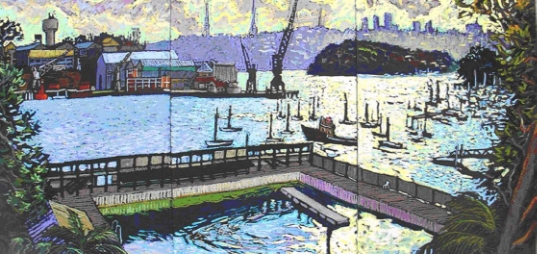
The island’s function has been highly varied, ranging from incarceration, heavy shipbuilding and engineering; to small boat construction and design, fine joinery and cabinet making. This diversity of activity is reflected both in the buildings - their materials, scale and pattern of windows - as well as the spaces created between them and their articulation by industrial infrastructure such as rails, slipways, docks, wharves and cranes. It is a place of cuttings: the hillsides cut to form cliffs and broad aprons, two docks nose to nose, rail tracks, tunnels, slipways and the grain silos cut by hand into the top of the sandstone plateau.
The island’s evolution has been accretive as it has been modified and adapted as required - to fulfil a particularly large contract, or to accommodate changes in ship size and building technology. An important character of the island derives from this reworking of existing buildings and facilities.
The island was ‘off-limits’ as a gaol and as a naval dockyard, contributing to its sense of mystique. It was also a place of innovation and learning through apprenticeship training.
- The quality of isolation inherent in the island. This was one of the main reasons for its selection as a convict prison and one appreciated by today’s visitors;
- The layering of uses and history;
- The hard-edged industrial character;
- The bleakness of the stone convict compound and associated buildings;
- The values and examples of innovation and ‘making do’ evident in many of the dockyard buildings; and
- The tradition of adaptation associated with the dockyard.
The following statements of significance have been taken from the draft Conservation Management Plans prepared for the island by Godden Mackay Logan (Dockyard CMP) and the Government Architect’s Office (Convict Buildings and Remains CMP).
The following summary statement of significance is taken from Government Architects Office, Conservation Management Plan, 2005.
Cockatoo Island is the only surviving Imperial convict public works establishment that retains most of the major buildings and works from its early construction campaigns. In combination, the physical and documentary record provides a rare opportunity to understand the system of life and work in a place of secondary convict incarceration. It appears to be the only place in the convict system that was established specifically for the purpose of hard labour. It was also unusual in its establishment close to a major centre of population.
The use of the Island for the construction and repair of maritime vessels has remained an important aspect of its use throughout its history. Substantial evidence of this use during the convict period exists in Fitzroy Dock and the associated workshop buildings. Fitzroy Dock was the first dry dock planned in Australia, constructed using advanced engineering technology and techniques. The development of the dock reflects rapidly changing applications of steam technology to shipping and ship repair and the rapid spread of information, ideas and technology among the network of professional engineers throughout the British Colonies.
Other buildings on the site, particularly the mid nineteenth century Steam Workshop complex and Biloela House, exhibit high quality stone construction, detailing and features.
Cockatoo Island has a range of archaeological resources, including rare evidence that has the potential to yield information not available from other sources, about life and work within a place of secondary punishment. They represent elements of the system of life and work on the Island not represented in extant buildings and ruins. The archaeological resources of Cockatoo Island therefore have the potential to substantially contribute to understanding of this period of Australia’s history. They also have the potential to provide a tangible experience for visitors to the Island and a direct link to the people who lived there. Later evidence relating to institutional use of the Island for the care and reform of children, contributes to the ongoing story of Cockatoo Island as a place of work and incarceration.
The development and history of Cockatoo Island is intrinsically linked to several Governors of NSW, and noted engineers and military figures, including Governors Gipps and FitzRoy, Major George Barney of the Royal Engineers, Gother Kerr Mann, and Sir William Denison.
The Island was closely associated with the Nautical Training Ships Sobraon and Vernon and is likely to contain the only surviving physical evidence of this highly successful scheme. Its use as a girls’ industrial school and reformatory also reflects a lack of adequate financial support for purpose built accommodation for juvenile care for girls in the later nineteenth century. These later uses contribute to the significance of the place but are not in themselves of outstanding heritage significance, particularly as physical remains from this period are minimal.
Cockatoo Island is a cultural landscape of State and National Significance by virtue of its location, manipulated landform, collection of buildings, works and potential archaeological resources from a significant period of Australia’s history. Cockatoo Island has outstanding heritage value to the Nation due to its early use as an imperial convict public works establishment, its ongoing use for construction and repair and the extensive evidence of these important uses that remain on the island.
Cockatoo Island’s previous dockyard, industrial, maritime and Defence uses, and the surviving physical evidence of those previous uses, are of Commonwealth and National cultural heritage value and significance.
The Island retains an outstanding and unique, geographically and functionally related ensemble of elements. Its layout, buildings, landscape elements, works, machinery and archaeological resources together reflect, illustrate and embody its former use and premier strategic role in Australia’s maritime, industrial and Defence history. It demonstrates the changes to maritime and heavy industrial processes and activities in Australia from the mid-nineteenth century. All elements contribute to the heritage value of Cockatoo Island as a whole and have heritage value and significance in their own right.
Cockatoo Island’s current layout and street pattern, the two sandstone docks in their dramatic, created escarpment setting, reclaimed waterside ‘working platforms’, and the form and previous function of most of its buildings and landscapes, in particular, are testimony to the physical dominance and influence of the long period of dockyard industrial, maritime and Defence uses. This physical dominance is the surviving result of the long term national, international and State and Federal Government investment in, and understanding of, the economic and strategic importance of Cockatoo Island’s dockyard, industrial, maritime and Defence uses for Australia.
Parallel with, and related to, its premier position in Australia’s dockyard, industrial, maritime and Defence history, Cockatoo Island operated as an engineering enterprise which developed and implemented standards of excellence which set best practice benchmarks throughout the country. It was Australia’s largest post-World War I Commonwealth employer, and the complexity of its union and guild membership, and the history of its demarcation and industrial disputes, catalysed the Federal Government to establish the first Federal wage and conditions award in Australia and apply it to the Island. The Federal award established to consolidate and organise Cockatoo Island was the model for many subsequent Federal awards which have operated alongside various state award systems in Australia until very recently.
Cockatoo Island’s dockyard, industrial, maritime and Defence use history reflects through its retained form and fabric, the Federalisation of previous state activities and enterprises, an occurrence that was experienced throughout Australia after Federation.
Formerly state land and the location of mixed state/ private activities; the island was resumed by the Commonwealth under emergency provisions in a time of national need.
This was due to its strategic location, established uses, valuable improvements and skilled labour force. The Commonwealth retained its ownership of those enterprises following the World War I and, by that retention, ensured it had the primary and central determining role in large engineering and maritime industries in Australia throughout the twentieth century. Retaining that primacy was an essential part of ensuring Australia’s defence needs were properly met according to Commonwealth, not state or private, priorities. This priority status became critical during the Pacific War effort from 1942, when Cockatoo Island was used to repair and re-fit various ships and vessels for the RAN, Royal Navy and the US and was, at different times, the location for the construction of HMAS Sydney and HMAS Melbourne.
Cockatoo Island’s dockyard, industrial, maritime and Defence uses were developed for the nation and in the national interest and were of vital importance to Australia for over 100 years. The surviving elements of those uses on the Island today, in particular the docks, remnant equipment, warehouse and industrial buildings and a range of cranes, wharves, slipways and jetties which illustrate the materials, construction techniques and technical skills employed in the construction of shipbuilding and dockyard facilities, remain important to Australia as an integral and irreplaceable part of its national cultural heritage.
When listing a place on the Commonwealth and National Heritage List, the Australian Heritage Council makes an assessment of the place and advises of the values that the place holds. Places on the National list have demonstrated outstanding heritage values against one or more of the criteria; places on the Commonwealth Heritage List are places managed by the Commonwealth and been found to have significant heritage values against one or more criteria.
The following table shows how the attributes of the place – either tangibly in the physical fabric or intangibly in the associations and uses – make up the National and Commonwealth Heritage listed values of Cockatoo Island. The text is taken from the citations published by the Department of Environment, Water, Heritage and the Arts at the time of listings.
National Heritage Listed Values | Commonwealth Heritage Listed Values |
|
Criterion a: Events, Processes Cockatoo Island is a convict industrial settlement and pre and post Federation shipbuilding complex. It is important in the course of Australia’s cultural history for its use as a place of hard labour, secondary punishment, and for public works, namely its history and contributions to the nation as a dockyard. Fitzroy Dock is outstanding as the only remaining dry dock built using convict and prisoner labour and it is one of the largest convict-era public works surviving in Sydney. The dock was the earliest graving dock commenced in Australia and was one of the largest engineering projects competed in Australia at that time. Convicts excavated 580,000 cubic feet of rock creating 45 foot (15m) sandstone cliffs that extended around the site just to prepare the area for the dock, a huge technical achievement in itself. The dockyard’s lengthy 134 years of operation and its significance during both world wars, and in Australia’s naval development and service as the Commonwealth dockyard, all contribute to its outstanding value to the nation. It is the only surviving example of a 19th century dockyard in Australia to retain some of the original service buildings including the pump house and machine shop. The powerhouse, constructed in 1918, contains the most extensive collection of early Australian electrical, hydraulic power and pumping equipment in Australia. The surviving fabric relating to convict administration which includes; the prisoners’ barracks, hospital, mess hall, military guard and officers’ room, free overseers’ quarters and the superintendent’s cottage. Evidence of convict hard labour includes the sandstone buildings, quarried cliffs, the underground silos and the Fitzroy Dock. Cockatoo Island’s dockyard, through its contribution to Australia’s naval and maritime history, demonstrates outstanding significance to the nation. Fitzroy Dock is the oldest surviving dry dock in Australia operating continuously for over 134 years (1857-1991). The dockyard has direct associations with the convict era, Australia’s naval relationship with its allies (particularly Britain during the nineteenth and early twentieth centuries) and Australia’s naval development, especially during the First and Second World Wars. Cockatoo Island’s development into Australia’s primary shipbuilding facility and Australia’s first Naval Dockyard for the RAN (1913-1921) further demonstrates its outstanding importance in the course of Australia’s history. | Criterion a: Events, Processes Cockatoo Island is important for its association with the administration of Governor Gipps who was responsible for the establishment on the Island of an Imperially funded prison for convicts withdrawn from Norfolk Island in the 1840s. The establishment of maritime activities during the 1840s culminating in the construction of Fitzroy Dock 1851-57 under Gother Kerr Mann, one of Australia's foremost nineteenth century engineers; and the construction of twelve in-ground grain silos following a government order that provision would be made to store 10,000 bushels of grain on the island. The subsequent development of shipbuilding and dockyard facilities has clearly been in response to Federation in 1901, when the New South Wales government took over management of the island; the formation of the Royal Australian Navy in 1911; and the Commonwealth Government's purchase of the island in 1913. The first steel warship built in Australia, HMAS Heron, was completed on the island in 1916. During World War Two Cockatoo Island became the primary shipbuilding and dockyard facility in the Pacific following the fall of Singapore. Post war development of the facility reflects the importance of the island facility to the Commonwealth Government.
|
Criterion b: Rarity N/A | Criterion b: Rarity Cockatoo Island is the only surviving Imperial convict public works establishment in New South Wales. Individual elements of the convict Public Works Department period include the rock cut grain silos, the Prisoners Barracks and Mess Hall 1839-42, the Military Guard House, the Military Officers Quarters and Biloela House c1841. The range of elements associated with the shipbuilding and dockyard facility date from the 1850s and include items of remnant equipment, warehouse and industrial buildings and a range of cranes, wharves, slipways and jetties which illustrate the materials, construction techniques and technical skills employed in the construction of shipbuilding and dockyard facilities over 140 years. Individual elements within the dockyard facility include Fitzroy Dock and Caisson 1851-57, Sutherland Dock 1882-90 the Powerhouse 1918, the Engineer's and Blacksmith's Shop c1853 and the former pump building for Fitzroy Dock.
|
Criterion c: Research There has been considerable archaeological investigation on Cockatoo Island by the Sydney Harbour Federation Trust. This has indicated that it has significant research potential in terms of enhancing the knowledge of the operation of a convict industrial site and a long running dockyard. The surviving archaeological elements of now demolished or obscured structures and functions of the dockyard, in particular the remains of the docks, equipment, warehouse and industrial buildings and a range of cranes, wharves, slipways and jetties, have potential to illustrate and reveal the materials, construction techniques and technical skills employed in the construction of shipbuilding and dockyard facilities that are no longer available through other sources in Australia. The archaeological resources also have importance in demonstrating changes to maritime and heavy industrial processes and activities in Australia from the mid- nineteenth century. The dockyard contains the earliest, most extensive and most varied record of shipbuilding, both commercial and naval, in Australia. This is supported by extensive documentary evidence in the National Archives. | Criterion c: Research N/A |
Criterion d: principal characteristics of class of places Cockatoo Island represents some of the principal characteristics of Australian convict sites including: hard labour as a means of punishment and deterrence to the British ‘criminal class’; use of convict labour for the establishment of the colony through public works; and secondary punishment for re-offending convicts. Cockatoo Island is of outstanding importance to the nation as a site of severe punishment. The level of severity if expressed through the policy to extend convicts with ‘no indulgence beyond the strict Government ration’. The fundamental purpose of Cockatoo Island was to be the worst possible place imaginable and the ultimate deterrent and it is a fine example as a symbol of the harsh treatment used to deter the ‘criminal class’ in Britain. Fitzroy Dock and its associated excavation and buildings are outstanding examples of the use of convict and prisoner labour for public works. The underground silos, remaining evidence from quarrying and the group of convict built structures on the island are also testament to public works undertaken by the convicts. Although convicts under various sentences ended up at Cockatoo Island, it was established specifically as, and primarily was a place of secondary punishment for re-offending convicts. Cockatoo Island critically represents the principal characteristics of a dual use convict site, one that both incarcerates convicts and provides them with hard labour. The values expressed at Cockatoo Island are important for their ability to demonstrate the function, planning layout and architectural idiom and principal characteristics of an imperial convict public works establishment of the 1840s; and the functions, planning layout and architectural idiom and principal characteristics of a range of structures and facilities associated with the development and process of the dockyard and shipbuilding industry over a period of 134 years. | Criterion d: principal characteristics of class of places The industrial character of the cultural landscape of the Island has developed from the interaction of maritime and prison activity and retains clear evidence of both in a number of precincts. The cultural landscape is articulated by man made cliffs, stone walls and steps, docks, cranes, slipways and built forms. Extant structures within the precincts are important for their ability to demonstrate: the functions and architectural idiom and principal characteristics of an imperial convict public works establishment of the 1840s; and the functions and architectural idiom and principal characteristics of the range of structures and facilities associated with the development and processes of the dockyard and shipbuilding industry over a period of 140 years. The range of elements associated with the shipbuilding and dockyard facility date from the 1850s and include items of remnant equipment, warehouse and industrial buildings and a range of cranes, wharves, slipways and jetties which illustrate the materials, construction techniques and technical skills employed in the construction of shipbuilding and dockyard facilities over 140 years. Individual elements within the dockyard facility include Fitzroy Dock and Caisson, Sutherland Dock, the Powerhouse, the Engineer's and Blacksmith's Shop and the former pump building for Fitzroy Dock.
Individual elements of the convict Public Works Department period including the rock cut grain silos, the Prisoners Barracks and Mess Hall, the Military Guard House, the Military Officers Quarters and Biloela House. |
Criterion h: Significant people N/A | Criterion h: Significant people Cockatoo Island is important for its association with the administration of Governor Gipps in the 1840s, the construction of Fitzroy Dock from 1851-57 under Gother Kerr Mann, Federation in 1901, the formation of the Royal Australian Navy in 1911 and the construction of the first steel warship built in Australia, HMAS Heron. |
Cockatoo Island is one of eleven sites that will form a serial nomination of Australian Convict Sites for World Heritage listing. In this serial listing the island is referred to as the ‘Cockatoo Island Convict site.’
The other sites included in the nomination are: Port Arthur Historic Site (Tasmania); Kingston and Arthur's Vale Historic Area (Norfolk Island); Fremantle Prison (WA); Old Government House (Parramatta); Hyde Park Barracks (Sydney); Great North Road (NSW); Coal Mines Historic Area (Tasmania); Cascades Female Factory (Tasmania); the Archer Precinct (Woolmers Estate and Brickendon Estate, Tasmania) and Darlington Probation Station (Tasmania). Collectively, the Australian Convict Sites demonstrate the range of convicts’ experiences under various systems of control, punishment and reform.
Cockatoo Island Convict Site has been included in the serial nomination as an outstanding cultural landscape that depicts the pattern, management and lives of convict secondary offenders sentenced to hard labour on public works. The harshness of the punishment on the island was an important deterrent to criminals in Britain and the new colonies. The site was of particular strategic naval significance for Britain, for the new colony and for the development of the nation.
The Australian Government has an international obligation, should the nomination be successful, to protect, conserve, present and transmit to future generations the World Heritage values of the property.
Draft State Environmental Planning Policy (Convict Heritage)
A draft State Environmental Planning Policy (SEPP) will be prepared for the protection of World Heritage values around the nominated sites in NSW. The draft SEPP will identify ‘buffer zones’ around each nominated site. For Cockatoo, an area of water around the circumference of the island has been nominated as the ‘buffer zone’ by the State Government.
The ‘buffer zone’ is a designated area surrounding the nominated property which has complementary legal and/or customary restrictions placed on its use and development to give an added layer of protection to the property. This includes the immediate setting of the nominated property, important views and other areas or attributes that are functionally important as a support to the property and its protection.
The draft SEPP will be gazetted if the World Heritage Committee inscribes the Australian Convict Sites onto the World Heritage List.
The Australian Convict Sites group has the potential to meet World Heritage criteria (iv) and (vi) under the UNESCO Operational Guidelines for the Implementation of the World Heritage Convention for its outstanding global significance.
Draft World Heritage Values |
Criterion iv: An outstanding example of a type of building, architectural or technological ensemble or landscape which illustrate a significant stage/s in human history. Collectively, the Australian Convict sites are an outstanding example of an architectural ensemble which illustrates a significant stage in human history, that of the forced migration of convicts. Through these buildings the Australian Convict Sites demonstrate the main features of the global systems of transportation and convictism. These were: - Use of transportation as a strategic tool to expand the home state’s sphere of influence. Many state powers used convicts to build new colonies in order to expand their economic, military and political influence across the world;
- Use of transportation by nation states as a mechanism for the control of law and order. The establishment of penal colonies to punish criminal offenders and deter crime in the home state was an immediate and long term objective of transportation systems; and
- Use of transportation by state powers to reform the criminal elements of humanity. Penal systems were introduced to rehabilitate criminals into productive citizens and integrate them into the new colonies or for their return to the home state.
|
Criterion vi: Be directly or tangibly associated with events or living traditions, with ideas, or with beliefs, with artistic and literary works of outstanding universal significance. The Australian Convict Sites are of outstanding universal significance for their association with global developments in ideas and beliefs about punishment and reform of the criminal elements of humanity in the modern era. These included: - Consolidation and expansion of the transportation system as one of the dominant models of punishment of crime by European powers in the 19th century; and
- Emergence of new forms of punishment including the shift from corporal punishment to psychological punishment, and the development of segregated prisons for female and juvenile criminals; and
- Influence of transportation on the rise of a national penitentiary system in Europe.
|
The table below shows the assessed ability of each site in the serial group to meet a particular aspect of the two criteria.
Cockatoo Island contributes to the serial group through its capacity to meet Criterion IV by demonstrating in its fabric and setting the Geo-political spheres of influence. It also contributes to the serial group through its capacity to meet Criterion VI by demonstrating in its fabric and setting the Influence on emergence of a national penitentiary system.
THEMATIC ELEMENT | CRITERION IV | CRITERION VI |
EXPANDING GEO POLITICAL SPHERES OF INFLUENCE | PUNISHMENT AND DETERRENCE | REFORMATION | TRANSPORTATION AS DOMINANT MODEL OF PUNISHMENT | INFLUENCE OF ENLIGHTENMENT: SHIFT FROM PUNISHMENT OF BODY TO MIND | INFLUENCE ON EMERGENCE OF NATIONAL PENITENTIARIES |
SITE |
Kingston & Arthur’s Vale | | | | | | |
Old Government House & Domain | | | | | | |
Hyde Park Barracks | | | | | | |
Brickendon-Woolmers | | | | | | |
Darlington Probation Station | | | | | | |
Old Great North Road | | | | | | |
Cascades Female Factory | | | | | | |
Cockatoo Island | | | | | | |
Port Arthur | | | | | | |
Coal Mines | | | | | | |
Fremantle Prison | | | | | | |
If the Australian Convict Sites are inscribed on the World Heritage List, the Statement of Outstanding Universal Values for the serial group will form part of the Cockatoo Island Management Plan.
The Australian Convict Sites are of outstanding universal significance as the prime example of the forced migration of convicts and for their association with ideas and beliefs about the punishment of crime during the modern era. The series of sites are the only surviving examples in the world today that reflect these outstanding universal values and are fully protected under a comprehensive management system.
A number of sites represent the first of their kind, or one of the first, in the world. The 11 sites comprise a diverse array of architectural ensembles with more than 200 convict structures, ruins and archaeological remains. There are structures for housing, confining and managing convicts (penal stations, female factories, a juvenile prison, underground and solitary cells, barracks, stockades, hospitals and churches), convict-built infrastructure (roads, dockyards, a colliery, crank mills, kilns and brickworks), agricultural properties, government houses and penal administrative buildings.
The Australian Convict Sites are of outstanding universal value as a broad representation of the transportation of convicts to penal colonies around the globe. Convictism is one of the main forms of forced migration, along with slavery and indentured labour. The forced migration of convicts bears important similarities to and differences from these other forms. Penal transportation is an important stage of human history that ushered in a new era in the punishment of crime in the world from the early modern to modern period. From the 17th through to the 20th centuries, the forced migration of convicts affected the development of many nations and the lives of several million convicts and their descendants. The nominated sites are a manifestation of individual suffering and subjugation of one part of humanity by another. They also evoke the universal impulse of nation states and penal reformers following the Age of Enlightenment to bring about the transformation of the criminal elements of society.
The Australian Convict Sites are a compelling expression of these outstanding universal values. The world’s major European powers transformed the criminals of their societies into instruments of colonisation and empire building. Convictism was an important global development that contributed to the rise and consolidation of the world economy and spread of multi-ethnic societies during the modern era. The flow of people and labour played a significant part in the world economy particularly during the 19th century. This movement of peoples contributed significantly to the growth and decline of world powers, particularly the British Empire. These developments are fully represented by the nominated sites. The Australian Convict Sites are unparalleled as the best surviving examples of the forced migration of convicts. They reflect the common elements of convictism during the modern era as well as a number of features that are unique in the world. Typically, convictism involved: the use of convicts to extend the geo-political influence of the home state; the transportation of prisoners to penal colonies to deter crime in the home state; and the reformation of convicts. Each site represents one or more elements of Australia’s integrated and diverse convict system which included assignment, gangs, probation, female factories, surveillance regimes, entitlement
and reward schemes and penal stations. The series of sites illustrates the typical cycle of convicts in the colonies who experienced many of these systems from the time of their
arrival until their emancipation or death.
The scale of transportation to Australia was far greater than any other penal colony in the world in terms of numbers sent, duration of the journey and area settled. The transportation of over one million prisoners and destitute Russians to Siberia during the 18th and 19th centuries is an outstanding example of forced migration. However, it is not representative of the key elements of the forced migration of convicts. The 80 year duration of transportation to Australia was the longest in the history of convictism. Australia is the only example of convicts making a major contribution to European settlement and development of a continent that later became a nation. Convicts and ex-convicts were the primary instrument of colonisation across Australia unlike many other penal colonies where convicts complemented free workers, indentured labourers or slaves. Australia’s convicts populated the colonies, shaped the social fabric and developed the first buildings, churches, roads, bridges, farms and industrial works across vast spaces. Convicts comprised the vast majority of the first European settlers and the colonies remained dependent on convict and ex-convict labour for more than a generation after the end of transportation. The nominated sites demonstrate exceptional regimes to rehabilitate convicts which were a central element of Australia’s convict system. Australia’s innovative systems were amongst the first of their kind for managing and rehabilitating female, male and juvenile convicts.
Many of the nominated sites illustrate unique systems to discipline and reform juvenile convicts and female convicts, as well as the reformatory achievements under Governor Macquarie, Lieutenant-Governor Arthur and Commandant Maconochie.
The Australian Convict Sites are of outstanding universal significance for their association with ideas and beliefs about the punishment and reform of criminals in the modern era. The system of penal transportation intersected with philosophical ideas and other global developments in the punishment of crime following the Age of Enlightenment. The drive to establish national penitentiary systems was a major force. The transportation system and these broader penology developments influenced one another and affected the course of the punishment of crime during the 18th and 19th centuries. The nominated sites provide extensive physical evidence of these pioneering ideas and developments. The sites are representative of the spread of penal transportation around the globe.
Australia’s penal colonies had an important impact on France and Russia. Both nations sought to replicate Australia’s success when deciding to establish their first penal colonies in New Caledonia, French Guiana and Sakhalin Island. The Australian Convict Sites are a symbolic representation of this influence. The spread of transportation had an important influence on the decline of execution as the dominant form of punishment of ‘serious crimes’ in the modern era. Penal transportation subsequently became one of the dominant models of punishment in Europe from the late 18th to mid 19th century.
The nominated sites are a compelling expression of the dominant use of the transportation system to punish and reform criminals during the 19th century. Spanning
nearly 100 years, the sites reflect the shift from corporal punishment to the psychological manipulation of the mind. The nominated sites illustrate French philosopher Michel Foucault’s notion of disciplinary punishment. Several sites provide important evidence of the classification of prisoners, the ‘separate system’, the ticket-of-leave system and the indeterminate sentence system.
The Australian Convict Sites provide physical evidence of significant new ideas and penal practices including segregated prisons for female prisoners and juvenile prisoners and the ‘separate system’.
The Australian Convict Sites are closely associated with the decline of the transportation system and rise of national penitentiaries. This was a significant development in the punishment of criminals in the modern era. The nominated sites typify the demise of penal transportation as a major tool of criminal justice. Australia was strongly associated with the decline of the transportation system, as Britain was plagued by ongoing allegations of slavery-like practices and moral contagion in her colonies. The theory and practice of the system began to crumble as penal reformers exerted pressure on the British government for supporting a system akin to slavery at the very time that slavery was being abolished across the world. The abolition of transportation to the Australian colonies was an important contributory factor leading to the emergence of a national penitentiary system across Britain. Britain, the largest global power in the world at the time, introduced a national penitentiary system modelled on the new penitentiaries in America.
The demise of transportation across the British empire had a significant impact on the geo-political makeup of the globe. The large- scale movement of British criminals to new and existing penal colonies ceased by the late 19th century with some minor exceptions. European powers no longer had a readymade convict force to fulfil their empire building ambitions, and penal colonies evolved into places of free settlement. The Australian Convict Sites demonstrate the outstanding universal values outlined under criteria (iv) and (vi) and are protected to a high level under a comprehensive management system. They are the pre-eminent convict sites among the more than 3,000 convict sites around Australia. The nominated sites are unique in the world as a representation of convictism and for their association with penal developments in the modern era. No other comparable series of sites survives in the world today that typifies these outstanding universal values and is protected for future generations with comprehensive management systems.
The cultural significance and statutory heritage values of Cockatoo Island are embodied in the fabric of the place, its setting, records, related places and objects. Intangible aspects of the island’s heritage- previous uses, associations and meanings also find expression in the site’s physical attributes. For example, the sandstone in the convict-built buildings help to tell the story of forced convict labour on the island. The discussion of the condition of the values therefore focuses on the physical attributes to which the values are inextricably linked.
The various uses of the island since the convict era have resulted in the layering of fabric and some destruction and adaptation of original fabric. As the whole island was deserted from early 1992 to 2001, there was considerable deterioration of the remaining building stock, machinery and cranes during that period. Since 2001 the Trust has carried out some remediation and repairs to some infrastructure and services and some conservation works to make the Island accessible to the public.
Despite the demolition of buildings and removal of machinery, cranes and other equipment by Defence prior to the transfer of the site to the Trust, the Island remains predominantly industrial in character. This value is reinforced through the retention and interpretation of physical evidence, such as rails, slipways, cranes and building footprints.
The Plateau
The most significant physical fabric on the island is the remaining convict origin sandstone elements, the legacy of the administration of Governor Gipps who was responsible for the establishment of the Island as a prison. Most of the sandstone buildings, quarried cliffs, underground silos and the Fitzroy Dock represent evidence of convict hard labour.
The majority of the convict-built structures are located within the Plateau precinct and in the Workshop complex within the Eastern Apron. These have been surveyed in detail for a stonework conservation program. Despite being exposed to the marine environment, the stonework is in relatively good condition. Human intervention has had a much greater impact on the intactness of the remaining fabric with removal of stone, replacement of roofs, and installation of services. Varying degrees of intervention has resulted in changes to the external appearance and internal configuration of buildings. As a result, many of the convict buildings or their original uses are not easily identifiable as being from that period.
The Residential precinct on the Plateau has functioned as the main domestic residential area of the island since it was first permanently occupied. Consequently, the general layout and appearance has remained largely intact and identifiable as residential, with the older building subject to numerous additions to accommodate changes in domestic life. These buildings have housed important figures in the Island’s history, including Gother Kerr Mann who was responsible for the construction of the Fitzroy Dock. This precinct also contains the remaining underground convict built wheat silos and the main area of trees and garden plantings on the Island.
The domestic landscape has deteriorated since the island was vacated in 1992. The gardens have become overgrown and tree roots are beginning to undermine building foundations, underground services and stone walls which previously delineated the residential subdivision pattern of the precinct.
Historical research has identified the pattern of development of the Plateau from the convict period through to the final phases of the maritime industrial use. This will guide archaeological investigations in the future which have the potential to uncover exceptionally significant convict remains.
The central industrial workshop buildings on the Plateau provide rare surviving evidence of industrial processes, including the changing technology of shipbuilding and repair. The main issue with these building has been the deterioration of fabric; roofs, gutters, joinery and wall cladding, and associated water damage.
The Dockyard Precincts
The dockyard contains the earliest, most extensive and most varied record of shipbuilding, both commercial and naval in Australia. This is supported by comprehensive evidence contained in the National Archives.
The majority of original dockyard buildings remain on the Southern Apron creating an important complex of robust buildings representing most phases of the Islands European occupation. This group of buildings are the most intact of the maritime aprons with most of them having been retained by Defence.
The Powerhouse (Building 58) brickwork is mostly in good condition along with the recently repaired windows and roofs. Much of its equipment remains in situ, and provides the most extensive collection of early electrical, hydraulic, power and pumping equipment in Australia. The basement area has been pumped dry.
The Fitzroy Dock is currently filled with water and the stonework has been subject to extensive weathering and wear. The caisson of the Fitzroy Dock has been stabilised through minor repairs and remains in the Dock. The Camber Wharf and pontoon has been rebuilt and reinstated, now providing a secondary entry / exit point for workers and visitors to the island.
The machinery and the cranes, particularly the external ones, many of which are located on the Southern Apron, present a major conservation challenge. A survey of all cranes, and an inventory of machinery and tools have been carried out and all have been found to be generally structurally stable, however many are missing components and lack of maintenance has resulted in fabric deterioration.
The Eastern and Northern Aprons were subject to major building removal by Defence prior to the transfer of the site to the Trust. Decontamination of the ground has been completed and landscaping undertaken in the majority of these spaces. Former building footprints have been used and interpreted in the landscape design and through the location of new buildings. The layouts of buildings on the island are a physical manifestation of the ship building process.
The Northern Apron was cleared of most of its metal trades and fabrication shops in 1978, with the remaining buildings being demolished before 1992. The slipways on the western end of the apron and building footprints of previous structures serve as a reminder of the previous use of this part of the island.
To the south of the Parramatta Wharf, across the cleared eastern apron, a complex of workshop buildings remain relatively intact. These buildings are representative of all of the phases of the Islands European occupation and include the Engineering workshop buildings and the water front buildings along the Bolt Shop Wharf (W3). The original convict built workshops have undergone many alterations and additions and as a result have lost some of their original integrity. Some stone conservation works have been carried out to these buildings.
Buildings 101, 102 and 103, a group of administration buildings representative of the Commonwealth Dockyard phase of the islands history, have undergone conservation works both internally and externally. A workshop has been established in Building 145 to facilitate the restoration of the Island’s machinery and cranes. Volunteers, many of whom have previously worked on the Island, will be undertaking this conservation work.
The Trust’s Heritage inventory will provide a description of the physical condition of the site, including all buildings and items. The detailed inventory sheets for each building, the association and uses, have been updated in the draft CMPs.
The Trust’s goal is to achieve the aims of this plan, working within the current planning framework and without diluting the essential elements that make the island different and appealing. This will require ensuring the objects of the Trust Act and Trust’s operational needs are met whilst balancing competing interests on the Island and the requirements of the EPBC Act.
Risks to achieving the Trust’s goals could come from a range of potential actions. For example:
- The need to remediate the island may compromise material of archaeological significance and require the removal of fabric which contributes to the interesting industrial patina.
- Providing public access to and re-occupying the island will require upgrading of the buildings and infrastructure, roads and pathways to meet current operational standards. These works may affect the existing layered and ‘make do’ character of the island.
- Works to upgrade buildings for leasing in accordance with building, health and safety requirements could result in the creation of a collection of shiny ‘new’ buildings that would be out of character with their surrounds.
The inherent risk in achieving these varied aims is that the heritage values of the island may be diminished. The cycle of re-use and redevelopment means that these pressures to the heritage values will be an ongoing management concern. Consideration has been given to these risks when developing the conservation policies for the island.
However, the heritage aspects of the Island and its buildings, structures and objects are recognised as its prime attributes and will be treated with utmost respect as required by the Burra Charter.
The following policies have been prepared as required by EPBC Amendment Regulations 2003, 10.01C, Schedule 5A (h) (i-xii) and 10.03B, Schedule 7A (h) (i-xii).
The policies seek to protect and conserve the statutory National and Commonwealth heritage values, as well as the potential World Heritage values of the island, as identified in the previous sections of this plan. The policies also aim to provide management guidance and these are reflected in the proposed Outcomes in this plan. The policies have been primarily derived from the Draft Convict and Dockyard Conservation Management Plans. The table presents policies applicable to the entire island and more specific policies to protect the values of Cockatoo’s convict, institutional and dockyard history. Excerpts from the National, Commonwealth and potential World Heritage values have been included throughout the table to emphasise the link between the values and the policies.
General Policies |
| Policies | Supporting Policies |
Policy 1 | The National and Commonwealth Heritage values and the potential World Heritage values of Cockatoo Island and its elements are the basis for conserving and managing the fabric of the place. | - Consider the impact of any action on the National and Commonwealth Heritage values of the place;
- Use the Significant Impact Guidelines 1.1 and 1.2, Department of Environment and Heritage, May 2006 to assist in reaching a decision about the level of impact; and
- Consult the Department for informal advice before deciding whether to make a formal referral in accordance with the EPBC Act.
|
Policy 2 | Carry out the future conservation and adaptation of the fabric of the place in accordance with the principles of the Australia ICOMOS Charter for Places of Cultural Significance (the Burra Charter), and any revisions of the Charter that might occur in the future. | - Ensure the Burra Charter is observed in all future works carried out on the island.
|
Policy 3 | Ensure an integrated approach, and an ongoing commitment to long term conservation of the island. | - Trust works, leasing, events and communications to ensure that Heritage values are protected and conserved.
|
Works to buildings and selection of uses |
Policy 4 | Use current and future draft Conservation Management Plans to provide detailed explanation and specific conservation policies on buildings or specific elements of Cockatoo Island. These CMPs are listed at Related Studies section of the Plan together with details of where to access to CMPs. | - Current and draft CMPs are listed in the Related Studies section of the Plan. These documents can be accessed at the Trust Resource Centre. Extracts are also available online at www.harbourtrust.gov.au. Future CMPs will also be made accessible in this way.
- As it is not possible to anticipate all possible actions or their impacts, the Conservation Management Plans will not always provide sufficient guidance, certainty or the confidence needed to implement an action. In these cases and where the draft CMPs recommend it, further professional heritage advice is to be obtained.
|
Policy 5 | When considering proposals for change analyse potential impacts on the tangible and intangible heritage values of the island. Wherever proposals are likely to impact on heritage values, a Heritage Impact Statement will be prepared, and where required referred under EPBC Act. | - If proposals are found to have impacts on heritage values consider alternative options or modify the proposal with ameliorative measures.
- Obtain relevant specialist advice when considering proposals for changes to or work on significant elements and fabric.
- Any works to significant fabric require the preparation of a Heritage Impact Statement.
- Heritage Impact Statements will be prepared by a relevant heritage professional.
- Ensure that conservation works are documented and supervised by relevant heritage professionals;
- Use consultants and trades people with the appropriate experience and training in their fields and with knowledge of good conservation practice when specifying and or carrying out maintenance and repair work.
- Introduce new fabric only in circumstances where the existing fabric or structure has reached a stage of deterioration, instability, or hazardous nature to the extent that replacement is absolutely necessary.
- Establish a conservation workshop / conservation program on the Island involving specialists and skilled volunteers.
|
Policy 6 | Remove works that are intrusive or adversely impact on significant areas, elements and fabric. | - Ensure that removal:
- aids in the interpretation and visibility of significant fabric;
- ensures the security or viability of the place;
- follows adequate recording and interpretation; and
- Follows a full assessment of alternative options which have determined that it is the most prudent alternative.
|
Policy 7 | Measures to upgrade buildings and structures to achieve BCA compliance and meet OHS standards are to minimise the removal or adaptation of the existing significant fabric. | - All capital works and adaptive re-use proposals will be guided by the heritage significance and sensitivities associated with each building.
- Identify all potential risks for occupational health and safety, structural and fire safety and assess the relevant buildings in relation to the Building Code of Australia; and
- Ensure that any recommendations to upgrade buildings do not compromise the heritage and aesthetic values of the island. New additions are not to be intrusive and materials are to be sympathetic to original built fabric.
|
Policy 8 | Ensure that any new buildings, structures, facilities or change are sympathetic to or enhance the heritage values of the place. | - Where new buildings, structures and facilities are appropriate their design must:
- be sympathetic to the heritage values of the island, the character of the particular precinct and existing buildings and fixtures in the vicinity and their setting;
- assist with the interpretation of heritage buildings or fixtures that have previously been removed;
- retain the industrial scale and form of existing buildings in the maritime precinct,
- have a robust character and patina in keeping with the former industrial setting in which they are located.
|
Policy 9 | Uses of buildings or groupings of buildings are to provide a mutually supportive mix of activities that contribute to interpreting the site and its history and heritage values. | - The general principles that underlie the selection of uses on the island are:
- uses that contribute to, or are complementary to, the maritime industrial heritage of the island;
- the need for maritime and non-maritime uses to provide diversity and to broaden the site’s attractions for the public, such as creating a venue for cultural uses, studios, offices, workshops, training facilities, tourism, leisure and short-stay accommodation;
- uses that best respond to the place and provide a positive contribution to the enjoyment and understanding of the place and its heritage;
- uses that are compatible with the ESD policies of the Trust;
- uses that are compatible with the heritage/environmental/public access and amenity requirements such as noise and light spillage; and
- measures necessary to meet service infrastructure and Building Code of Australia requirements can be readily implemented in a cost effective manner befitting the heritage values of the building(s). Relevant environmental standards and requirements for industrial and commercial operations will need to be addressed as part of any lease arrangements.
|
Policy 10 | Inform prospective leasees about the islands heritage significance and of heritage sensitivities associated with buildings for lease. | - Where applicable, include conditions in leases to ensure:
- works required by tenants should be fully reversible;
- the protection of significant buildings and fabric;
- occasional public access; and
- that tenant fit-out facilitates interpretation.
|
Policy 11 | Give special conservation attention to buildings, elements and items of exceptional significance to ensure appropriate uses are found, that public access is provided and suitable interpretation measures are introduced. | - Buildings of exceptional significance are to be reserved for uses in which the interpretation of the heritage values and the building and its context takes primacy and its public exposure is maximised.
- Buildings, elements and items of exceptional significance include:
- The Military Guard House ruins and prison buildings (Buildings 1, 3, 4 and 5)
- The Engineer and Blacksmith’s shop (Building 138)
- The Powerhouse and Rectifier Room (Buildings 58 and 57)
- Fitzroy Dock
- Biloela House (Building 22)
- Free Overseer’s Quarters (Buildings 9 and 11)
|
Policy 12 | Where there is conflict or uncertainty as to the appropriateness of particular actions for specific buildings or areas, conduct further detailed heritage investigation and produce a detailed Heritage Impact Statement. | - Follow the process set out in the Trust’s Heritage Strategy for the resolution of conflict arising from the assessment and management of heritage values.
- Where conflicts arise between the retention and conservation of differing fabric layers and archaeological resources and operational or other statutory imperatives, they will be assessed on a case by case basis and steps taken to minimise damage to later relics and built heritage. The decision will require the balancing of the loss, in heritage terms, occasioned by the disturbance or destruction of later relics/buildings against the gains that retention of the earlier relics will achieve. This is to be carried out as part of a transparent and inclusive process.
- Record any decision reached following the conclusion of the conflict resolution process.
- Refer to Department of Environment, Heritage, Water and the Arts for advice. Where actions will have a significant impact on heritage values they will be referred.
|
Cultural Landscape Policies Cockatoo has been home to a diversity of uses; from the establishment of the convict gaol and institutional training, to the industrial dockyard and large shipbuilding activities. The cumulative layers of fabric left behind by the interaction of these uses retain evidence of them all. The cultural landscape of the Island has developed from the interaction of prison and maritime activity and retains clear evidence of both in a number of precincts. The cultural landscape is articulated by man-made cliffs, stone walls and steps and built forms (NHL & CHL Criterion d). |
| Policies | Supporting Policies |
Policy 13 | Recognise the significance of the complex layering of archaeology, fabric, uses and associations of Cockatoo Island in a manner that conserves, enhances and interprets the heritage values of the place and its fabric. | - Recognise that the layers are important- but not always equally important.
- Generally convict era archaeological remains will take precedence over later remains (see Cockatoo Island Archaeological Management Principles).
- Where appropriate, retain evidence of the continuous use of buildings on Cockatoo Island by protecting and conserving significant fabric from all periods.
- Carry out an assessment of the potential impacts of all new structures on the cultural landscape of the place.
|
Policy 14 | Preserve, maintain and interpret the character of the cultural landscape, including the cultural plantings, heritage structures, and their settings. | - Re-instate and interpret former garden spaces, fences, walls and planting to the houses on the plateau.
- Protect, conserve and maintain the industrial character of the waterfront and working precincts of the island.
- Protect conserve and maintain the character of the convict compound on the plateau.
|
Policy 15 | Recognise and retain significant views to, from and within the island in its harbour setting; permitting easy recognition and interpretation of buildings, landscape features, and cranes. | - Investigate opportunities for improving sightlines within the island.
- Interpret important views and viewpoints both on the island and from the mainland.
- Consider the potential impact of works on:
- Access to significant vantage points on the island; and
- Views of the island from the water and surrounding shorelines.
|
Archaeological Policies Cockatoo Island has significant archaeological research potential due to the intensity of its occupation throughout most of the period of European colonisation of Australia. Archaeological material can be found in the fabric, fittings, and artefacts used as fill on the land or harbour floor surrounding the island. All relics are protected by Commonwealth legislation and the intentional uncovering of relics, without permission is forbidden. The surviving archaeological elements of now demolished or obscured structures and functions of the dockyard, in particular the remains of the docks, equipment, warehouse and industrial buildings and a range of cranes, wharves, slipways and jetties, have potential to illustrate and reveal the materials, construction techniques and technical skills employed in the construction of shipbuilding and dockyard facilities that are no longer available through other sources in Australia. The archaeological resources also have importance in demonstrating changes to maritime and heavy industrial processes and activities in Australia from the mid- nineteenth century. The dockyard contains the earliest, most extensive and most varied record of shipbuilding, both commercial and naval, in Australia. This is supported by extensive documentary evidence in the National Archives (NHL Criterion c). |
| Policies | Supporting Policies |
Policy 16 | Protect and conserve all archaeological remains on Cockatoo Island. | - Use the Cockatoo Island Archaeological Management Principles to guide all archaeological work on the Island.
- Use archaeological sensitivity maps from the Conservation Management Plans as a guide when planning works on the island;
- Undertake archaeological/ fabric investigation prior to documentation of future works on significant buildings;
- Use existing service routes where possible to minimise intervention or disturbance of archaeological remains;
- Upgrade infrastructure in consultation with archaeologist;
- Brief all contractors working in archaeological sensitive areas on the Trust’s adopted procedures; and
- Ensure that all contractors and lessees are instructed to cease work if any archaeological remains are encountered and seek professional archaeological advice before proceeding.
|
Policy 17 | Establish a system for recording, collecting and curating archaeological remains. | - Establish an archaeological artefact database;
- Establish an archaeological research program;
- Establish an archaeological record plan; and
- Provide storage and display facilities on the island to house collections resulting from archaeological investigations.
|
Natural Environment |
Policy 18 | Investigate ways of managing the natural environment to avoid adverse impacts on the heritage values of the island. | - Where building fabric is under threat consider strategies to manage populations of native fauna.
- Remove trees with large roots which are threatening significant fabric.
- Maintain the cultural landscape of the gardens by ensuring that weeds and exotic species are not allowed to invade the regenerated areas.
- Identify significant native fern allies with interpretive signage.
|
Remediation |
Policy 19 | Remediation works are to utilise techniques and approaches that minimise impacts on significant fabric. | - Obtain specialist heritage advice to identify suitable measures to minimise heritage impacts, record works carried out and/or provide advice on repair/reinstatement works on completion;
- Retain, conserve, stabilise and contain contaminant materials such as original significant asbestos where they do not pose an environmental hazard; and
- Replace frayed, damaged and deteriorating asbestos based roof material and fabric with sympathetic materials.
|
Access and Security |
Policy 20 | Encourage public access to the island. | - Encourage and improve ferry services to the island;
- Recognise the island’s relationship to other islands and sites around the harbour;
- Use the control of access to and through the site (eg retaining Parramatta Wharf as the main point of entry) to help interpret the heritage values of the place;
- Conserve and interpret existing circulation patterns; roads, paths, tunnels and stairs;
- Investigate the creation of additional connections on the island between the plateau and the apron areas; and
- Encourage the active use of the perimeter of the island and the interface of land and water.
|
Policy 21 | Access to the island is to be primarily by ferry/charter vessel and transport within Cockatoo Island is to be primarily pedestrian. | - Provide a regular ferry service to the island, using a combination of public and private services. Continue to negotiate with Sydney Ferries to secure the current ferry service, increase its frequency and provide connections with other nearby locations;
- Limit berthing for private vessels to maximise turnover and minimise the visual impacts of a marina on the island;
- Provide vehicular access to most areas of the island for servicing purposes; and
- Provide a limited number of smaller vehicles (such as electric-powered buggies or mopeds) for the island’s occupants and visitors, and in particular to facilitate access for people with limited mobility.
|
Policy 22 | Implement measures to help secure Cockatoo Island against theft, vandalism and other disturbances. | - Maintain existing 24 hour security presence on the island;
- Maintain patrol of Trust rangers during daylight hours; and
- Consider installation of closed circuit television to monitor significant buildings and thoroughfares on the island.
|
Consultation |
Policy 23 | Carry out ongoing community and stakeholder consultation. | - Consult in accordance with the Consultation and Communication Objectives and Policies set out in Part 3 of the Trust’s Comprehensive Plan.
- Consult with communities and interested stakeholders when considering amendments to Management Plans, the Trust’s Heritage Strategy and actions likely to have a significant impact on the heritage values of Cockatoo Island.
|
Indigenous values |
Policy 24 | Recognise that Indigenous people are the primary source of information on the values of their heritage, and that the active participation of Indigenous people in the identification, assessment and management is integral to the effective protection of Indigenous heritage values. | - Consult with Indigenous local communities when considering impacts on Indigenous places and in accordance with the Aboriginal Heritage Objectives and Policies set out in Part 3 of the Trust’s Comprehensive Plan;
- Due to alteration of the landscape there is unlikely to be extant physical evidence of pre-European Aboriginal use or occupation of the island. However further research for documentary evidence will be undertaken as well as a survey of the northern cliff face for any evidence of occupation;
- Pursue information relating to Aboriginal use of the Island (both pre and post contact) through liaison with representatives of the Land Councils, local community and former workers.
|
Interpretation Cockatoo Island is a convict industrial settlement and is important in the course of Australia’s cultural history for its use as a place of hard labour, secondary punishment and public works. Cockatoo Island is important for its association with the administration of Governor Gipps in the 1840s, and the construction of Fitzroy Dock under the engineer Gother Kerr Mann. The dockyard has direct associations with the convict era, Australia’s naval relationship with its allies (particularly Britain during the nineteenth and early twentieth centuries) and Australia’s naval development, especially during the First and Second World Wars. Cockatoo Island’s development into Australia’s primary shipbuilding facility and Australia’s first Naval Dockyard for the RAN (1913-1921) further demonstrates its outstanding importance in the course of Australia’s history. During World War Two Cockatoo Island became the primary shipbuilding and dockyard facility in the Pacific following the fall of Singapore. Post war development of the facility reflects the importance of the island facility to the Commonwealth Government (NHL & CHL criteria a & h). |
Policy 25 | Communicate the totality of the history and the natural, cultural, social and significant values of Cockatoo Island to the public through continued development and implementation of the Cockatoo Island Interpretation Strategy. | - Continue to develop and implement the Cockatoo Island Interpretation Strategy taking care to represent all layers of historic evidence in a sensitive, comprehensive but unobtrusive manner, using a full range of interpretation tools and measures;
- Use the Interpretation Strategy as an essential component in future decision making for site uses and development;
- Prepare a detailed design for public access and interpretation routes through and around Cockatoo Island ensuring that the significance of the place is readily able to be appreciated;
- Interpret the major aspects of significance of Cockatoo Island in all conservation, archaeological and development proposals for the site.
- Set up a repository for documentary and pictorial material.
- Utilise primary sources to present accurate and authentic information.
|
Research and Training |
Policy 26 | Key staff and other stakeholders with responsibilities are to have the appropriate knowledge and skills to manage the heritage values of the island. | - Develop training programs for staff and persons involved in undertaking works on Cockatoo Island, to make them familiar with the heritage values of the place.
|
Monitoring and Review |
Policy 27 | Continually monitor the Plan to assess its effectiveness in protecting and conserving the National and Commonwealth heritage values. | - Ensure the Trust’s Heritage Strategy is kept up to date in accordance with Section 341ZA of the EPBC Act.
- Ensure the Trust’s Heritage Register is kept up to date in accordance with Section 341ZB of the EPBC Act. This includes the monitoring of the condition of the heritage values through identification of any conservation works undertaken, repairs and maintenance, and any significant damage or threat to heritage values.
|
Policy 28 | Undertake a full review of the Plan in accordance with Section 341X and 324W of the EPBC Act. | - Full review of the Plan to commence 5 years after its adoption.
- All subsidiary plans to be reviewed, as a minimum, on a five yearly basis.
|
General Convict / Institutional era Policies Cockatoo Island has been home to convict penal and institutional activity and represents the principal characteristics of Australian convict sites including: hard labour as a means of punishment and deterrence to the British criminal class; use of convict labour for the establishment of the colony through public works; and secondary punishment for re-offending convicts. Cockatoo Island is important for its ability to demonstrate the function, planning layout and architectural idiom and principal characteristics of an imperial convict public works establishment of the 1840s. (NHL & CHL Criterion d) Of particular significance are the individual elements of the convict period including the rock cut grain silos, the prisoners’ Barracks and Mess Hall, the Military Guard House, the Military Officers Quarters, the Free Overseers’ Quarters and Biloela House all located on the Plateau. On the lower aprons of the Island the Fitzroy Dock and Cassion (and former pump building) and the Engineers’ and Blacksmiths’ shop remain as evidence of convict labour (NHL & CHL Criterion a). Cockatoo Island may have outstanding universal value because its fabric and setting contribute to the serial group by demonstrating the Geo-political spheres of influence (World Heritage criterion iv) and the influence on the emergence of national penitentiary system (World Heritage criterion vi). |
| Policies | Supporting Policies |
Policy 29 | Protect, conserve, maintain and enhance the significant convict and institutional structures and their settings and fabric in-situ. | - Alterations to significant fabric must provide a positive benefit for the long term conservation or interpretation of the place. Preferably no further intervention to the significant fabric is to occur except where it facilitates its interpretation and public accessibility.
- Removal of intrusive fabric of low heritage significance may be considered if it aids in the interpretation and visibility of significant fabric.
- Any change or intervention in the significant fabric, other than is necessary to prevent the deterioration of the fabric, or the fabric surrounding it, should only be undertaken following a detailed assessment of impacts.
|
Policy 30 | Carefully manage incremental change to ensure retention and maintenance of fabric in-situ. | - Avoid any further incremental change to the significant fabric of convict remains.
- Encourage the use of traditional materials and methods in conservation works.
- Remove trees with large roots threatening stone walls and other convict remains.
- Reinstate and / or interpret gardens and fences.
- Conserve all sandstone fabric associated with the convict era.
|
Policy 31 | All new work to be reversible where possible. | - Do not fix to or core through penal phase building fabric.
- Use existing penetrations, fixing points, and conduits if necessary.
|
Policy 32 | Ensure the adaptive re-use of existing Convict and institutional heritage respects the heritage significance and built fabric of the place. | - Buildings of exceptional significance are to be directly managed by the Trust to ensure appropriate uses are found and public access is provided.
- New uses are to allow for the interpretation of the original pattern of use.
- Ensure the adaptive re-use of buildings has regard for the relevant Conservation Management Plans.
- Remove intrusive elements and consider reinstatement of convict structures where there is sufficient evidence.
|
Evidence of convict hard labour includes the sandstone buildings, quarried cliffs, the rock cut grain silos and the Fitzroy Dock. Fitzroy Dock is outstanding as the only remaining dry dock built using convict and prisoner labour and it is one of the largest convict-era public works surviving in Sydney (NHL Criterion a ). |
Policy 33 | Interpret convict structures and the range of buildings used by prisoners and activities carried out by prisoners through the development and implementation of the Cockatoo Island Interpretation Strategy. | - Interpret the range of building activities carried out by prisoners by hand.
- Retain and interpret existing ruins including gun loopholes and metal supports.
- Investigate the methods of interpretation of the Military Guard house, associated kitchen and isolation cell block.
- Interpret modifications to natural landscape for gardens, grain storage, water collection and storage.
- Provide an interpretative display within the former Prisoners’ Barracks, Mess Hall, Mess shed, Cook house and workshop.
|
Policy 34 | Protect, conserve and maintain the remaining penal colony houses, their original fabric and their garden settings in particular Biloela House (Building 22). | - Conserve original and significant fabric including window openings, doors, internal walls, ceilings and mouldings contributing to the significance of the five houses and adapt them for contemporary use.
- Where evidence exists, reconstruct and interpret individual gardens including the vegetable garden north of Building 24.
- Reinterpret the relationship of Building 9 and Building 11 and interpret the missing building between them.
|
Policy 35 | Retain views to and from significant places on the Plateau | - Re-establish view from the Military Guard House into the Prisoners’ Compound.
- Re-instate extensive harbour views from verandahs of the residential quarters by re-opening verandas and pruning to re-establish views.
|
Plateau Precinct – Convict Gaol Policies |
| Policies | Supporting Policies |
Policy 36 | Protect, conserve, maintain and interpret all the fabric and elements associated with the Convict period of occupation on the plateau. | - Conserve the group of convict built sandstone buildings (buildings 1, 2, 3, 4, 5, 9, 11, 20, 22 and 22A).
- There are to be no new structures or fabric elements introduced in the convict gaol (excepting those introduced to restore previously removed original Convict period fabric).
- Interpretive devices must be carefully considered and located in a way that does not detract from the heritage significance of the place.
- Consider re-instating gardens and terraces where there is evidence to support such actions.
- Investigate former convict courtyard surface to inform re-surfacing of this area and provide proper drainage.
|
The Island has research potential in terms of enhancing the knowledge of the operation of a convict industrial site (NHL criterion c) |
Policy 37 | Protect and conserve any archaeological remains within the precinct. | - Carry out archaeological investigation to improve the understanding and interpretation of Convict heritage values.
- Ensure all work and any excavation is supervised by an archaeologist with expertise in Convict remains.
- Ensure archaeologists investigate all sensitive areas before works take place.
- Where any archaeological remains are encountered all work must cease until archaeological advice is obtained and approval is granted to proceed.
|
General Dockyard Policies Cockatoo Island’s dockyard, through its contribution to Australia’s naval and maritime history, demonstrates outstanding significance to the nation. It operated for 134 years between 1857 and was Australia’s primary shipbuilding facility for much of this time. The dockyard contains the earliest, most extensive and most varied record of shipbuilding, both commercial and naval in Australia and has the potential to enhance our understanding of maritime and heavy industrial processes in Australia from the mid nineteenth century. It is the only surviving example of a 19th century dockyard in Australia to retain some of the original service buildings. Of particular note are individual elements including the convict built Fitzroy Dock 1851-57 (and Building 143 the former Pumphouse), the Engineer’s and Blacksmith’s Shop c.1853 as well as the Sutherland Dock 1882-1890 and the Powerhouse 1918 (NHL criteria a & c). |
| Policies | Supporting Policies |
Policy 38 | New uses are to maintain the industrial character of the island with retention of significant values and attributes including the dockyard’s long history of additive and adaptive processes. | - Any proposals for new uses must be considered in the context of the potential impacts on the significance of the area or components, the sensitivity to change and the role within the dockyard as a whole.
- Uses that are compatible with the maritime industrial heritage of the island are to be encouraged as much as possible.
- Differing uses and activities may be co-located as this would reflect the previous multiple activities in the area.
- Retention and adaptation of existing structures is to be given priority wherever possible over new development.
- New structures, including buildings, may be constructed within certain areas of the Island provided they are sensitively located, sympathetic in form, scale and architectural character, removable and/or highly adaptable for a range of long term uses.
- New development is to relate sympathetically to and seek where appropriate to interpret the hard edged industrial character and patina of the dockyard areas and components.
|
Cockatoo Island is important for its ability to demonstrate the function, planning layout and architectural idiom and principal functions of a range of structures and facilities associated with the development and process of the dockyard and shipbuilding industry over a period of 134 years (NHL & CHL Criterion d). The industrial character of the cultural landscape of the Island has developed from the interaction of maritime and prison activity and retains clear evidence of both in a number of precincts. The cultural landscape is articulated by man made cliffs, stone walls and steps, docks, cranes, slipways and built forms (CHL Criterion d). The development of shipbuilding and dockyard facilities has responded to the requirements of different ownership or management systems, changing technologies, ship building techniques and particular contracts (CHL Criterion a). |
Policy 39 | The significance of the complex layering of fabric; uses and associations of the Dockyard is to be recognised, conserved and enhanced / interpreted wherever possible as part of the future management of the place. | - Conserve the legibility and centrality of the dockyard-related uses and associations.
- Recognise and retain wherever possible the ‘idiosyncrasies’ of the dockyard’s character relating to its physical fabric and relationships to the Island’s historic uses and associations.
|
The range of elements associated with the shipbuilding and dockyard facility date from the 1850s and include items of remnant equipment, warehouse and industrial buildings and a range of cranes, wharves, slipways and jetties which illustrate the materials, construction techniques and technical skills employed in the construction of shipbuilding and dockyard facilities over 140 years (CHL Criteria b & d). |
Policy 40 | Protect, conserve, maintain and retain all machinery and equipment in its historic location to assist its interpretation. | - When undertaking repair or maintenance, care is to be taken to ensure significant fabric and features are not damaged.
- Record machinery or equipment needing repair, removal, relocation or alteration for functional, safety or other purposes prior to taking any action.
- Return and reinstate machinery and equipment to its known original location when the opportunity arises.
- Prepare a long term maintenance program for the dockyard (including all site components) to assist ongoing care and management.
|
Policy 41 | Existing wharfage is to be retained and reused wherever possible. | - Existing wharfage is to be retained and reused where practicable, given the physical requirements of the intended use.
- Existing wharves may be added to and extended and new wharves may be re-established where former wharves existed.
|
Dockyard Precincts – Southern Apron Policies The buildings on the Southern Apron are the most intact of all the maritime aprons. Important individual elements within the dockyard facility include Fitzroy Dock and Caisson, Sutherland Dock (CHL Criterion b). |
| Policies | Supporting Policies |
Policy 42 | Protect and conserve the significant structures, elements and fabric of the southern apron dockyard precinct. | - Repair, maintain and reinstate existing fabric in the precinct. Any repair or maintenance of fabric, particularly where it is part of or connected to convict structures, requires sensitive attention.
- Wherever possible maintain all dockyard cranes, machinery and fittings in-situ.
- Use expert heritage advice and undertake heritage impact assessments when considering changes to the docks or associated structures and fabric.
|
Policy 43 | Conservation and adaptive re-use of existing structures should occur before preparing proposals for redevelopment. Flexibility for adaptation and change is generally possible given the lower ‘sensitivity to change’ rankings of many structures, allowing them to be upgraded for current fit-out, technology and OH & S requirements. | - No works or actions are to be undertaken that would permanently compromise the ability of dry docks to be re-used as such.
- Retain as much original fabric as is possible after consideration of the suitability of proposed new uses.
- Replace failed fabric to the minimum extent necessary, and ensure it is recognisable as new fabric.
|
Policy 44 | Maritime-related activities such as boat building / repair/ servicing and associated activities should be encouraged as much as possible in this precinct. | - Differing uses and activities (including maritime and non-maritime related) may be co-located in this area as this would reflect the multiple activities previously carried out in this area.
|
The Powerhouse, constructed in 1918, contains the most extensive collection of early Australian electrical, hydraulic power and pumping equipment in Australia (NHL Criterion a). |
Policy 45 | The machinery and equipment in the Powerhouse is to be retained in its current location and its significance interpreted. | - An appropriate physical and visual setting is to be maintained for the machinery and equipment in the Powerhouse.
- Conserve original fabric. Where fabric must be replaced for maintenance or refurbishment, original materials and their operational dimensions are to be reproduced as far as possible.
- Future uses for the Powerhouse are to allow for the restoration of the tiled flooring, polished brass railings and the cleanliness typical of electrical and machinery installations.
|
Fitzroy Dock is the oldest surviving dry dock in Australia and operated continuously for over 134 years (1857-1991). The dock and its associated excavation and buildings are outstanding examples of the use of convict and prisoner labour for public works. The dock was the earliest graving dock commenced in Australia and was one of the largest engineering projects completed in Australia at that time under Gother Kerr Mann, one of Australia’s foremost nineteenth century engineers (NHL & CHL Criteria a & d). |
Policy 46 | Retain the existing character and integrity of the Fitzroy and Sutherland Docks, their immediate setting and inter-relationships. | - The docks are not to be compromised by new structures unless these are required to accommodate uses essential for the viability of the precinct.
- Seek to conserve Fitzroy Dock as a dry dock, interpreting its construction and use and its relationship to the former Pumphouse.
- Recognise the importance of the dock cassions in interpreting the working of the docks and continue to support their conservation.
- The cliff setting to Sutherland Dock must be retained.
|
Dockyard Precincts – Eastern Apron Policies |
| Policies | Supporting Policies |
Policy 47 | Retain the Parramatta Wharf as the main public entry point. | - Protect and conserve the Parramatta Wharf and administration building as part of the main public entrance.
- Visitor reception and associated facilities are to be provided adjacent to the wharf. Consider the possibility of adapting the administration building for this purpose.
- New wharf access may be provided along the eastern edge of the apron. The design of new maritime facilities is to be in keeping with the industrial character of the Island.
- Other controlled access may be considered such as the reinstatement of the Ruby Wharf and steps.
|
Policy 48 | Protect and conserve the eastern cliff face and the open character of the eastern apron whilst facilitating the use of the area for activities such as passive recreation, cultural events and boat storage. | - Conserve and interpret the surviving evidence and features relating to previous structures in a manner that maintains and exploits the open underdeveloped nature of this site and allows for its use for large scale events.
- Reassessment of the plan may allow for future rebuilding of structures (see policy 52).
- Ensure that any new and temporary structures are of a scale appropriate to the character of the Eastern Apron area.
- Avoid obstructing views of, or diminishing the significance of the cliff face or footprints of former industrial buildings.
- Give consideration to the repair and improvement to the Bolt Wharf to berth large ferries for events.
|
Cockatoo Island is the only surviving example of a 19th century dockyard in Australia to retain some of the original service buildings including the Pumphouse and the Machine Shop (NHL Criterion a). |
Policy 49 | Protect, conserve and interpret the Turbine Shop and Heavy Machine shops (Buildings 139, 140, 141 and 150) including their cranes, equipment and heavy machinery and their historical associations. | - Ensure the layering of fabric, changes of use and the relationship to past historical events/associations remains evident in the Turbine Shop and Heavy Machine Shop.
- Any changes to buildings and elements within the existing Turbine shop complex need to be assessed in light of their impact on heritage values.
- Consider the reconstruction of the roof and clock tower of the former convict workshop.
- Give consideration to the design and construction of a new building or buildings at the southern end of the eastern apron to be sympathetic in scale with and complementary to the existing urban and industrial character of the existing historic structures.
|
Policy 50 | New uses for the workshops should seek to maintain and enhance previous functions and traditions (eg. Specialist/small scale industrial process) where possible. | - Adopt a flexible approach to matching uses with existing spaces
- Allow adaptation of areas and spaces generally, particularly where this can be in an ‘additive’ form capable of being removed or reversed.
|
Policy 51 | Protect and conserve the important historic buildings on the southern part of the eastern apron to provide a fine urban street edge to the Bolt Wharf foreshore. | - It is essential to retain the only remains of the north/south ‘street’ that linked one end of the eastern apron to the other.
- Retain the way these buildings address and frame the ‘street’ but explore the possibility of making use of the harbour orientation of their eastern elevations.
|
Policy 52 | Any new development proposed in this precinct should be in a form that is sympathetic with the character and heritage values of the precinct. | - New development may be permitted if it is sited where:
- the existing historic thoroughfares, buildings and archaeology and the general historic character of former land use in the vicinity is retained.
- Its design acknowledges and works with the existing form/massing/scale and gritty hard-edged industrial character
- It does not adversely affect key views from the Plateau
- It retains views from the precinct of the cross-section of the grain silos in the cliff face.
|
Dockyard Precincts – Northern Apron Policies |
| Policies | Supporting Policies |
Policy 53 | The historic unified use and development of the Northern Apron is to be conserved and interpreted as part of future use and development. | - Conserve the character and scale of its former use with large open spaces interspersed with large building footprints and remnants of previous use.
- Generally retain the open nature of the northern apron for passive recreation, camping and the interpretation of foundations of former structures and ship building equipment.
- Maintain a sense of a single, integrated precinct with compatible activities within a larger defined whole to facilitate its interpretation of shipbuilding.
- In recognition of its former role as a memorial garden the existing lawn area adjacent to Parramatta Wharf will remain a space for passive recreation.
|
Policy 54 | The two shipbuilding slipways and the Plate Wharf at the western end of the precinct are to be conserved and interpreted. | - Use of these components is not to obscure the ability to read their original functions and spatial qualities.
- Any commercial adaptive re-use must enhance the conservation of the heritage values of the precinct.
|
Policy 55 | Surviving evidence / features relating to previous structures are to be conserved and interpreted in a manner that retains and exploits the large-scale nature of this part of the site. | - The cranes within the Northern Apron Precinct are to be conserved. Consider reinstatement of cranes to operable condition subject to appropriate detailing of refurbishment works.
- Consideration could also be given to reinstatement of historic artefacts from the islands which were transferred to Spectacle Island for storage in 1992.
- Interpret the northern apron to explain the process of the Plateyard and materials / elements being transported and added to the ships being built on the slipways.
- Interpret the stories of former workers and of boat launches.
|
Policy 56 | New development will be permitted if it maintains the industrial character of the island with retention of significant values and attributes. | - New development must be sensitively sited relative to the historic thoroughfares and buildings, the archaeological evidence of earlier structures and the general historic character of land use in the vicinity.
- The design of new development must acknowledge and work with the existing form / massing / scale and industrial character of the precinct’s shipyard-related development.
- New development must not adversely affect key views from the Plateau to the north, northwest and northeast and towards the island from neighbouring vantage points.
|
Plateau Precinct – Workshops |
| Policies | Supporting Policies |
Policy 57 | Protect, conserve and maintain the workshop buildings (6, 10, 12, 13, 15 and 19) their industrial character, and their relationship to open spaces and courtyards, whilst ensuring that convict remains are not affected. | - Protect, conserve and maintain the fabric of the workshop buildings (6, 10, 12, 13, 15 and 19), their structural systems and the elements which contribute to the significance of the place.
- Protect, conserve and maintain the water towers and their fabric.
- Carry out archaeological investigation for Convict era remains around Buildings 12 and 13.
- Conserve and interpret the Mould Loft floor (first floor Building 10) as an exceptional record of the ships built at Cockatoo since 1912.
- Encourage the reintroduction of appropriate light industry through adaptive re-use of workshops.
|

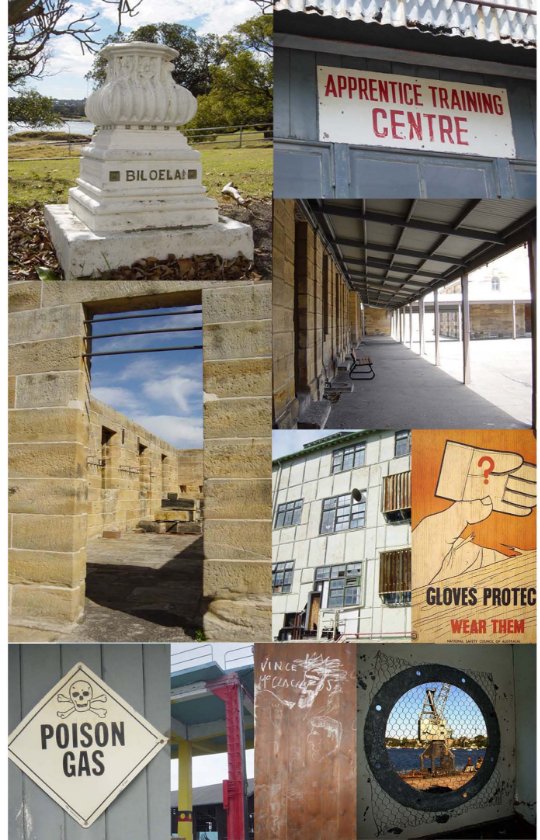

The various themes of the vision are set out below:
| Cockatoo Island provides a sense of wonder by being an island that has a grand scale as well as intricacy and complexity. The island is in a commanding position in a broad basin at the meeting of three waterways where it enjoys vistas over the surrounding waters, islands and peninsulas. This relationship to the surrounding waters will be appreciated through the journey by water, the sense of arrival, and the selection of new uses and activities on the island. As an island, there will need to be a degree of self-sufficiency, by providing accommodation and basic services such as food outlets to cater for Cockatoo’s visitor, worker and resident population. |
| Water Access |
| A Public Place The past isolation of the island owes as much to its former uses as to its geography. This new phase of the island’s history will be marked by openness and a sense of ownership by the people. The island will be woven back into the fabric of the city and become integrated into the cultural and commercial life of Sydney. Cockatoo Island will become an important part of a network of public foreshore spaces stretching along the harbour and its tributaries. |
| An Historic Place Cockatoo Island tells an important story about our island nation’s historical development from a penal settlement to a maritime industrial nation, interspersed with occasional reminders of the harbourside’s original landform and vegetation. The convicts provided the initial labour, laying the foundations of Cockatoo’s maritime and dockyard history. In addition to its convict past, the island has also been home to a number of institutions. The whole island became the Commonwealth Dockyard in the early 20th Century. While all the phases of the island’s history will be respected, certain sites will focus on the particular phase that is most pertinent at that location, such as the convict story that relates to the Military Guard house ruins and compound. Interpretive material and vantage points will provide people with a better understanding of the island’s heritage values. |
| Existing CharacterThe island has an austere, robust, gritty character reflecting its past uses. Its historic phases of development, each important in their own right, provide a complex, interwoven web that grew in a seemingly haphazard way in response to changing needs. The intricate succession of spaces and the distinct character of Cockatoo’s various precincts add to the sense of revelation and surprise when wandering about the island. The island’s robust working character and its patina of age should be maintained. New uses and activities will be located in existing buildings wherever possible. New buildings will be constructed if necessary and designed to be sympathetic to the island’s values and character as well as views to and from the water. A Living, Working Island |
| |
Historically, the island has been populated by people associated with its working uses. In keeping with this, a small number of people will live on the island on a permanent basis, and short-stay accommodation will be available for the island’s visitors and workers. The re-occupation of the island will help its revival by providing diversity and round-the-clock life. |
| A Sustainable IslandEnvironmental best practice will be used to remediate contaminated areas of the island and to achieve environmentally sustainable forms of water, energy and waste management. Most people will arrive by public transport and will primarily get about the island by foot or bicycle. |
The outcomes are summarised in Figures 26, 28, 31, 34 and 36.
This plan aims to retain the island’s diversity, which is derived from its incremental development over a long period of time. In accordance with the conservation policies, the emphasis is on retaining and adapting existing buildings; however some buildings or parts of buildings may be demolished and new buildings and structures may be required to fulfill the primary objectives for the island. The scale, form, materials, finishes and interface with the public domain of new buildings must be sympathetic to the heritage values of the island and its buildings and fixtures, as well as assisting with the interpretation of heritage buildings or fixtures that have previously been removed. In the maritime precinct the areas identified as suitable for possible new structures tend to be located within predominantly industrial areas of the island. This industrial scale and form will need to be retained in the design of any purpose-built structures. The robustness and continual changes in use over the history of the island will need to be portrayed in the design of new buildings.
Potential design outcomes for the whole island are illustrated at Figure 26.

Design of the Public Domain
Public access will be through the sequence of spaces already provided by the pattern of existing development on the island- see Figure 27. They already present the ingredients for a memorable and distinctive public domain. Modifications of, or additions to the public domain need to reflect and respond to the established character and palette of materials of the island, its spaces and buildings.
Within these spaces, paths will be given definition only where necessary, to define areas where access is limited due to operational and safety requirements, or areas used for events and outdoor dining or other activities. The definition of the pathways within spaces should not detract from the scale and overall form and character of the spaces themselves.
New pathways will recognise new opportunities to experience the island, such as a cliff-top walk that will reveal the granaries and connect a number of vantage points overlooking the operational areas of the southern apron, the docks, the major public spaces of the eastern apron, and across the water to the city. Access will also be provided to the vantage points at corners of the island.
Disabled access is to be provided to connect the key vantage points and the island’s significant public spaces.
The most significant public places, shown in Figure 27, include the large-scaled open spaces such as the Eastern Apron plaza, the Northern Apron; the space between the two dry docks; the hillside overlooking the Northern Apron; and the smaller defined spaces such as the convict compound courtyards and the street-like spaces between the workshops. Each space provides a unique view or experience within the island, and offers locations for a diverse range of activities and functions.
The design of these public spaces will enhance visitors’ understanding and appreciation of the place and the evolution of the occupation of the island. Shade and shelter will need to be incorporated in the design in a sympathetic manner. Vehicular access through these spaces will be limited and the routes identified. Slipway 2 on the Northern Apron will provide vehicular access primarily to the northern side of the island and the plateau. The slipway between the Camber Wharf and Buildings 92 & 93 will provide vehicular access primarily to the southern side of the island.
The sense of arrival by water will be enhanced by the design of entries, providing orientation, gathering areas and visitor facilities.
The lighting of the island is important to create a night-time landmark and also to provide spaces that are safe and inviting to use during the evening.

 Maritime Industry
Maritime uses are preferred for the Southern Apron because it has a diverse range of workshop buildings, sheds, hardstand, wharves and slipways that would suit the smaller scale industry that is now likely to be viable. The relatively lower heritage values of the buildings generally on the southern apron provide more flexibility for their adaptation to suit contemporary technology and work practices. The area is also more readily separated from the rest of the island by the two dry docks. This may enable OH&S requirements to be met more easily. The area can still be viewed by the public from a safe distance, and overlooked from the southern edge of the plateau. Specific policies to inform these outcomes include Policies 38-44.
The outcomes for the southern apron are summarised in Figure 28. Figure 29 shows drawings and photographs of potential activities in this area.
Island Access
Access will be provided through the reinstatement of the Camber Wharf and pontoon on the eastern end of Timber Bay. The wharf pontoon will be suitable for access by ferries. A series of smaller pontoons could be located within the Camber Wharf to accommodate smaller private vessels used, for example, to transport workers to and from the island.
To allow for the delivery of goods and services to the island, it is proposed that the existing ramp be repaired to provide a roll-on/roll-off facility. This will primarily service the southern side of the island. The ramp is located between Timber Bay and Building 92/93. It will accommodate barges similar to those currently operating on Sydney Harbour allowing truck access across water. The area around the ramp will allow the manoeuvring of trucks and possibly the short term storage of materials.
In the medium to long term, the eastern corner of the apron provides a possible location for a new wharf for short stay visitor boats.
The revitalisation of the Southern Apron in this way would facilitate the re-occupation of the island by helping to provide both a means of access and a critical mass.
The revitalisation of the Southern Apron may either take the form of one major operator or a collection of complementary uses as separate tenancies. In either case, general island worker access to and from the island via the Camber Wharf and the adjacent roll on roll off ramp will need to be maintained.
Public Access
Access between the Southern Apron and the Plateau will be provided through the repair and reinstatement of the stairway between the heads of the two docks and the lift between the tunnel and the external stairway landings of Building 10.


Public access will be provided on the apron where requirements for occupational health and safety can be fulfilled. At a minimum, public access is required along the northern side of the docks and the northern side of the plaza between the two docks. Subject to operational requirements, public access along the southern edge of the docks and the rest of the plaza is desirable. At the very least, occasional public access should be provided through guided tours of operational areas- especially to significant heritage buildings such as the Shipwrights’ Shed (Building 81). Tenants will be encouraged to open up their businesses for public viewing where possible.
Infrastructure Improvements
The development of the necessary infrastructure and provision of specialised equipment and services will depend on the needs of operators and the achievement of the ‘critical mass’ of activities to support the provision of these services. Apron surfaces will require repair and resurfacing to allow for the required structural loadings and appropriate management of environmental impacts. (Refer to Policy 41).
Repairs will be undertaken to the Sutherland Wharf to make it suitable for the berthing of large vessels or as a loading/unloading facility of goods. Some structures including the Timber Wharf, Patrol Boat Wharf and Jetty will require minor repairs, whereas the slipways will require significant repair works if they are to be reused.
Public amenities, primarily serving island tenants, will be provided close to the main apron entry. Building 83 is the most likely location as it has the necessary services.
Dry Docks
The Sutherland and Fitzroy Docks are important heritage items, therefore their conservation and interpretation are high priority (Refer to Policy 46). The GML CMP recommends that the possible reuse of one of these docks as a dry dock will be investigated. This will depend on the demand for the use of dry docks, the modifications that may be required to facilitate reuse, and the overall cost. The Sutherland Dock may be preferable to recommission due to its design features, the simpler operation of its caisson, its age and size. If the docks are emptied, environmental controls will need to be put in place to ensure the dewatering process does not adversely impact on the water quality of the Harbour.
The use of one or both of the dry docks to display historic ships or a submarine will also be explored as it provides an additional attraction relevant to the heritage and maritime significance of Cockatoo Island and enables the docks to be fully seen and appreciated. A water-free dock may also attract other imaginative uses.
In their flooded state the docks provide the potential for a landing area for boats going into dry storage on the island or to be put on hardstand areas for repair or display purposes. There is also potential for the berthing of visiting ships.
Powerhouse
Building Additions and New Buildings
The buildings in this precinct form a relatively cohesive group of industrial buildings ranging from the 1909 Timber Shipwrights’ shed to the double brick Weapons Workshop built in the late 1960s. The heritage significance of these buildings and structures varies, with the Shipwrights’ shed and the Sutherland Wharf considered having high significance and the other buildings having a much lower significance. The collection of buildings, however are valuable for interpreting the shipbuilding history of the island. It is proposed that the Shipwrights Shed will be restored along with its associated waterfront infrastructure. The buildings have been continually used for maritime related uses and have been altered several times in their lifetime to accommodate changing requirements. Their revival may require a number of changes to comply with current work practices and safety standards as well as changes in technology. The buildings of lesser heritage significance could be re-modelled or re-built over time to suit emerging uses.
Some activities may require purpose built structures. The inadequacy of existing buildings and the requirement for a new structure will need to be demonstrated. New buildings are expected to be infill rather than demolition and replacement of the whole grouping. Any new building or additions to existing buildings are to:
- Be consistent with the generally low scale of buildings on the south western side of the apron and within a maximum height of RL12.5;
- Retain the spatial relationship of buildings to the water’s edge, the slipways, wharves and the Sutherland Dock by staying within the prescribed building envelope;
- Retain the overall character of the grouping of freestanding buildings;
- Fit sympathetically with the silhouette of buildings and their individual roof forms against the sandstone cliff face – particularly as viewed from the south
- Utilise utilitarian building forms, details, materials of buildings (pale brick, corrugated roofing iron) and building signs;
- Be in keeping with the existing materials and structures of the southern apron;
- Retain occasional spaces between buildings and the scattered glimpses between buildings; and
- Provide sufficient apron space adjacent to Sutherland wharf and the Sutherland Dock for truck and crane movements as well as storage.
The robust, concrete framed buildings on the south eastern corner (Buildings 92/93) enable the interior layout and exterior treatment to be modified extensively, if need be. Figure 30 - Possible New Building Envelopes indicates the maximum extent of any building extensions or new building, to retain adequate waterfront apron space along the Fitzroy Dock and along the Camber Wharf. The maximum height of additions or a new building is RL 21 to retain the visual prominence of the Workshops and the cliff line to the north of this site.

 This precinct includes three distinct areas – the Parramatta Wharf entry at the northern end of the apron; the Plaza in front of the cliff face; and the Workshops on the southern side of the apron.
The Eastern Apron will continue to provide the main public access to the island and be home to a range of activities that enhance the sense of arrival and wonder due to the large scale of its workshops and spaces. Specific Policies to inform these outcomes include 47-52.
The outcomes for the Eastern apron are summarised in Figure 31. Figure 32 shows drawings and photographs of potential activities in this area.
Arrival to the Island
The Plaza- created by the demolition of workshops prior to the formation of the Trust, will continue as a multi-purpose space for a broad range of uses, such as events, cultural activities, market stalls, and the display of boats (Refer to Policy 48).
The area requires improvements to cater for safe, unrestricted public access. This work will include improvements in the drainage and treatment of stormwater, and the treatment of uneven surfaces and trip hazards. These treatments will be used to facilitate interpretation of past structures, buildings and uses; the main service spine that extended along the entire length of the apron; and former shorelines. Shade will be provided in a manner that is in keeping with the robust, industrial character of the island and the precinct. In-ground planting is precluded by the requirement to retain the integrity of paving and to avoid disturbing contaminants.
A building on the plaza may be considered if it is for a significant cultural, civic or maritime purpose. The building’s siting, scale and form would have to respond sympathetically to its dramatic setting, and would have to retain the continuity of access along the foreshore. A new building is not envisaged in the near future (Refer to Policy 42).
Workshops
The grouping of workshop buildings on the southern side of the eastern apron, (Buildings 119, 120, 123 & 124) form a fine urban street and an edge to the foreshore along the Bolt Wharf. These frontages lend themselves to uses that provide some activity of interest to the passing public. This may include venues for cultural events, places for functions and ceremonies, exhibition space, refreshments, cafes/ restaurants, as well as maritime or other workshop/studios or retail such as ship chandlers, navigational supplies etc. (Refer to Policies 49-50).
The distinctive characteristics of the buildings must be retained in their adaptive re-use including significant internal and external fixtures and orientation to the street.
The Turbine Shop (Building 150) and the Heavy Machine Shops (Buildings 139 and 140) suit large scale performances, events, exhibitions and functions. Other uses that respond to the dramatic volume and character of the spaces will also be considered. The Heavy Machine Shop, which houses most of the remaining large machinery, lends itself to providing a public gallery, explaining the workings of the workshops and the


 machinery and providing a link from the Eastern Apron to the central plaza between the ends of the two dry docks on the Southern Apron.
The smaller adjoining Machine Shops, to the south may provide uses complementary to the cultural or event related uses, or for maritime industry – such as boat storage, display or repair, possibly in association with the Fitzroy Dock.
The Engineers’ and Blacksmiths’ Shop (Buildings 138, 137 & 143), with the Fitzroy Dock, was at the genesis of the maritime industrial precinct. These workshops were successively modified and added to. Some of these additions may be peeled back to enable the workshops of the Convict era to be given a clearer expression. The buildings may also be modified in a number of ways to clarify the distinct stages of the development of the island. Separation may be provided between the Convict workshop and the large halls to the rear by removing parts of the roof where waterproofing is difficult to maintain. This would create a courtyard in association with a public accessway linking the Eastern Apron plaza with the Fitzroy Dock (Refer to Policies 49-50).
Due to the varying levels of significance of the incremental changes and additions to the buildings, any proposed changes would require detailed heritage investigation and assessment and possible referral under EPBC Act.
Building 118, a large shed along the foreshore, may be removed in order to improve the presentation and visibility of the Convict Workshop from the harbour and views to the harbour from the workshops and the street.
A new building may be constructed on the south eastern corner of the apron. This site has the potential to define a formal public space, adjacent to the workshops, and open to the harbour on the east. Any new building should reflect the character of the adjacent buildings and designed in accordance with Policy 52.
Figure 33-Possible New Building Envelopes indicates the maximum extent of building to retain adequate waterfront apron space along the Bolt Wharf and former Destroyer Wharf, and which extends the street alignment given definition by the workshop buildings and the convict workshop. The alignment to the north maintains views to the city through the lane along the southern edge of the convict workshop. The maximum height of a new building is RL 21 to retain the visual prominence of the Workshops and the cliff line to the north-west of this site.
The ground floor of a new building should provide some activities (such as café / restaurant or retail) along the frontages to the main space, the waterfront edges and the street.
Northern Apron
 The Northern Apron is now a large open space with remnants of its previous industrial uses. Initial covering of contaminated areas and hazards with clean fill was carried out prior to the Cockatoo Island Festival. The precinct will be retained and further enhanced as open space while the slipways and hardstand areas at the western end of the apron will provide access for deliveries of goods to and from the Island and potential for maritime uses. Specific Policies to inform these outcomes include 53-57.
The outcomes for the Northern Apron are summarised in Figure 34. Figure 35 shows drawings and photographs of potential activities in this area.
Parkland
The Northern Apron is one of the areas of the island that can be readily opened up to general public access. The main priority is to provide additional, minor improvements for safety, to enable the area to be used for passive recreation. A camping area will also be considered for part of the apron. Some of the existing sheds and small utility buildings will be converted to amenities and shade shelters. The service vehicular access and associated hardstand near the slipways will need to be retained and differentiated in their design treatment from the rest of the park. (Refer to Policy 53).
Over time, the design treatment will be further enhanced to provide additional shade and shelter, and to accommodate on-site wastewater treatment including the possible use of reed beds. These improvements will be used to convey the dramatic changes and uses such as the original shoreline, the ship building process, the steel sheets of the plate yard, demolished workshops, rails, cuttings, and cranes.
The sense of openness of the parkland will be retained. The capping of contaminants constrains the type of planting that can be used. The design of both the Northern Apron at Cockatoo Island and the Horse Paddock at Woolwich will be similar in character, and provide opportunities for sculptural or festive installations to flank the harbour as it narrows from a broad bay to the Parramatta River. The open space will also permit its use as an emergency landing place for helicopters.
The parkland needs to be considered in its totality, extending up the hillside to the plateau. Access in addition to the Burma Road will be provided between the apron and the plateau. Some of the existing stairs may be readily modified to provide adequate, safe access. New stairs may be provided with occasional resting places along the way. The existing character of the hillside as a reminder of the original landform of Cockatoo Island will be retained and further enhanced. It may also provide an opportunity for interpretation of the Aboriginal heritage of the island, subject to availability of any additional information. Small kiosk or refreshment structures associated with shady seating areas may be provided on the paved terraces at the bottom of the cliff face.
Interpretation will be provided to help explain the former uses of this area in the shipbuilding process in accordance with policies 54,55 and 56.


Hardstand Area
The western end of the apron has two large slipways and a wharf. The No. 2 Slipway, the smaller of the two will be upgraded as a roll-on roll-off ramp to allow barge access to this side of the Island. The scale of the ships built and launched from the No. 1 Slipway will be interpreted possibly through a large sculpture or some other landscape treatment. Its rise above the general ground level of the apron will be retained as a landscape feature and possible informal outdoor “amphitheatre”. A hardstand area between Slipway No.1 and 2 will be consolidated to cater for service access requirements, which include truck manœuvring area and temporary storage. Boat building and repair activity may also be accommodated on the hardstand and adjacent grassed areas which may generate a requirement for storage or small office facilities. These may be able to be accommodated in portable shipping containers or small scale, temporary buildings. The hardstand areas and grassed areas used for maritime activity will be designed to collect and treat surface water run-off. (Refer to Policy 54).
The wharf will be repaired to enable barge access. The possibility of additional wharves and pontoons, creating a sheltered basin and mooring places for small boats will be investigated.
New Services Infrastructure
Previously the power and sewerage infrastructure were located in the western corner of this apron, and the area is still considered to be a suitable area to accommodate new infrastructure requirements to support the future use of the Island. (Refer to Policy 56).
Cockatoo Island provides the Trust with a unique opportunity to investigate the use of ecologically sustainable technologies for power, water, stormwater and sewerage systems. This may require the development of low-scale purpose-built buildings in this location, within a park setting, and open to public visitation and information.
A new building in this location is to be no greater than one storey and a maximum height to RL 12.5, to retain the prominence of the backdrop of vegetation and the terraced gardens to the south of the slipways. Any building is to conform to the footprint shown in the outcomes drawing to retain sufficient space for public access between it, the slipways, rails and cranes.
Additional low scale, open shade and shelter structures may be considered as part of the public domain outside of the area designated for new building.
 A network of public places
The primary access to the Plateau will be via the Burma Road. Additional access stairs will also be provided and the existing lift will be repaired.
The outcomes for the Plateau are summarised in Figure 36. Specific Policies to inform these outcomes include Policies 29-37 and 57.
The Plateau provides a collection of distinctly different spaces and buildings, from the courtyards of the internalised Gaol compound, to the rows of large, industrial workshops, culminating in a cluster of dwellings and their gardens on the eastern end of the plateau. This sequence will become a part of the network of public places and pathways. They will be linked by a circuit walk that will highlight the different character of each area, interspersed with a variety of vantage points along the edge of the plateau overlooking different areas of the island aprons and the harbour. Vehicular access to the plateau will be restricted to service and delivery vehicles only.
Significant cultural plantings will be retained on the Plateau, in particular the figs, which will be protected as animal foraging habitat.
Convict Gaol
The restoration and conservation of the group of convict-built sandstone buildings (Buildings 1, 3, 4, 5, 9, 11, 20, 22 and 22A) forming the gaol is a high priority. (Refer to Policies 34 and 36).
The history and significance of these buildings and spaces will be interpreted and will be a major focus of its future use and management. Uses could include classrooms, space for functions and events, museums or exhibition/display spaces for interpretive material. Retention of the later additions to these buildings such as the verandas and WW II additions will be considered in terms of their level of intrusiveness versus their interpretive value, amenity and benefit, if any, in providing protection of fragile heritage fabric.
There are two houses remaining that are closely associated with the compound. The Military Officers’ Quarters (Building 2), along the northern boundary of the gaol compound, will be used in close association with the compound – to facilitate public visitation and interpretation of the gaol, or even as a dwelling to provide for a live in caretaker. The Overseers’ Quarters (Building 9), is located at the top of the Burma Road and adjacent to a grassed open area with views over the Northern Apron and the harbour. This area is well suited to become a part of the public parkland and an occasional performance or event venue. The building could provide café/restaurant facilities, or public amenities and information for the public as part of the early stages of the opening up of parts of the island to unrestricted public access.
Investigations into any archaeological evidence of former buildings and gardens will be undertaken as part of the interpretation of the previous use of the site. In particular an
 archaeological investigation of the western corner of the Prisoners’ Barracks (Building 5) will be undertaken where the store and solitary cells are believed to have existed. If found it will be revealed and interpreted. Around the former Military Officers’ Quarters (Building 2) the gardens and former terraced gardens will be reinstated along the northern embankment. The enclosed courtyard surface and central well will be investigated. The grassed courtyard to the west of Building 3 will be retained as an open courtyard space. (Refer to Policy 37).
The main circuit walk on the plateau will link the various features of the site that are associated with the Convict era, to enable visitors to appreciate that the whole island was once part of a gaol and labour camp complex – it was not just the most obviously visible remains such as the gaol compound and the sandstone workshop building. The walk will feature interpretive material that shows how each part of the island plateau was used and how it evolved. The circuit will include the:
- Gaol compound;
- Interpretive material about the lumber yard and quarry along the northern side of the workshop buildings and views into convict archaeological remains;
- Cliff top walk to the east of the houses providing a view over the harbour and the eastern apron, with interpretive material showing the extent and use of that area;
- The granaries excavated by Convicts on the south east corner of the plateau including the possibility of a deck that enables viewing into the cut granary silos in the cliff face;
- Water cistern along the southern edge of the plateau and;
- Viewing areas over the convict built Fitzroy Dock.
The elements of the Plateau walkway are shown in Figure 37. (Refer to Policies 33-37).


Figure 38: Possible Convict Trail on Plateau.
The Plateau Workshops
The central area of the plateau is characterised by a group of large industrial buildings including the Mould Loft (Building 6), Drawing Office (Building 10), the Joiners’ Shop (Building 12), Polishing Shop (Building 13) and Electrical Shop (Building 15). They are all 2-3 storey timber and steel framed sheds mostly clad with corrugated iron. The Timber Store (Building 19) is a timber building of two storeys clad with slatted timber and corrugated iron.
Although these buildings were built on the site of a number of former buildings and spaces, including the convict exercise yard, lumber yard, quarry and water tanks, the removal of individual buildings for interpretation purposes is not recommended. Given the level of significance of the workshop buildings in the context of the Island’s dockyard history, these buildings will be restored and adaptively re-used. Refer to Policy 57).
Any alterations and additions to the existing workshop buildings must maintain the character of the industrial nature of the buildings and retain the buildings’ relationship to the open spaces, particularly the alley ways between buildings and the open spaces and courtyards at their ends. The fit out and adaptation of the buildings must retain significant structures and fixtures – internal and external. The brick and breeze-block shelter and amenity block along the northern edge of the Drawing Office may be modified to improve access and provide a sense of entry between the courtyard and building via the graceful stairwell. The prominent silhouette created by the gable end roof forms and the water towers is to be retained.
The spaces in these buildings are varied. Some are open and with relatively exposed sides, some are partitioned into smaller “offices”. The buildings may be suitable for a wide range of uses including artist or design studios, offices, demonstrations, performance spaces, training or educational facilities or exhibitions or even dormitory style accommodation. Interpretation of their Dockyard uses will be an important ingredient in any new fitout. This is particularly important for the Mould Loft (building 6) with its tangible history of shipbuilding on Cockatoo. (Refer to Policy 57).
Archaeological investigations have been carried out around the perimeter and beneath parts of the workshop buildings, in particular the open spaces to the north of the buildings. The purpose is to improve our knowledge and assist with the interpretation of the previous uses of this area, in particular the convict era. Interpretation of the original water tanks cut into the rock, (which have since been covered by Buildings 15 and 17), will be a priority on the southern side of this area. (Refer to Policy 57).
The use of the existing water infrastructure (two water towers) for potential water collection, re-use and recycling will be investigated. The high water tower is along the main north-south axis of the Convict trail on the island plateau. The interior of the ground level of the tower may therefore provide a suitable display area conveying the evolution of the plateau from the convict era. The potential for a viewing platform and some other public oriented use at the top of the water tower will also be investigated.
Mobile telecommunications infrastructure will only be considered if it can be demonstrated to be compatible with these public uses and if the new infrastructure is designed to be: of minimal visual impact on the simple silhouette, form and finish of the water tower and sympathetic with the island’s heritage values.
The Houses
The five houses located along the eastern portion of the plateau will be repaired and adaptively re-used. The most suitable future use in terms of their heritage value, layout and character and the desired mix of activities for the island, is as dwellings for short- term accommodation or small office/studios. (Refer to Policies 34-36).
The gardens and fences of the houses will be repaired both to reflect the previous subdivision pattern and to retain and enhance significant cultural plantings. A sequence of garden spaces and plantings will be re-established along the north of the plateau. The vegetable gardens previously located to the north of Building 24 will be interpreted through either reinstatement or other landscape treatments. Gates will be provided to allow access through and between the gardens. Areas along the eastern edge will become part of the public parkland, particularly the tennis court, providing potential for small events and gatherings. Occasional public access with tours or open days will be required to a representative example of the houses, and in particular, to Biloela.
Unrestricted public access will be provided to the cliff top walk via the wide Common that extends between the private gardens from the area near the water tower to the cliff edge.
The area between the cliff edge and the gardens adjacent to the cliff top walk will be revegetated in a manner that helps to stabilise the embankments, and help to convey the original landscape of the island.
The provision of public access is a fundamental objective of the Trust. This commitment entails a responsibility to create an environment that is accessible to all members of the community, including children, the elderly, and people with disabilities. This will be fulfilled as far as possible on Cockatoo Island. A consideration of accessibility issues will encompass transport to the island, navigation between the different precincts as well as access to individual buildings and spaces. (Refer to Policies 20-21).
As the uses for different buildings and precincts become clearer, detailed access audits will be carried out to identify barriers to access for people with a wide range of disabilities. Once identified, the Trust will employ different access solutions depending on the purpose of the building and its anticipated uses. The impact of each option upon the fabric of the buildings and heritage significance of the place will be considered and assessed before a final solution is selected.
Solutions chosen will be simple and wherever possible not result in major modifications to existing buildings and structures. Any modifications will be reversible and minimise damage to original materials.
New areas, such as the park on the Northern Apron, will be designed and planned to reflect the diversity and needs of the community. These provisions will benefit not only people using mobility aids such as wheelchairs but also aged visitors, children, and people with strollers. Facilities such as accessible toilets, water fountains and information posts will be clustered together. Shade and seating will be generously provided around the island so that people can rest and experience the landscape at their leisure.
Information about the accessibility of the island will be available prior to people reaching the island so they know what facilities and levels of access to expect. Once on the island, interpretative and directional signage will be provided to guide visitors, both around the precincts and within buildings and spaces. Trust signage complies with standards in relation to visibility, size of lettering and sign height.
Where appropriate, the Trust will consider producing specific interpretation for people with special needs and for people from non-English speaking backgrounds. The Trust will also actively respond to visitor surveys that may identify the special needs of specific groups.
While the aim at Cockatoo Island is to provide independent access wherever possible, in some cases the topography or the design of buildings will mean this is not able to be achieved. Buildings or areas of heritage significance or those that present too many obstacles to access may be able to be appreciated without entering the space. In other instances interpretative solutions such as models or diagrams could be used to interpret spaces that are inaccessible to the public.
Noise emissions must comply with the relevant NSW Environment Protection Authority standards and the guidelines contained in the Land Use Planning Noise Survey prepared for the Trust by Dick Benbow & Associates Pty. Ltd. Certain activities, as identified in this survey, will require further noise assessment and management. Management techniques could include a range of options such as time restrictions, application of engineered controls or the preparation of a Noise Management Plan for specific events.
The principles of Water Sensitive Urban Design (WSUD) are to be incorporated into the redevelopment of the maritime precinct in order to achieve water quality, water conservation and ecological objectives. Effective integration of these objectives will require the application of concepts on an island wide basis. The key concepts to be applied are:
- Source controls – removal or mitigation of the pollutant source, and on-site rainwater use;
- Conveyance controls – applied during the conveyance of stormwater to the harbour; and
- Discharge controls – applied at the point where water leaves the site or island.
The overriding policy for the Trust for the management of contamination is to ensure that public health and the environment are protected with the application of consistent and sound environmental management practices. The remediation and management strategy proposed for the island is based on this policy, the Trust’s ESD commitment and the outcomes and requirements of the contaminated land audit. (Refer to Policy 19).
Significant volumes of contaminated materials have been used as fill over the apron areas of the Island. Contamination of other areas of the island has also resulted from other ‘laydown’ mechanisms discussed earlier in this plan. Extensive environmental assessment over the past 15 years has shown that soils in all precincts across the Island are contaminated at levels that exceed one or more of the criteria that would be applicable to the proposed land use outcomes. Remaining contaminants in solid media (soils, sediments and wastes) are also a source of contamination to ground and surface waters, and may be providing an offsite environmental impact.
Capping Strategy for Filled Areas
The Trust considers that a capping strategy, supplemented by the excavation and offsite disposal of high level or gross contamination, is appropriate for the filled apron areas for the following reasons:
- The heterogeneous nature of these materials means that it is not technically feasible to ‘treat’ these materials;
- Large areas are already capped with concrete slabs such that the exposure to underlying soils is prevented;
- The cost of removal of large volumes of materials to landfill, and replacement with clean soils would be prohibitive, and of limited benefit on ESD grounds;
- The lands will remain in public ownership and an appropriate level of ongoing management may be applied; and
- The lower cost of this strategy will allow remediation works to be undertaken at a greater rate, thereby allowing sooner and greater access to the island for the public and future users.
Capping may be achieved through the repair of existing pavements to form a continuous barrier and/ or installing new concrete or asphalt pavements of high integrity. Various capping systems would be appropriate depending on land use and environmental objectives. Those that may have utility on the island include:
- Asphalt and concrete - most suited to areas where a hardstand surface was required and/ or where it was appropriate to minimise water infiltration.
- Soil/ landscaped separation layer – most suited to parkland / open space areas. This type of treatment has been implemented on the Eastern Apron.
- Low permeability landscaped barrier (which may be appropriate for the Northern Apron).
However, before capping, further requirements for implementation include:
- Building decontamination and hazardous materials removal works are to be carried out prior to the commencement of any soil remediation works in an area. This will include removal and disposal of any remaining dangerous goods or materials. Following building decontamination programs in each area, any remaining hazardous materials, such as asbestos cement sheet in good condition are to be managed in accordance with the hazardous materials register and management plan being prepared for the island.
- Areas of high level or gross contamination or sources which may present potential unacceptable health risk or an ongoing source of contamination or off-site impact are to be appropriately investigated and where required remediated, preferably by treatment and/or removal and disposal from the island. Gross contamination may include:
- Any remaining asbestos materials in surface soils;
- Concentrated washes in surface soils, such as grit blast wastes or where there is gross hydrocarbon (oil spill) contamination;
- Contaminated wastes in the form of sediment, sludges or liquid wastes associated with septic systems, tanks or pits of the former stormwater or sewerage systems;
- Any remaining solid or liquid wastes associated with former machine pits;
- Potentially contaminated soils in the vicinity of the former substations, ASTs, coal bunkers, workshops, stores and remediation of gross contamination associated with these facilities.
3. Demolition and remediation of any remaining underground tanks used for storing petroleum products. However, all known underground tanks have been removed and associated contaminated soils remediated.
4. Capping systems for Cockatoo Island are to be designed in accordance with ANZECC (September 1999), ‘Guidelines for the Assessment of On-site Containment of Contaminated Soil’, taking into account land use considerations and the nature of the fill. Capping systems are to be designed to properly mitigate any adverse impacts arising from malodorous soils or volatile soil gas that may arise from the underlying contaminated soils.
5. Ongoing management requirements of retained contamination will need to be documented and implemented in accordance with an Environmental Management Plan (EMP), and implemented by the Trust. The EMP will address management and monitoring of retained contamination, as well as potential environmental impact of projects, leasing or use. The EMP shall also address the ongoing monitoring of groundwater quality on the island.
6. Remediation to be conducted on a precinct-by-precinct basis, with land use restrictions remaining in place until buildings and land have been remediated and certified for the intended land use.
7. Review of the remediation process by an accredited independent auditor engaged by the Trust.
Surface and Groundwater
The Trust will continue the environmental monitoring program it has established for surface and groundwater on the island. The purpose of this program is to establish an up to date baseline and monitor trends in waters as the remediation and management actions are implemented. It is envisaged that implementation of the above strategy, including removal of potential mobile sources of contamination and appropriate capping design, will contribute to a gradual improvement in surface and groundwater contamination in the long term.
Near Shore Sediments
No active remediation of contaminated sediments surrounding the island has been
recommended or proposed at this stage. However, the Trust will undertake required
further assessment of sediments in consultation with the NSW Maritime Authority to
confirm management requirements in accordance with NSW DEC and auditor
requirements. Regardless of further assessment, remediation and management
of the island will be implemented to prevent any further contamination of sediments.
Important considerations are:
- Remediation of former stormwater and sewer system wastes as described above;
- Implementation of appropriate dust, sediment and erosion controls during remediation and civil work; and
- Pollution controls systems and requirements for managing potential discharges from future site activities, such as boat maintenance and cleaning.
Management will also include implementing controls such as siltation curtains to prevent the spread of contaminated sediment when the Sutherland Dock caisson is moved. Should either of the dry docks be recommissioned, residual sediments within the docks will require removal, dewatering and disposal.
Specific works for each precinct will be documented in Remediation Action Plans (RAPs). The RAPs will detail further remedial works necessary for each area to achieve the following objectives:
- Protection of human health;
- Minimisation of ongoing active management of remaining contamination;
- Cost effectiveness; and
- Protection of heritage, cultural and natural values.
An outline of requirements for each area is provided as follows:
Plateau Area
The plateau area requires separate consideration, due to the lesser extent of fill materials and the presence of existing landscaped /grassed areas and heritage structures. Gross wastes, such as general waste debris, waste piles and asbestos-containing materials were removed and disposed from the site in 2005. In the short term, non sealed areas of the site were stabilized with clean topsoil and grass or rolled VENM gravels, which is considered protective for short term visitation.
In the long term, remediation is required for soils in grassed or landscaped areas containing metals (mainly lead) and PAH contamination exceeding appropriate risk based criteria to be developed considering the proposed land uses (a combination of commercial, short term residential and public open space). An area specific RAP will be prepared. Where soils are required to be removed, this would be carried out to maximum 0.5m or bedrock and replacement with clean soil. Building slabs or pavements will be considered to provide suitable containment for contaminated soils in these areas.
Southern Apron
A hazardous materials removal and abatement program has been carried out for buildings located to the west of the patrol boat jetty, and is to be carried out for the remaining buildings and structures in this area. This should include removal and disposal of remaining chemicals and dangerous goods.
A hazardous materials removal and abatement program has been carried out for all buildings in this area. The existing capped area is to be maintained through any further works in accordance with the EMP.
A hazardous materials removal and abatement program is to be carried out for the
remaining buildings and structures in this area. These include the substation
structures, the former amenities building and pipe sealing shop, and cranes.
An assessment will be made of the former acid bath, and remediation of any gross contamination associated with this facility.
An assessment will be made of soils in the vicinity of the former substations, and remediation of soil contamination associated with these facilities.
Environmental Management Plan ( EMP)
A draft EMP has been prepared for Cockatoo Island. The objective of the EMP is to guide the Trust in the achievement of environmental best practice and avoidance of any environmental harm from activities associated with rehabilitation, development and use of the Island.
The EMP documents the ongoing environmental management requirements and the broad remedial strategies for the island to achieve and maintain the defined environmental and land use outcomes. The EMP also provides guidance for detailed design of works and will be the basis for environmental specifications.
However, the EMP will be expected to consider the potential impact of site activities on sediments surrounding the island and provide appropriate management controls. The Site Auditor has recommended that further studies be undertaken so that health and ecological risks of sediment contamination may be evaluated in accordance with the process outlined in the ANZECC (2000) Sediment Guidelines.
Built Environment
Aim: To provide flexible and resource-efficient accommodation to meet growing and evolving demand. This will be achieved by:
- Providing and designing for suitable buildings, either through adaptive
reuse, modification or additions, or by new construction;
- Selecting appropriate building materials; and
- Using appropriate construction methods.
Water
Aim: To reduce the use of water sourced off the island and to minimise pollution. This will be achieved by providing:
- Water storage capacity to cope with peak loads and wastewater
storage for post-event treatment;
- Flexible infrastructure to meet the changing needs of the Island;
- For the treatment of sewerage and stormwater, with treated water
being possibly used for underground irrigation or for firefighting;
- Different levels of water quality to match requirements: for e.g. potable water
for drinking, and treated water for other uses; and
- Efficient facilities that reduce water consumption.
Energy
Aim: To reduce energy use and utilise renewable energy where possible. This will be achieved by:
- Designing new buildings and retrofitting existing buildings (subject to
practical constraints and heritage considerations) to minimise energy
consumption; and
- Installing devices such as photovoltaic cells and solar panels for hot water.
Transport
Aim: To promote sustainable forms of transport to and on the island. This will be achieved by:
- Encouraging the majority of people to access the island by public transport; and
- Establishing a generally car-free island where people mostly get about by walking or cycling.
Materials and Waste
Aim: To reduce materials used and waste generated on the island. This will be achieved by:
- Recycling building materials; and
- Providing the Island with effective waste management.
One of the primary objectives of the Trust, in conserving the heritage of its lands and opening them up to public access, is to convey their rich natural and cultural heritage in a meaningful, relevant and engaging way to the public. (Refer to Policy 25).
The proposed use of the Island, its buildings and spaces, the creation and the design of parklands and the development of public open days, events, and publications will all be considered as part of an interpretation program to convey the totality of the significant values of Cockatoo Island, its context and setting. This will need to include the past uses of the island from its pre-European landscape- original shoreline and form- and Aboriginal heritage through to the various phases of its development and use. The interpretation program will need to appeal to the general public, the formal education sector and special interest groups. See Figure 39 - Interpretation Opportunities.
The Trust has prepared an interpretation strategy for Cockatoo Island which provides recommendations as to how the Trust can best communicate the natural, cultural, social and other values and significance of the lands to the public. The strategy aims to ensure that the interpretive and educational needs and expectations of visitors, key stakeholders and the Harbour Trust are met.
The strategy has six main functions:
- Define and articulate the interpretive vision, goals and objectives that will guide interpretation on Cockatoo Island;
- Identify an overarching interpretive theme and a set of sub-themes and key stories around which interpretive information will be organised and structured;
- Explore the interpretive needs and expectations of likely audiences and outline interpretive tools that will reach them;
- Provide guidelines for suggested interpretive methods and techniques that will engage and enrich visitor experiences;
- Recommend a strategic approach towards the spread of interpretation across the island; and
- Recommend a process for monitoring and evaluating interpretive activities.
The strategy recommends that the interpretation program should include, but not be restricted to, the following elements:
- Development of a visitors centre to provide a year round venue for community education programs and act as a porthole for visitors to the outdoor experience;
- Adaptive reuse of buildings to include maritime related training / education facilities;
- Thematic guided tours and self-guided walks for the general public;
- Structured education programs for the formal education sector including schools, universities and centres for continuing education; including resource material for students and teachers;
- School holiday programs;
- Extended study tours in partnership with other agencies; for example working with the Historic Houses Trust to interpret the Convict Gaols of Sydney, or with National Parks and Wildlife as landowner of other Sydney Harbour islands;
- Public signage and artefact displays that convey the site’s rich mixture of convict, social and maritime history and related stories;
- Soundscapes, lighting and audio-visual experiences;
- Cockatoo Island themed publications (such as The Story of Cockatoo), tourist information brochures, maps, and merchandise;
- Events, open days, art exhibitions and festivals;
- Website;
- Staff and tenant education programs; and
- Oral History programs.
The Interpretation Strategy will be continually developed by the Trust. (Refer to Policy 25).

As identified in the Trust’s Comprehensive Plan, the implementation of this Management Plan will take place over a number of years and the Trust has the discretion as to when and what work is carried out. Priorities for the implementation of the Management Plan have been determined in a manner consistent with Part 2 of the Trust’s Comprehensive Plan and in response to priorities identified in the relevant CMPs.
The following table summarises the outcomes to be achieved through the implementation of the Management Plan. The table identifies individual projects and prioritises their implementation. The Implementation Plan identifies the relevant policies to be used to guide the implementation of each project and to ensure works are carried out in a manner which is consistent with the National and Commonwealth heritage management principles.
Implementation Plan
Location | Outcome | Projects | Priority /Progress | Related Conservation Policies |
Whole Island | Improved Public Access | - Negotiate with ferry operators to secure regular passenger service
| High / Ongoing | 20, 21,23,41,47 |
| | - Landscape treatment and repair to pavements to allow safe public access
- New pavements to provide access to vantage points around the island and to ‘corners’ of the island.
| Medium / Ongoing Medium / Ongoing | 1-8,11-14,16,18-21, 25, 29-32, 37, 42-43,46-48, 52-56 1-8,11,13-16,19-21,23, 25-44, 46-48, 53-56 |
| | - Preparation and presentation of interpretive material and signage in public domain areas
| High/ Ongoing | 1-9,13-15,18,20,23,24,25-27, 33-36, 39, 40, 45-53, 55-57 |
| | - Provision of public access along foreshore
| High / Ongoing | 1-8,13-15,20,21,23,25-27,47,56 |
| | - Provision and / or upgrade of on site services for island and building uses
| High / Ongoing | 1-8,10,16-19,23,26-32,34,36-39,42- 44, 46-57 |
| | - Remediation of contaminated areas and hazardous materials in public areas in accordance with a Remediation Action Plan (reviewed by Auditor)
| High / Ongoing | 1-8,19,23,26,27,37,45 |
| | - Installation of interpretive sculptures that convey a sense of the Island’s industrial heritage
| Low / Ongoing | 1-8,13-15,19,23,25-27,38-57 |
| | - Manage natural environment to avoid adverse impacts on the island.
| High / Ongoing | 1-8,14,18,26,27 |
Eastern Apron | Parramatta Wharf Entry Improvements | - Upgrade wharf to allow assisted disabled access, provision of shelter, seating, lighting and transport information
| High / Ongoing | 1-8,19-23, 26,27,41,47 |
| | - Resurface pavements within entry precinct
| High / Ongoing | 1-8,11,14,16,19-21,23,25-27,38-42 |
| | - Provision of new disabled access ramp to Administration building
| Completed | 1-12,19,20,21,23,25-27,38-41 |
| | - Repair and maintenance of existing buildings including Administration Building, Muster Station and Timber Wharf shelter
| High /Ongoing | 1-12,19,27,47,53 |
| | - Provision of public toilet facilities.
| Completed | 1-9,12,20,23,25-27,37,47 |
Eastern Apron | Open landscaped area | - Landscape treatment to interpret previous uses
| Low /Ongoing | 1-8, 12-16,18-21,25-27,39,40,46-51 |
| | - Repair pavements for use of space for events, functions etc.
| High / Ongoing | 1-8,12-15,19,21,23,25-27,38-40,46-51 |
| | - Provision of boat berthing facilities
| Medium | 1-8,12,20,21,23,26, 27,38-41,47,51 |
| | - Repairs to Bolt Shop Wharf
- Possible reinstatement of Ruby Steps
| High Low | 1-8, 12,13,15,20,21,23,26, 27,37-40,48, 51 1-8,20,21,23,25-27,38-41 |
| | - Boardwalk to provide public access along shoreline
| Low | 1-8,20,21,23,25-27,38-41 |
| Workshop Area | - Develop public promenade space in the ‘street’ with maritime retail, cafes, restaurants or exhibition spaces
| High / Ongoing | 1-12,20,21,23,25-27,38-41,48-51 |
| | - Potential removal of building 118 to reveal views to the Convict workshop building
| Low | 1-8,12,19,23,25-27,40,48, 51 |
| | - Review retention or removal of Apprentice Training Centre over Building 138
| Medium | 1-8,11,12,23,25-27,29-35,38,39,40,49-51 |
| | - Investigate creation of spaces on western side of Building 138 to reveal form of the original buildings and improve roof drainage
| Medium / High | 1-8,11,12,23,25-27,29-35,38,39,40,49-51 |
Southern Apron | Improved access | - Provision of roll on / roll off ramp near Camber Wharf
- Reinstatement of Camber Wharf and pontoon
| Completed Completed Completed | 1-8,12,13,14,23,26,27,40, 41,43-44,46 1-8,12,13,14,23,26,27, 40,41,43-44,46 1-8,12,13,14,23,26,27, 40,41,43-44,46 |
| | - Corrosion repairs to Sutherland Wharf
- Possible new wharf on eastern corner
| Medium High / Medium Low | 1-8,12,13,14,23,26,27, 40,41,43-44,46 1-8,12,13,14,23,26,27, 40,41,43-44,46 1-8,12,13,14,23,26,27, 40,41,43-44,46 |
Southern Apron | Improved Access | - Establish route for vehicular access from slipways adjacent to Camber Wharf and slipways on the Northern Apron.
| Medium / Ongoing | 1-8,12-21,39,41-45,46-56 |
| | - Repair and reinstatement of stairway to plateau
| Medium | 1-8,12-21,23,26-33,35,37-40,44 |
| Improved Environmental Conditions | - Apron surfaces to be repaired and resurfaced to allow for appropriate management of environmental impacts
| High / Ongoing | 1-8,11-17,19-21,23,25-33,38,39,40,42,46 |
| Works to enable use/ leasing of buildings and services | - Modification and adaptive reuse of workshop buildings
| High | 1-8,12,18-20,23,25-27,38-40,42-44,46 |
| | - Provision of public toilets
| Medium | 1-8,12,20,21,23,26,27,38, 39,43,44,46 |
| | - Investigate possible reuse of Dock/s
| Medium | 1-14,18,19,23,25-33,38-40,42,43-44,46 |
| Improved interpretation of cultural heritage | - Repair, conserve and interpret the Powerhouse as a working artefact
| High | 1-14,18,19,20,23,25-27,38- 40,42-45 |
Northern Apron | Improved Access | - Upgrade Slipway No.2 to provide roll on roll off access
| Medium | 1-8,10,12-15,18,19,23,25-27,38-41,53-56 |
| | - Consolidate hardstand area between Slipway No. 1 and No. 2 to provide service access and cater for boat building activity
| Medium | 1-8,10,12-15,18,19,23,25-27,38-41,53-56 |
| | - Investigate repair of wharf to allow barge access
| Medium | 1-8,10,12-15,18,19,23,25-27,38-41,53-56 |
| | - Develop open area as passive public parkland
| High | 1-8,10,12-15,18,19,23,25-27,38-41,53-56 |
| Improved Environmental Conditions | - Investigate use of open space for waste waster recycling
| Medium | 1-9,12-14,16,19,23,25-27 |
| Improved interpretation of the cultural heritage | - Interpret the large scale of the ships built on No.1 slipway by installation of large sculpture or similar means.
| Low | 1-8,11-15,20,21,23,25-27, 39-41,53-56 |
Plateau | Improved Public Access | - Development of convict trail interpretive paths
| Medium Medium | 1-8,12-18,20,23,25-37 1-8,11-17,19,20,23,25-27,29-37,57 |
Plateau cont.. | Improved interpretation of the cultural heritage | - Preparation and presentation of interpretive material and signage in Convict Ruins (Building 1) and Courtyard
| High | 1-8,12-14,18-20,23,25-37 |
| | - Undertake Archaeological Research program
| High / Ongoing | 1-7,12-14,16-19,23,25-30,33,34,36,37,57 |
| Building uses, adaptive reuse and building removal | - Undertake conservation works to convict era buildings
| High | 1-8,11,12-17,19,23,29-34,36,37 |
| | - Repair and conserve building fabric of houses
| High | 1-8,11,12-17,19,23,29-34,36,37 |
| | - Repair and conserve building fabric of workshops
| High High | 1-8,11,12-17,19,23,29-33,36,37,57 1-8,12-20,23-37 |
The plan will be continually monitored to assess the effectiveness of the Plan in protecting and conserving the National and Commonwealth heritage values. This monitoring will utilise the following methods:
- The condition of the tangible and intangible heritage values will be monitored annually. The assessment will utilise the baseline condition determined by the recently completed CMPs during the first year of inception of the plan. The assessment will identify any conservation works undertaken, repairs and maintenance, deterioration over time or any significant damage or threat to heritage values.
- Intangible attributes of the values will also be monitored through assessment and evaluation of the Trust’s Interpretation Strategy and individual elements of that strategy.
- Records of all Action proposals, associated decisions and reasons for decisions will be kept for reporting purposes. This will enable the Trust to determine how the Management Plan is being used by staff, tenants and contractors in decision making and will monitor the effectiveness of the assessment process.
- The updating of the Trust’s Heritage Register will be an important part of the monitoring of the implementation of the Plan.
Review Process
A full review of the plan, in accordance with Section 341X and 324W of the EPBC Act, 1999, as amended, will commence five years after it has been adopted. The review may be undertaken internally or using external consultants depending on the resources available at the time. All subsidiary plans will also be reviewed on a five-yearly basis or as outlined in the policies.
This review will mainly be focused on possible amendments associated with:
- Any new research findings or information gained through community consultation;
- Emergence of previously unforeseen management issues that impact on the heritage values of the place;
- The result of the abovementioned monitoring programs, where they indicate that the policies contained in the plan do not achieve the stated management objectives; and
- Any new policies recommended for improved protection of heritage values.
The plan will remain in force until such time as a new plan is adopted.
Front Cover (from top to bottom)
Launch of Empress of Australia - Cockatoo Island 18 January 1964
Source: Courtesy of the Estate of the Late Captain R.G. Parker OBE, RAN (retd)
Southern Apron – Cockatoo Island
Source: Simon Kenny
Source: Simon Kenny
Figure 3
Cockatoo Island, Parramatta River c.1843
Source: Rex Nan Kivell Collection, National Library of Australia. NK11146/2 U1428.
Figure 6
Biloela (Cockatoo Island) by B. E 1889.
Source: Dixson Library, State Library of New South Wales. DL Pf101.
Figure 8
Section of Silo No. 5.
Source: Reproduced in J. S. Kerr Cockatoo Island: Penal and institutional remains, National Trust of Australia, Sydney, 1984.
Figure 9
1857 Plan of Cockatoo Island
Source: Mitchell Library, State Library of New South Wales. ML M3 811.15 Cockatoo/1857/1
Figure 10
View of labour yard showing stone quarry and stone dressed by prison labor, c.1890s.
Source: Department of Corrective Services.
Figure 11
Gardening, HMNS Vernon boys on Cockatoo Island. [1870-1879]
Source: State Library of New South Wales. GPO 1-05167
Figure 12
Recreation ground belonging to N.S.S. (Nautical School Ship) Sobraon. 1898.
Source: State Library of New South Wales. GPO 1 – 12599
Figure 13
Main Walk from Military Officers’ Quarters. Offices on left hand side c.1890s.
Source: Department of Corrective Services.
Figure 14
Interior of Sewing Room No.1. c.1890s.
Source: Department of Corrective Services.
Figure 15
Cockatoo Island: H M S Galatea in dock, 1870.
Source: State Library of NSW. GPO 1 - 05320
Figure 16
Machine Shop: Cockatoo Island. [c.1860-1880].
Source: State Library of New South Wales. GPO 1 - 24668
Figure 17
Machine Shop Cockatoo Dockyard, 27 February 1914.
Source: J.C. Jeremy Collection.
Figure 18
Cockatoo Docks War Record 1939-1945, Cockatoo Docks and Engineering Company, Sydney, 1950.
Source: SHFT Collection.
Figure 19
USS New Orleans, December 1942.
Source: J.C. Jeremy Collection.
Figure 20
Dockyard apprentices assembled at Fitzroy Dock, 1947.
Source: SHFT Collection.
Figure 21
Drawing office at Cockatoo Dockyard. c.1945.
Source: J.C. Jeremy Collection.
Figure 22
Clean room where the telemotor and high pressure air components of Oberon class submarines were refitted.
Source: National Archives of Australia. M2680.
Figure 23
Launch of HMAS Success. March 1984.
Source: J.C. Jeremy Collection.
Figure 25
Source: Map reproduced with permission of UBD.
Figure 38
Possible Convict Trail on Plateau, 2005
Source: Nick Hollo.
Photographic Collages (following page 52)
2002 - 2005, Contemporary scenes from Cockatoo Island.
Source: Ron Mason.
- Cockatoo Island from Dawn Fraser Pool, Balmain (p 46).
- Northern Apron from the Clifftop (p 55).
Note: The following studies are available for viewing at the Harbour Trust Resource Centre. Contact the Trust on (02) 8969 2100 for further information. Extracts of the Conservation Management Plans (Historical Analysis and Conservation Policies) identified with an asterisk (*) can also be viewed through the Trust website www.harbourtrust.gov.au
ANZECC, September 1999, Guidelines for the Assessment of On-site Containment of Contaminated Soil
ANZECC and ARMCANZ, 2000, Australian and New Zealand Guidelines for Fresh and Marine Quality
Conybeare Morrison International Pty Ltd, 2004, Conservation Management Plans for Buildings 6, 12 & 13, Cockatoo Island, Volume 1 & 2
Dick Benbow & Associates Pty. Ltd, 2004, Land Use Planning Noise Survey – Cockatoo Island
GIS Environmental Consultants, 2003, Flora and Fauna Survey – Cockatoo Island
Godden Mackay Heritage Consultants, 1997, Conservation Management Plan – Cockatoo Island, Volume 1 Main Report, prepared for Department of Defence
Godden Mackay Heritage Consultants, 1997, Conservation Management Plan – Cockatoo Island, Volume 2 Inventory of Heritage Items, prepared for Department of Defence
*Godden Mackay Logan Pty Ltd, 2007, Draft Conservation Management Plan- Cockatoo Island Dockyard Volumes 1-3
Godden Mackay Logan Pty Ltd, 2007, Draft Conservation Management Plan -Cockatoo Island Powerhouse equipment and machinery
Godden Mackay Logan Pty Ltd and Government Architects’ Office, 2007, Cockatoo Island Archaeological Management Principles
*Government Architect’s Office, NSW Department of Commerce, 2009, Draft Conservation Management Plan Cockatoo Island, Convict Buildings and Remains, Volume 1 - CMP
Government Architect’s Office, NSW Department of Commerce, 2009, Draft Conservation Management Plan Cockatoo Island, Convict Buildings and Remains, Volume 2 – Inventory Sheets
HLA Envirosciences, 2005, Asbestos in Soils Investigation, Cockatoo Island, Sydney Harbour
HLA Envirosciences, 2005, Draft Soil Vapour and Groundwater Assessment - Pipe Laundry, Cockatoo Island
HLA Envirosciences, 2005, Draft Supplementary Soil Assessment - Zone B (Hill Area), Cockatoo Island
HLA Envirosciences, 2005, Groundwater and Surface Water Monitoring and Assessment, Cockatoo Island
Institute for Sustainable Futures, 2004, Sustainability on Cockatoo Island, Bringing Cockatoo Island Back To Life, Stage 1 Report
Jeremy, John, 2006, The Shipyard – Shipbuilding at Cockatoo Island 1870-1987
Jeremy, John, 2005, Safe to Dive – Submarines at Cockatoo Island 1914-1991
Jeremy, John, 2004, To Build a Ship – The construction of HMAS Success at Cockatoo Island
Jeremy, John 1998, Cockatoo Island – Sydney’s Historic Dockyard
Kellogg Brown & Root Pty Ltd, 2004, Cockatoo Island - Transport Management Plan
PPK Environment and Infrastructure, 2002, Site Services Survey – Cockatoo Island, Stages 2&3- Location of Services
Robertson & Hindmarsh Architects Pty Ltd, 2003, Conservation Management Plan - Building 10 Cockatoo Island Sydney Harbour
Robertson & Hindmarsh Architects Pty Ltd, 2003, Conservation Management Plan – Building 21 Cockatoo Island Sydney Harbour
Robertson & Hindmarsh Architects Pty Ltd, 2003, Conservation Management Plan – Building 23 Cockatoo Island Sydney Harbour
Robertson & Hindmarsh Architects Pty Ltd, 2003, Conservation Management Plan – Building 24 Cockatoo Island Sydney Harbour, Volumes 1 & 2
Semple Kerr, James, 1984, Cockatoo Island – Penal and Institutional Remains, prepared for the National Trust of Australia (NSW)
Semple Kerr, James & Jeremy, John, 2003, Cockatoo Island Sydney – A Thematic Presentation, prepared for the Sydney Harbour Federation Trust
Sinclair Knight Mertz Pty Ltd, 2003, Draft Summary Site Audit Report – Site Audit 43 Cockatoo Island, by Dr Ian Swaine for Sydney Harbour Federation Trust
Sydney Harbour Federation Trust, 2007, Cockatoo Island Interpretation Strategy
Woodward-Clyde & CMPS&F (formerly EGIS, now GHD), 1998, Cockatoo Island Environmental Characterisation Report, Volumes 1 -5, prepared for Department of Defence
Appendix 1
Building numbers and their uses
Appendix 2
Landscape Studies
Appendix 3
Archaeological potential- Convict Buildings and Remains
Appendix 4
Zones of Archaeological Potential- Dockyards and Industrial Uses
Appendix 5
Combined Schedule 5A and 7A –
Environment Protection and Biodiversity Act Regulations 10.01C and 10.03B
Appendix 6
Schedule 5B and 7B – Environment Protection and Biodiversity Act Regulations 10.01E and 10.03D
Appendix 7
National Heritage Listing (including Summary Statement of Significance)
Appendix 8
Commonwealth Heritage Listings (including Summary Statement of Significance)


Appendix 5
Combined Schedule 5A and 7A –
Environment Protection and Biodiversity Act Regulations 10.01C and 10.03B
A Management Plan for a National and Commonwealth Heritage Place must: | Relevant section of the Cockatoo Island Management Plan |
(a) establish objectives for the identification, protection, conservation, presentation and transmission of the National and Commonwealth Heritage values of the place; and | Aims of the plan p.6 Policy 1 |
b) provide a management framework that includes reference to any statutory requirements and agency mechanisms for the protection of the National and Commonwealth Heritage values of the place; and | Introduction; Aims of the plan; Planning Framework pp.6-10 Policies 1, 2, 3 |
c) provide a comprehensive description of the place, including information about its location, physical features, condition, historical context and current uses; and | Site Description pp.10-13 Analysis and Assessment pp.31-46 |
d) provide a description of the National and Commonwealth Heritage values and any other heritage values of the place; and | Heritage values pp.47-55 |
e) describe the condition of the National and Commonwealth Heritage values of the place; and | Condition of National and Commonwealth Heritage Values pp. 59-61. |
f) describe the method used to assess the National and Commonwealth Heritage values of the place; and | Conservation Management Plans p.32 |
g) describe the current management requirements and goals including proposals for change and any potential pressures on the National and Commonwealth Heritage values of the place; and | Aims of the plan p.6 Planning Framework pp.7-10 Heritage Listings pp. 31-32 Outcomes pp.85-108 |
h) have policies to manage the National and Commonwealth Heritage values of a place, and include in those policies, guidance in relation to the following: | Policies pp. 62-84 |
i) the management and conservation processes to be used; | Policies 1-13, 16-19, 23, 24 |
ii) the access and security arrangements, including access to the area for indigenous people to maintain cultural traditions; | Polices 20,21,22 |
iii) the stakeholder and community consultation and liaison arrangements; | Policies 23, 24 |
iv) the policies and protocols to ensure that indigenous people participate in the management process; | Policy 24 |
v) the protocols for the management of sensitive information; | n/a |
vi) the planning and management of works, development, adaptive reuse and property divestment proposals; | Policies 4-12,18,19, 20-57 |
vii) how unforeseen discoveries or disturbances of heritage are to be managed; | Policy 16 |
viii) how, and under what circumstances, heritage advice is to be obtained; | Policies 4,5,12 |
ix) how the condition of the National and Commonwealth Heritage values is to be monitored and reported; | Monitoring and Review of the plan p.114 Policies 12, 17, 27 & 28 |
x) how records of intervention and maintenance of a heritage places register are kept; | Policies 17, 27 & 28 |
xi) the research, training and resources needed to improve management; | Policy 26 |
xii) how heritage values are to be interpreted and promoted; and | Interpretation pp.108-109 Policies 9, 10, 13- 15, 25, 33-57. |
i) include an implementation plan; and | Implementation table pp.110-114 |
j) show how the implementation of policies will be monitored; and | Monitoring and Review of the Plan p. 115 Policies 27 and 28 |
k) show how the management plan will be reviewed. | Monitoring and Review of the Plan p.115 |
Appendix 6
Schedule 5B and 7B – Environment Protection and Biodiversity Act Regulations 10.01E and 10.03D
National and Commonwealth Heritage management principle | |
1. The objective in managing National and Commonwealth Heritage places is to identify, protect, conserve, present and transmit, to all generations, their National and Commonwealth Heritage values. | Aims of the plan p.6 |
2. The management of National and Commonwealth Heritage places should use the best available knowledge, skills and standards for those places, and include ongoing technical and community input to decisions and actions that may have a significant impact on their National or Commonwealth Heritage values. | Policies 4, 5, 23, 24, 26 |
3. The management of National and Commonwealth Heritage places should respect all heritage values of the place and seek to integrate, where appropriate, any Commonwealth, State, Territory and local government responsibilities for those places. | Aims of the plan p.6 Planning framework pp.7-10 |
4. The management of National and Commonwealth Heritage places should ensure that their use and presentation is consistent with the conservation of their National and Commonwealth Heritage values. | Aims of the plan p.6 Policies 1, 2 |
5. The management of National and Commonwealth Heritage places should make timely and appropriate provision for community involvement, especially by people who:
(a) have a particular interest in, or associations with, the place; and
(b) may be affected by the management of the place. | Policy 23 & 24 |
6. Indigenous people are the primary source of information on the value of their heritage. The active participation of Indigenous people in identification, assessment and management is integral to the effective protection of Indigenous heritage values. | Policy 24 |
7. The management of National and Commonwealth Heritage places should provide for regular monitoring, review and reporting on the conservation of National and Commonwealth Heritage Values. | Monitoring and Review of the plan p.108 |
Appendix 7
National Heritage Listing
List: National Heritage List
Class: Historic
Legal Status: Listed place (01/08/2007)
Place ID: 105928
Place File No: 1/12/022/0089
Summary Statement of Significance:
Cockatoo Island is highly significant for its associations with convicts and the nature and extent of its remains demonstrate the principal characteristics of a dual use convict site where incarceration is combined with hard labour.
Cockatoo Island operated as a penal establishment from 1839-69, primarily as a place of secondary punishment for convicts who had reoffended in the colonies. Convicts sent to Cockatoo Island were subject to harsh living and working conditions and the place is outstanding as a site of severe punishment and labour. The main form of hard labour on the Island was quarrying, labouring and construction. Convicts excavated 580 000 cubic feet of rock creating 45 feet (14 metre) sandstone cliffs to prepare an area to construct a dock. The Fitzroy Dock was constructed between 1839-1847 and is the only remaining dry dock in Australia built using convict and prisoner labour. Fitzroy Dock was strategically situated on Cockatoo Island to provide services to the Royal Navy which at that time had no depot in the South Pacific.
Convicts also constructed impressive underground silos to store wheat. These were hand hewn in rock and averaged 19 feet (5.8 metres) deep and 20 feet (6 metres) in diameter. The silos were built in response to the severe drought of 1837-39 and were part of a strategy to reduce the colony’s reliance on infrequent grain shipments.
Cockatoo Island contains an extensive suite of extant buildings and fabric related to the administration, incarceration and working conditions of convicts and has considerable potential to contribute to our understanding of the operation of a convict industrial site.
Cockatoo Island is also important to the nation as a pre and post Federation shipbuilding complex. It operated for 134 years between 1857-1991. It was Australia’s primary shipbuilding facility for much of this time and contributed significantly to Australia’s naval and maritime history. It was Australia’s first naval dockyard for the Royal Australian Navy (1913-21) and continued to support and build ships for the Navy through two World Wars, Korea and Vietnam. It retains extensive fabric associated with ship building (including the Fitzroy and Sutherland docks). The place demonstrates the principal characteristics of a long running dockyard and ship building complex including evidence of key functions, structures and operational layout. Cockatoo Island contains the nation’s most extensive and varied record of shipbuilding and has the potential to enhance our understanding of maritime and heavy industrial processes in Australia from the mid nineteenth century.
Official Values:
Criterion A: Events, Processes
Cockatoo Island is a convict industrial settlement and pre and post-federation shipbuilding complex. It is important in the course of Australia’s cultural history for its use as a place of convict hard labour, secondary punishment and for public works, namely its history and contributions to the nation as a dockyard.
Fitzroy Dock is outstanding as the only remaining dry dock built using convict and prisoner labour and it is one of the largest convict-era public works surviving in Sydney. The dock was the earliest graving dock commenced in Australia and was one of the largest engineering projects completed in Australia to that time. Convicts excavated 580,000 cubic feet of rock creating 45 foot (14 metre) sandstone cliffs that extended around the site just to prepare the area for the dock, a huge technical achievement in itself.
The dockyard’s lengthy 134 years of operation and its significance during both world wars, and in Australia’s naval development and service as the Commonwealth dockyard all contribute to its outstanding value to the nation. It is the only surviving example of a 19th century dockyard in Australia to retain some of the original service buildings including the pump house and machine shop. The powerhouse, constructed in 1918, contains the most extensive collection of early Australian electrical, hydraulic power and pumping equipment in Australia.
The surviving fabric related to convict administration includes the prisoners' barracks, hospital, mess hall, military guard and officers' room, free overseers' quarters and the superintendent’s cottage. Evidence of convict hard labour includes the sandstone buildings, quarried cliffs, the underground silos and the Fitzroy Dock.
Cockatoo Island’s dockyard, through its contribution to Australia’s naval and maritime history, demonstrates outstanding significance to the nation. Fitzroy Dock is the oldest surviving dry dock in Australia operating continuously for over 134 years (1857-1991). The dockyard has direct associations with the convict era, Australia’s naval relationship with its allies (particularly Britain during the nineteenth and early twentieth centuries) and Australia’s naval development, especially during the First and Second World Wars. Cockatoo Island’s development into Australia’s primary shipbuilding facility and Australia’s first Naval Dockyard for the RAN (1913-21) further demonstrates its outstanding importance in the course of Australia’s history.
Criterion: C Research
There has been considerable archaeological investigation on Cockatoo Island by the Sydney Harbour Federation Trust. This has indicated that it has significant research potential in terms of enhancing the knowledge of the operation of a convict industrial site and a long running dockyard.
The surviving archaeological elements of now demolished or obscured structures and functions of the dockyard, in particular the remains of docks, equipment, warehouse and industrial buildings and a range of cranes, wharves, slipways and jetties, have potential to illustrate and reveal the materials, construction techniques and technical skills employed in the construction of shipbuilding and dockyard facilities that are no longer available through other sources in Australia. The archaeological resources also have importance in demonstrating changes to maritime and heavy industrial processes and activities in Australia from the mid-nineteenth century.
The dockyard contains the earliest, most extensive and most varied record of shipbuilding, both commercial and naval, in Australia. This is supported by extensive documentary evidence in the National Archives.
Criterion: D Principal characteristics of a class of places
Cockatoo Island represents some of the principal characteristics of Australian convict sites including: hard labour as a means of punishment and deterrence to the British 'criminal class'; use of convict labour for the establishment of the colony through public works; and secondary punishment for re-offending convicts.
Cockatoo Island is of outstanding importance to the nation as a site of severe punishment. The level of severity is expressed through the policy to extend convicts with 'no indulgence beyond the strict Government ration'. The fundamental purpose of Cockatoo Island was to be the worst possible place imaginable and the ultimate deterrent and is a fine example as a symbol of the harsh treatment used to deter the 'criminal class' in Britain. Fitzroy Dock and its associated excavation and buildings are outstanding examples of the use of convict and prisoner labour for public works. The underground silos, remaining evidence from quarrying and the group of convict built structures on the island are also a testament to public works undertaken by the convicts. Although convicts under various sentences ended up at Cockatoo Island, it was established specifically as, and primarily was a place of secondary punishment for re-offending convicts.
Cockatoo Island critically represents the principal characteristics of a dual use convict site, one that both incarcerates convicts and provides them with hard labour.
The values expressed at Cockatoo Island are important for their ability to demonstrate the function, planning layout and architectural idiom and principal characteristics of an imperial convict public works establishment of the 1840s; and the functions, planning layout and architectural idiom and principal characteristics of a range of structures and facilities associated with the development and processes of the dockyard and shipbuilding industry over a period of 134 years.
Description:
In its original state it was 12.9 hectares in size, however it has been expanded to 17.9 hectares through cutting, filling and reclamation. Almost all of the original vegetation of the island has been removed, and the current vegetation includes plants growing on the quarried cliff faces and planting of exotic species in the garden areas. Its landscape is articulated by man made cliffs, stone walls and steps, docks, cranes, slipways and built forms (GAO CMP:2005:p2).
Cockatoo Island consists of a sandstone plateau up to 79 feet (24 metres) above water level that has been gradually reduced from its original extent by quarrying for sandstone building blocks and excavation for docks and buildings. Spoil from these activities over time has been used to help create the surrounding flat apron areas.
The plateau area can be divided into three main areas dictated by the convict era layout. The western end comprises the prisoners barracks and hospital (1839-42) form three sides of an open courtyard with the mess hall (1847-51) comprising the fourth side. West of the barracks a formal lawn encloses the roofless military guard house (1842), and the military officers’ quarters (1845-57).
The central part has the two Free Overseers Quarters and evidence of the Prison Quarry area. The latter has been built over by a group of six large dockyard buildings. The Electrical shop is built in the area excavated for the water cisterns. These large buildings plus two concrete elevated water tanks are part of the island’s distinctive silhouette.
The eastern end of the plateau is the residential area comprising the remaining convict era structures; the Superintendent’s residence substantially enlarged in 1860, and the Clerk of Petty Sessions residence adjacent to Biloela house. A second free overseers quarters was converted to an air raid shelter in 1942. The rock hewn silos are visible only as covers at ground level and two half silos are exposed from prior quarrying. The symmetrical silos are bottle shaped, and an incision on the surface of the rock indicates the diameter of the silo below ground, averaging 19 feet (5.8 metres) deep and 20 feet (6 metres) in diameter. Additions were made to three Federation style residences constructed by the dockyard in 1915-16.
The lower part of the island, which surrounds the central area, has been mostly levelled and developed for dockyard purposes and still accommodates over 80 industrial buildings, concrete pads from demolished buildings, cranes, dry docks and wharf related structures. Many buildings and wharves were demolished after the closure of the dockyard, and this has resulted in large open areas on the northern and eastern foreshores. A detailed description of the remaining buildings, machinery and equipment associated with the dockyard can be found in the Godden Mackay Logan Conservation Management Plan, February 2006.
The apron areas beneath the plateau can also be divided into distinct precincts.
The southern area with the two docks Fitzroy Dock and Sutherland Dock:
Fitzroy Dock is an excavated dry dock 472 feet (144 metres) in length and maximum beam of vessel which could be docked is 49 feet (14.8 metres). Its sides are lined and stepped with sandstone masonry blocks to facilitate shoring of ships and access to ships for maintenance and repair. The dock can be pumped out by the electrical pumping plant located in the Powerhouse building and is connected to the pump wells by a deep conduit alongside the Sutherland Dock. Twelve of the original 15 gun barrel bollards remain in place (three are held in storage). The present caisson was completed by the dockyard in July 1932.
The Sutherland Dock is an excavated dry dock lined with bluestone concrete blocks (partly replaced by new concrete in the late 20th century). The dock is 686 feet (209 metres) long when the caisson is in the inner fit, 89 feet (27 metres) in breadth and the depth of the water over the sill at high tide is 32 feet (9.75 metres). The lower altars are bluestone concrete, the broad altars and copings are granite and the upper altars sandstone ashlar. A sliding steel caisson was installed in 1975 to replace the original wrought iron caisson.
The eastern area with the large group of interconnected sheds abutting the convict built Steam Workshop built at the same time to support the Fitzroy Dock. The northern part of this apron has had its buildings demolished (1991) except for the Administration Building adjacent to the Parramatta wharf to the main point of entry to the island.
The northern apron is also devoid of its main buildings and is now a grassed area ending in the two concrete slipways. At the western end of the island is the brick Powerhouse with its landmark brick chimney.
History:
Unless otherwise specified, the history is sourced from the Godden Mackay Logan and Government Architects Office CMPs, 2006.
In the early 1820s convict assignment was increased to provide cheap labour to free settlers and to relieve the burden on the British Treasury. For those who continued to offend, or whose crimes were such that they could not be assigned, life was often much harder. A report from Governor Bourke in 1837 on the overcrowded secondary punishment penal establishment at Norfolk Island stated the system of convict management produced ‘no real reformation of heart’. This resulted in passing of ‘An Act for the Conditional remission of Sentences of Convict transported to Norfolk Island and Moreton Bay and to enforce the conditions thereof’ (The Public General Statutes of New South Wales: 1838-46). The Act substituting hard labour for transportation to a place of secondary punishment was introduced in June 1838. Secondary offenders ‘of good conduct’ who had been sentenced by the colonial courts to Norfolk Island or Moreton Bay could earn conditional remission of parts of their sentences by working in irons on the roads or other public works. The Act made labour available for public works where it was most needed, and remitting sentences reduced costs by removing men from the convict system early. In a climate of changing views about the object of punishment, it also provided a rather different opportunity for prisoner reform (2005 CMP: 2005:16). Cockatoo Island was selected by Governor George Gipps as the ideal location for a place of hard labour; isolated, easy to provision and secure, but not distant and so was ‘under the very eye of authority’.
Convict settlement of Cockatoo Island 1839 - 1841
In February 1839, under direction of Governor Sir George Gipps, an initial contingent of sixty commuted prisoners from Norfolk Island was sent to Cockatoo under military escort. The initial establishment was a convict stockade, worked by men in irons, with ‘no indulgence beyond the strict Government ration’ to construct the convict establishment. By May, convict numbers had increased to 167. The island had ample supply of sandstone for quarrying and more permanent prisoners barracks commenced. Convicts constructed a wharf to receive essential supplies of goods and provisions, extensive terraced gardens and walling and with no fresh source of water, cut water tanks in the rock above the escarpment. In response to drought, fluctuating wheat prices and infrequent shipments of grain to the colony, Governor Gipps ordered convicts to excavate up to 20 grain silos by hand in solid rock to store grain for future use in the colony. This was later (1841) seen by British Government as an interference with free market forces and all grain was ordered to be sold.
In 1840 transportation to New South Wales was suspended, but it was to be many years before all its convicts ceased to be a burden on the British Treasury. The majority of those who had been transported to New South Wales were assigned, or had tickets of leave, but there remained about 5 000 prisoners who were still under punishment, or who through illness or disability were still maintained by the government.
Governor Gipps responded to the considerable pressure for convict accommodation by gazetting Cockatoo Island in 1841 as a place for the reception of male offenders under sentence of transportation (GAO CMP p4(2.1.6)). Transportation to New South Wales had ended, but the worst offenders were now housed much closer to the heart of the colony.
The second building phase – 1841-44
With an increasing workforce, the second phase of building construction included permanent accommodation for the military guard and a combined guard house and barracks for 56 soldiers. Two cells under the cookhouse and a range of twelve solitary cells was completed in 1843. The cells were excavated out of solid rock and accessed by ladder through a trap door from above. By 1844 all of the major penal buildings on Cockatoo Island were complete.
In 1842 there were 342 prisoners on the island. With accommodation already overcrowded it was difficult to carry out the only form of classification that had been ordered by the Governor, to keep the Norfolk Island men separate from those who had been sentenced to transportation (State Records NSW in GAO CMP 2005: p20).
The numbers decrease, and increase
Captain Alexander Maconochie’s social experiment in penal reform on Norfolk Island meant that it solely received prisoners newly arrived from Britain. Those convicted in New South Wales of transportable offences were sent to Cockatoo Island. The experiment was abandoned in 1844 and all doubly convicted prisoners under sentence of transportation on Cockatoo Island were sent to Norfolk Island. As the remaining convict population of the colony decreased rapidly in the 1840s, the population on Cockatoo Island did likewise, to 85 by 1847. By this time there were no prisoners trustworthy enough to serve as overseers, an integral part of the system. In total, about 1 440 prisoners had been brought to Cockatoo Island from Norfolk Island, the majority of whom had their sentences commuted. Their conduct, Governor Gipps reported, ‘both on the Island and after their release from it, has been such as fully to vindicate the Act, indeed to prove in a remarkable degree the policy no less than the mercy of it.’ (GOA CMP: 2005:21).
In October 1847 Earl Grey sent instructions for as many prisoners as possible to be given tickets of leave or conditional pardons, to relieve the government of the expense of their upkeep. Those who could not be released on such terms would be sent to Van Diemen’s Land. Once again, insufficient accommodation for this in Van Diemen’s Land resulted in the use of Cockatoo Island. Norfolk Island would be used for convicts still serving their original sentences and requiring strict coercion, while secondary offenders and those sentenced to punishment, deprived of their tickets of leave or returned from private service, would be placed on Cockatoo Island (2005 CMP: 21).
As Cockatoo Island changed from a British penal establishment to a colonial one, the number of civil officers employed in its administration increased. From 1839 to 1847 the island was run by the Superintendent and his assistant, with security maintained by the military guard and prison labour under the Engineer’s Department. All other tasks necessary to run the penal establishment, including the supervision of labour, were carried out by prisoners (2005 CMP: 26).
A dry dock to serve the British Navy
As the population of the colony grew; Governor Gipps among others hoped that Port Jackson might become a naval station for the British Fleet. Cockatoo Island was a sheltered, easily accessible but safe and defensible location surrounded by deep water with a workforce that had been sentenced to hard labour, and identified by Governor Gipps as a the best place in Sydney Harbour for a naval establishment (GAO CMP:2005:p22). Although not sanctioned until 1847, Governor Gipps directed convicts to begin clearing and preparing the island for construction of a dry dock in 1845 (Birmingham: 1984: 20). Convicts removed large sandstone rock cliffs with an average height of 45 feet (15 metres), just to clear a level space large enough to accommodate the dock. Construction of the dock commenced in 1851 (Parker: 1977:13). As a distant and remote British settlement, shipping was a vital lifeline for the Australian colonies. The construction of a dry dock within the harbour of Port Jackson ‘would be of great and permanent advantage to the Colony’ and would be built using prisoner labour (2005 CMP: 22). The Royal Navy contributed to the cost of the dock on the condition the Royal Navy ships had preferential use rights (Jeremy: 1998:19). Gother Kerr Mann was responsible for the design and construction of the dockyard. Work on the dock progressed more slowly than anticipated, with a largely unskilled, and often unwilling prisoner workforce. A strong demand for labour in the Colony following the gold rush, combined with Cockatoo Island’s penal status meant that free labour was not an option. The Resident Engineer, under pressure to have the dock completed promptly so it could receive vessels, pushed the prisoners hard, but some refused to work after hours. Alongside the dry dock were engine houses, a police barracks, offices a chapel and a mess room. The dock was finally completed in 1857 and the first ship to use the dock was the survey frigate HMS Herald, which docked on 1 December 1857 (Jeremy: 1998:p9). Of equal importance with the dock were its pumps, the machinery for ship repairs and the workshops in which to the house them. By c 1858-59 the engine house and six bays of workshops had been completed (2005 CMP: 26). As soon as the dry dock was finished there were plans to extend it and by 1858 the work was under way. Like the original dock, this took a long time as more of the adjacent cliff had to be excavated.
Overcrowding in the penal establishment became a regular problem and by 1861 around 500 convicts were held in accommodation built for no more than 328 (Kerr: 1984:26). Overcrowded wards and lack of supervision also lead to physical suffering through lack of fresh air and practices ‘grossly obscene’ between the male prisoners (Kerr: 1984:26).
Dual use – Public Works and Social Institutions
The period from 1869 saw the administration of the prison and dockyard split. The land above the escarpment remained in institutional use under the newly appointed NSW Department of Prisons and the foreshores became dedicated to dockyard use under the Public Works Department.
Disturbing reports concerning the harsh treatment of prisoners had caused considerable public concern for years and in 1869 the penal settlement was disbanded and prisoners were transferred to Darlinghurst. The name was changed to ‘Biloela’ (Aboriginal for cockatoo) in order to try to present a new image.
From 1871 to 1888 the prison barracks became an industrial school for girls and a separate reformatory for girls under 16 convicted of a crime (Kerr: 1984:9). In 1871 the wooden sailing ship, the NSS Vernon moored at Cockatoo Island for the training of delinquent, homeless or orphaned boys in seamanship. An initiative of Henry Parkes, the ship was administered by the Department of Education and housed up to 500 students (Kerr: 1984:9). The boys were given an area on the island for recreation with swimming bathes and a vegetable garden to tend (Parker: 1977:8). The dilapidated Vernon was replaced in 1891 by the NSS Sobraon which remained until 1911. Although kept separate from the dock, later the more trustworthy students were given trade training in some of the dockyard workshops on ship building and repairs (Parker:1977: 8). The girls reformatory was relocated to Watson’s Bay in 1879 and the industrial school for girls closed in early 1888.
By the time the last extension of the Fitzroy Dock was completed in 1880, the NSW Parliament, keen to see Australia capable of serving bigger vessels in the Royal Navy, decided to build a new dock (GML CMP:2006:2). Construction of the Sutherland Dock commenced in 1882 and was completed in 1890. It was built by free labour under the guidance of a young engineer, Louis Samuel, who died in 1887 at the age of 26. The work was completed under the supervision of his younger brother Edward. The new dock was a spectacular sight. It was a significant engineering achievement designed to be one of the most advanced docking facilities in the southern hemisphere and is reported to have been able to accommodate the largest ships then in service in the world (Jeremy:2006:1). In an official NSW Government publication in 1886, the Sutherland Dock is referred to: ‘The dock is the largest single graving dock yet constructed, and will be capable of receiving the largest vessel afloat’ (Docks, Slips and Engineering Establishments of Port Jackson:p5).
With closure of the prison, departure of the school ship and increased international shipping, the shipbuilding, ship repair and engineering activities expanded rapidly and dockyard facilities spread over the whole island. The dockyard at Cockatoo Island was the only one in Australian which was big enough to accommodate (after modification) the flagship of the new Australian Navy, the battle cruiser HMAS Australia. The preoccupation with keeping the Royal Navy engaged with the Colonies port facilities would continue into the new century.
Return to a gaol 1888-1909
Overcrowding elsewhere in the colony forced the return of prisoners to Cockatoo Island on 8 June 1888 (Kerr: 1984:11). ‘Biloela gaol’ was a temporary establishment to hold habitual petty offenders, vagrants and prostitutes. Although considered ‘unsuitable’ and ‘temporary’ they were to remain in penal use for a further 20 years (Kerr: 1984:26). Men were accommodated in convict barracks and females housed in buildings in the lumber yard. By 1889, Biloela housed 85 male and 106 female prisoners, with approximately two thirds in some form of employment. By 1896 Biloela could claim to be the oldest establishment reformatory in Australasia, with 560 prisoners.
Following Federation in 1901 the name returned back to and has since remained Cockatoo Island (Parker: 1977:5). The male prison section was closed in 1906 and prisoners were transferred to the new Long Bay Gaol. In 1909 female prisoners were similarly relocated to Long Bay. NSS Sobraon was relocated in 1911 by the Commonwealth Government for use as a naval training ship and the boys were moved to a boy’s farm at Gosford (Parker: 1977:5).
Between 1904 and 1908 extensions were made to the shops and yard plant, new slipways were built, and cranes and other machinery were acquired. The formation of the Australian Navy (the RAN from 1911) opened the way for local construction of warships. The first RAN warship built at Cockatoo Island was the destroyer HMAS Warrego, completed in 1912. Warrego was built in pieces in Scotland and re-assembled in Sydney.
Commonwealth-owned Dockyard
In 1913, the Commonwealth Government purchased Cockatoo Island for the building of major naval vessels as well as for ship repair (Balint et al: 1982:47). It was the first Naval Dockyard for the Royal Australian Navy (RAN) and continued to support and build and service ships for the Navy for some 80 years through two World wars, Korea and Vietnam. In 1928, the Commonwealth Shipping Act 1923 stated that ‘where possible, all repairs, construction etc. of Commonwealth vessels to be at Cockatoo Island’ (Balint et al: 1982:49). The first steel warship to be wholly built in Australia, HMAS Huon, was completed on the island in 1916. Cockatoo dockyard also built the first steel ship ever built in Australia, the tug Hinton, in 1886, assembled from imported components.
The period from 1910-19 saw the greatest expansion of the facilities on Cockatoo Island since construction of the docks. Prior to World War One 800-900 men were employed on Cockatoo Island, by the end of the war this had increased to a maximum of 4 085 in December 1919 (Jeremy:1998: p250). In 1918 a large powerhouse and chimney was built to provide electricity to the island. The building housed steam-turbine generating plant, the dock pumping machinery and hydraulic pumps and air compressors for dockyard services.
With the outbreak of World War Two development of the dockyard increased dramatically. From 1933 the dockyard was leased from the Commonwealth by Cockatoo Docks and Engineering Co Ltd and during World War Two the workforce, which reached an average of 3 043 in 1942, was employed on the island fitting out troop ships, building naval vessels and repairing allied warships (Birmingham: 1984:p11,12). After the war the lessee company became a member of the world-wide Vickers Group and dockyard undertook a continuing program of re-converting ships for commercial service, modernising warships and constructing warships for the RAN, including the construction of the first all-welded warships to be built in Australia. Cockatoo Island dockyard also built the propulsion machinery for most of these ships. Cockatoo Dockyard was the largest steam turbine builder and repairer in Australia, servicing turbines for ships, power plants, sugar mills, oil refineries and other industries throughout Australia.
For over a hundred years, since the late 19th century, Cockatoo Dockyard contributed to the development of Australia by producing products for power stations, bridges, dams, ports, mines and major projects including the Snowy Mountains Scheme. From 1960 to 1991 the dockyard undertook a long program of submarine refitting for which special facilities were built in 1969-71. For the last 20 years of operation the refit and maintenance of the RAN’s Oberon-class submarines was the main role of the dockyard during which time it had one of the most advanced (non-nuclear) submarine refit facilities in the world.
In its 137 year history, Cockatoo Dockyard docked or slipped some 12 000 vessels, more than any other dockyard in Australia, it built Australia’s first modern warship and the largest (at the time) roll on/roll off passenger ship in the world. Cockatoo Dockyard introduced the first formal quality control system in any Australian dockyard and trained many thousands of young Australians through the dockyard apprentice training scheme. The combination of such a wide range of work in one establishment reflects the strength of the position of Cockatoo Dockyard in the heavy engineering industry of the day.
In the run-down prior to closure of the dockyard at the end of 1992, most Commonwealth and company assets were sold, a number of buildings were sold and demolished for scrap, and the docks flooded. Sale of the island was proposed. ‘Friends of Cockatoo Island’ a group of mainly ex dockyard employees fought the sale and the island became vested in the Sydney Harbour Federation Trust (SHFT).
Condition and Integrity:
Cockatoo Island has been vacant from all industrial activity since 1992 and many buildings have deteriorated during this time. The various uses of the island since the convict era have resulted in the layering of fabric and some destruction and adaptation of original fabric. The Sydney Harbour Federation Trust commissioned a survey of all external penal settlement building stonework on the island and the results show that it is in good to reasonable condition with the main areas for remediation being mortar joints and some refacing with only minimum stone replacement needed. A program of stonework repairs is scheduled to commence in 2007. Decontamination works have been completed for all buildings.
The buildings and machinery such as cranes are subject to corrosion in the exposed maritime environment and require conservation and maintenance (GMLCMP 2006:134).
The prisoner’s barracks was converted to an air raid shelter during World War Two which saw a concrete roof, supported on freestanding internal concrete columns, and blast walls added to the northern and eastern wings. The sequence of finishes and bed arrangements are only partly visible, obscured in many areas by later modifications. The two wards have both been subdivided and their original volumes are not evident. The eastern quarters building has good stonework, but the building’s integrity was significantly reduced through partitioning for later dockyard uses. The southern wing of the barracks, which was used as the infirmary, is in good condition and was fitted out as offices and boardroom for the dockyard. The original roof framing may exist under the existing metal roofing. The courtyard has been covered in bitumen and large puddles are formed during rain. The central division walls largely survive as does evidence of the sequence of institutional colour schemes and plugs in the walls.
The military guard room and kitchen is roofless. Stonework is in sound condition and all external metalwork, for example the iron gun racks and window bars, were conserved in 2000. There is some weed and other vegetation growth.
The mess hall is substantially intact, and the stonework is in mainly good sound condition. Pine floor boards lie on top of original flagged stone flooring, the condition of which is not known. Windows have been elongated to suit dockyard use of the building.
The officers’ quarters has been added to substantially over time. It is in fair to good condition. The building is divided into two units.
The free overseers’ quarters is in fair to good condition and will be the subject of major conservation works (2007-08). The other remaining structure of the three dwellings has been significantly altered in its conversion to an air raid shelter with only its external and middle interior stone walls remaining.
Biloela House has been divided into two with a wall and is in good condition. It has been re-roofed losing the original separate curved veranda roof profile. This will be rectified when future conservation works take place (2007-08). Stonework of the north and south wings is in mainly good condition.
The original stone clerk of petty sessions cottage has been extended and the whole building is in fair to good condition.
One intact silo is able to be viewed and is in excellent condition. A grill covers the mouth of the silo and rain water has built up inside. No investigations have been done to date to check the condition of the other silos.
Dockyard buildings
Over 80 buildings remain from the dockyard periods. A more detailed description can be found in the Godden Mackay Logan Conservation Management Plan 2006.
Two Dockyard Residences, two brick detailed cottages and a two storey semi detached have been conserved externally in 2001 and are in good condition.
The Drawing Office was the home of the embryonic Australian aircraft manufacturing business. The building is in fair condition and will be the subject of a program of conservation works (2007-08).
The Powerhouse Building brickwork is mostly in good condition. Repairs to windows have been completed and re-roofing will be completed in 2007 to fix current leaks. The basement area including the pumps has been pumped dry.
The Mould Loft is a steel-framed galvanized iron clad building dating from about 1910. It is possibly the only surviving full-size shipbuilding mould loft remaining in Australia, and is certainly the oldest. Recent cleaning of the floor by the SHFT has revealed the full-size body plans of the last ships lofted at the dockyard and there is evidence that lines scribed into the floor may date back to World War Two, although this is still to be confirmed. Conservation works will be completed during 2007.
The Fitzroy Dock is now filled with water. The sandstone dock has been extended and the floor reconfigured but the original stone altars and coping with gun barrel bollards remain intact. The caisson for Fitzroy dock is in excellent condition as are the 12 bollards. The stonework has been subject to extensive weathering and wear.
The Sutherland Dock stonework has been subject to extensive weathering and wear. Some of the dock’s original equipment is still intact, including the steam travelling jib cranes. It is thought the condition of the Sutherland Dock caisson is good.
The Engine House workshops and Pump house, built in a number of stages suffers from rising damp (currently being treated with sacrificial render) and roof leaks. Otherwise this robust building is in fair to good condition.
The Turbine Shop group of steel framed sheds that abut the engine house workshops to the west are in fair to good condition.
The group of five buildings to the east of the engine house workshops varies from fair to good condition.
The group of buildings on the southern apron are mainly robust brick structures that are in good condition.
Many items of plant and machinery were sold in 1991. Demolition removed some forty buildings from the island. All slipways existing in the last decades of the dockyards operation are still present. Several other structures are no longer extant including Fitzroy Wharf, Destroyer Wharf, Plate Wharf, Coal Wharf and Cruiser Wharf. New sea walls were constructed at the site of the Cruiser, Destroyer and Plate Wharfs, and around the northern shipyard fill.
Location:
About 18ha, in Sydney Harbour, between Birchgrove Point and Woolwich Point, comprising the whole of the Island to low water.
Appendix 8
Commonwealth Heritage Listings
Cockatoo Island Industrial Conservation Area, Cockatoo Island, NSW, Australia
Photographs: | None |
List: | Commonwealth Heritage List |
Class: | Historic |
Legal Status: | Listed place (22/06/2004) |
Place ID: | 105262 |
Place File No: | 1/12/022/0089 |
Summary Statement of Significance: |
Cockatoo Island is important for its association with the administration of Governor Gipps who was responsible for the establishment on the Island of an Imperially funded prison for convicts withdrawn from Norfolk Island in the 1840s; the establishment of maritime activities during the 1840s culminating in the construction of Fitzroy Dock 1851-57 under Gother Kerr Mann, one of Australia's foremost nineteenth century engineers; and the construction of twelve in-ground grain silos following a government order that provision would be made to store 10,000 bushels of grain on the island. The subsequent development of shipbuilding and dockyard facilities has clearly been in response to Federation in 1901, when the New South Wales government took over management of the island; the formation of the Royal Australian Navy in 1911; and the Commonwealth Government's purchase of the island in 1913. The first steel warship built in Australia, HMAS Heron, was completed on the island in 1916. During World War Two Cockatoo Island became the primary shipbuilding and dockyard facility in the Pacific following the fall of Singapore. Post war development of the facility reflects the importance of the island facility to the Commonwealth Government (Criteria A.4 and H.1).
The industrial character of the cultural landscape of the Island has developed from the interaction of maritime and prison activity and retains clear evidence of both in a number of precincts. The cultural landscape is articulated by man made cliffs, stone walls and steps, docks, cranes, slipways and built forms. Extant structures within the precincts are important for their ability to demonstrate: the functions and architectural idiom and principal characteristics of an imperial convict public works establishment of the 1840s; and the functions and architectural idiom and principal characteristics of the range of structures and facilities associated with the development and processes of the dockyard and shipbuilding industry over a period of 140 years. Cockatoo Island is the only surviving Imperial convict public works establishment in New South Wales. Individual elements of the convict Public Works Department period include the rock cut grain silos, the Prisoners Barracks and Mess Hall 1839-42, the Military Guard House, the Military Officers Quarters and Biloela House c1841. The range of elements associated with the shipbuilding and dockyard facility date from the 1850s and include items of remnant equipment, warehouse and industrial buildings and a range of cranes, wharves, slipways and jetties which illustrate the materials, construction techniques and technical skills employed in the construction of shipbuilding and dockyard facilities over 140 years. Individual elements within the dockyard facility include Fitzroy Dock and Caisson 1851-57, Sutherland Dock 1882-90 the Powerhouse 1918, the Engineer's and Blacksmith's Shop c1853 and the former pump building for Fitzroy Dock. (Criteria B.2 and D.2)
It is possible that Aboriginal values of National Estate significance also exist at this place. As yet these have not been identified, documented or assessed by the Australian Heritage Commission.
(Historic Themes: 2.3 Coming to Australia as a punishment, 3.7 Moving goods and people, 3.12 Developing an Australian manufacturing capacity, 3.13 Developing an Australian engineering and construction industry, 5.1 Organising workers and work places, 7.1 Governing Australia as a province of the British Empire) |
Official Values: |
Criteria | Values | A Processes | Cockatoo Island is important for its association with the administration of Governor Gipps who was responsible for the establishment on the Island of an Imperially funded prison for convicts withdrawn from Norfolk Island in the 1840s; the establishment of maritime activities during the 1840s culminating in the construction of Fitzroy Dock 1851-57 under Gother Kerr Mann, one of Australia's foremost nineteenth century engineers; and the construction of twelve in-ground grain silos following a government order that provision would be made to store 10,000 bushels of grain on the island. The subsequent development of shipbuilding and dockyard facilities has clearly been in response to Federation in 1901, when the New South Wales government took over management of the island; the formation of the Royal Australian Navy in 1911; and the Commonwealth Government's purchase of the island in 1913. The first steel warship built in Australia, HMAS Heron, was completed on the island in 1916. During World War Two Cockatoo Island became the primary shipbuilding and dockyard facility in the Pacific following the fall of Singapore. Post war development of the facility reflects the importance of the island facility to the Commonwealth Government.
Attributes
All remaining evidence of industrial occupation, function and use from the island's initial occupation in the 1840s until its closure in 1992. | B Rarity | Cockatoo Island is the only surviving Imperial convict public works establishment in New South Wales. Individual elements of the convict Public Works Department period include the rock cut grain silos, the Prisoners Barracks and Mess Hall 1839-42, the Military Guard House, the Military Officers Quarters and Biloela House c1841. The range of elements associated with the shipbuilding and dockyard facility date from the 1850s and include items of remnant equipment, warehouse and industrial buildings and a range of cranes, wharves, slipways and jetties which illustrate the materials, construction techniques and technical skills employed in the construction of shipbuilding and dockyard facilities over 140 years. Individual elements within the dockyard facility include Fitzroy Dock and Caisson 1851-57, Sutherland Dock 1882-90 the Powerhouse 1918, the Engineer's and Blacksmith's Shop c1853 and the former pump building for Fitzroy Dock.
Attributes
The rock cut grain silos, the Prisoners Barracks and Mess Hall, the Military Guard House, the Military Officers Quarters and Biloela House. Fitzroy Dock and Caisson, Sutherland Dock, the Powerhouse, the Engineers' and Blacksmiths' Shop and the former pump building for Fitzroy Dock. | D Characteristic values | The industrial character of the cultural landscape of the Island has developed from the interaction of maritime and prison activity and retains clear evidence of both in a number of precincts. The cultural landscape is articulated by man made cliffs, stone walls and steps, docks, cranes, slipways and built forms. Extant structures within the precincts are important for their ability to demonstrate: the functions and architectural idiom and principal characteristics of an imperial convict public works establishment of the 1840s; and the functions and architectural idiom and principal characteristics of the range of structures and facilities associated with the development and processes of the dockyard and shipbuilding industry over a period of 140 years. The range of elements associated with the shipbuilding and dockyard facility date from the 1850s and include items of remnant equipment, warehouse and industrial buildings and a range of cranes, wharves, slipways and jetties which illustrate the materials, construction techniques and technical skills employed in the construction of shipbuilding and dockyard facilities over 140 years.
Attributes
The cultural landscape, which is articulated by man made cliffs, stone walls and steps, docks, cranes, slipways and built forms. Individual elements of the convict Public Works Department period including the rock cut grain silos, the Prisoners Barracks and Mess Hall, the Military Guard House, the Military Officers Quarters and Biloela House. The range of elements associated with the shipbuilding and dockyard facility from the 1850s including items of remnant equipment, warehouse and industrial buildings and a range of cranes, wharves, slipways and jetties which illustrate the materials, construction techniques and technical skills employed in the construction of shipbuilding and dockyard facilities over 140 years. Individual elements within the dockyard facility include Fitzroy Dock and Caisson, Sutherland Dock, the Powerhouse, the Engineer's and Blacksmith's Shop and the former pump building for Fitzroy Dock. | H Significant people | Cockatoo Island is important for its association with the administration of Governor Gipps in the 1840s, the construction of Fitzroy Dock from 1851-57 under Gother Kerr Mann, Federation in 1901, the formation of the Royal Australian Navy in 1911 and the construction of the first steel warship built in Australia, HMAS Heron.
Attributes
All of the remaining historic fabric in the former industrial area. |
|
Description: |
History:
Cockatoo Island is the largest island in Sydney Harbour. It is not known who first called it Cockatoo Island, though it was known as such long before it was called Biloela. This name was given to the Island in 1870 by the Reverend William Ridley, a student of an Aboriginal language, in response to a request from the Governor for a suitable name. The Island has been subject to five major administrative/occupation phases.
1) Prison Dockyard 1839-64. The expansion of settlement 1810-20 under Governor Macquarie led to the construction of places of confinement including Norfolk Island and Macquarie Harbour. Assigned convicts were left under the control of landowners but convicts in government service and secondary offenders in penal settlements were housed in barracks as soon as these could be constructed. In time the settlements on Norfolk Island and in Tasmania were defeated by isolation and the inability of Sydney and Hobart based administrators to exercise adequate control. In 1839 Governor Gipps advised the Secretary of State for the Colonies that he was forming an establishment on Cockatoo Island for Imperial prisoners withdrawn from Norfolk Island. Unlike contemporary New South Wales (NSW) penal establishments which were executed under contract, the work on Cockatoo Island was carried out by the prisoners. Expenses were met from Imperial, not Colonial, funds emphasising the role of the Imperial Government in the establishment of Cockatoo Island. The buildings were constructed to the design of the commanding Royal Engineer, George Barney, responsible for convict and military buildings in NSW. Twelve grain silos were also cut out of the rock in 1839 to store grain, following Gipps' order that the government would make provision for the storage of 10,000 bushels on the island within two years. The year 1839 also saw the expansion of the island's convict gaol with the construction of the barracks; U-shaped in plan, the barracks held accommodation for 344 convicts. As transportation ceased in 1840 the prison was used to house an increasing number of colonially sentenced convicts. As the island was surrounded by deep water it was ideal for maritime activities as a British outpost at a time of increasing rivalry between European nations and the United States of America in the Pacific. In 1846 Governor Gipps reported to the British Government that convicts would be employed in clearing and preparing the island for the construction of a dry dock. Approved in 1847 the colonial government built Fitzroy Dock between 1847-57 with convict labour. The first ship, HM Surveying Brig Herald, docked in 1858. Gother Kerr Mann, one of Australia's foremost nineteenth century engineers, was responsible for the design and construction of Fitzroy Dock, the first begun in the southern hemisphere and contemporary with Mort Dock at Woolwich. Captain Gother Mann was Engineer in Chief at Cockatoo Island from 1847 and later became Superintendent of Convicts. During this time additions were made to the gaol including an ornate mess hall and houses for prison officials including Biloela for the Prison Governors. This period was also one of brutality against any unrest from the prisoners leading to a Select Committee of Inquiry chaired by Henry Parkes in 1861. The brutalising conditions of the Island were admitted but no discernible improvements occurred. Up to 500 prisoners were held there but the usual number was about 250. Officers' accommodation was erected in the 1840s-50s including superintendent's quarters, clerk of petty sessions, military officers quarters and quarters for the free overseer.
2) NSW Department of Public Works 1864-1913. During this period the administration of the dockyard and prison split. The land above the escarpment remained in institutional use but, as the docks expanded, the foreshores became dedicated to dockyard use. During the latter part of the nineteenth century Sydney's population increased rapidly producing a poorly educated, dysfunctional, community. Punishment, reform and education became key concerns. Cockatoo Island is associated with this period through the training ship Vernon and the establishment of the Girls Institution and Reformatory from 1871-88. In 1871 the training ship Vernon for boys, an initiative of Henry Parkes, was anchored at the north-east corner of the island with recreation grounds and swimming baths by 1896. Although the young prisoners were kept separate from the dock they worked there on ship building and repairs. From 1861 dock development had occurred with the first stone workshop buildings for metal working, foundry and general activities, drawing and administrative offices. In 1868 Fitzroy Dock was reported to be the third most important dry dock in the country after Mort's Woolwich dock and the ASN works in Pyrmont. By 1870 a new dock was recommended at Cockatoo Island by Captain Gother Kerr Mann. While this was being debated the male prisoners were transferred to Darlinghurst gaol from the island in 1871. During the 1870s the silos were pressed into service for water storage. In 1869 the Executive Council had approved the transfer of prisoners from Cockatoo to Darlinghurst; the prison buildings subsequently became an Industrial School for Girls and a Reformatory in 1871. However, overcrowding elsewhere forced the return of male prisoners and the barracks were divided between prisoners of both sexes. The new dock, approved in 1882, was longer than any existing in the world. This dock, the Sutherland Dock, built by private contractors and free labour, eventually cost 268,000 pounds and was completed in 1890. The tender was awarded to twenty-three year old Australian engineer Lewis Samuel. New workshops were also built with wharfage for repair work. However, during the 1880s prison accommodation continued to deteriorate and the number of prisoners declined to about 100 each, male and female. In 1888 the girls departed and the establishment was again proclaimed a prison. Further additions included a fumigation building, surgeon's consulting rooms and isolation cells were added in 1897 with stone quarried on site. Although the prison was condemned in 1899 by the Public Works Committee it remained in operation. Electricity was installed in 1901, the birth year of the new independent nation, Australia. As British control ceased in 1901 the NSW government took over with further building of workshops in corrugated iron on steel frames forming additions to the original stone workshops. The dockyards expanded rapidly. Major new workshops were provided, now largely in brick, along the eastern shore with docking wharves and included an erecting shop, foundry, blacksmith and shipwright shop. In 1903 a Royal Commission was established to look at all aspects of the working of the Government docks and workshops. In 1908 a steel foundry was established on the Island followed by a range of new workshops. By 1905 parts of the men's prison quarters collapsed so that in 1906 they were transferred to shore for the last time and relocated at Long Bay Gaol. The female prison division was similarly closed in 1909; NSS Sobraon, the school ship, was relocated elsewhere in 1911.
3) Commonwealth Dockyard 1913-33. In 1911 the Royal Australian Navy was established and in 1913 the Commonwealth Government bought the island from NSW for 870,000 pounds. Despite the building expansion from 1900 much of the dock and workshops equipment was in poor shape and major expansion and upgrading of equipment was increased. Development occurred on the escarpment above the dockyard. By 1912 a lift had been constructed up the escarpment with most of the structures in the centre of the Island demolished and replaced by more efficient structures. The prison buildings were converted into drawing offices and new boiler and turbine shops added. The old power house, containing a steam driven dock pump and consisting of a brick building with columns and arches attached to the facade, was demolished. The new larger power house and chimney built in 1918, which still stands, provided for steam turbine electric generating equipment, electrically driven air compressors, dock-dewatering pumps and hydraulic pumps. The Commonwealth Government had ordered several naval vessels in 1912, including the cruisers Brisbane and Adelaide each of 5,600 tonnes and 25,000 shaft horse power (18,650kw) and several destroyers. One of these, HMAS Heron, was handed over in February 1916 to become the first steel warship to be built in Australia. No 1 slipway was lengthened whilst Brisbane was being built for its launching in 1915 and the floating crane Titan was assembled from British made sections. Little further development occurred between the wars. As naval activity decreased commercial shipbuilding grew until the Depression when all activity declined. Under Navy control until 1921 it was then placed under a Board of Control responsible to the Prime Minister's Department soon superseded by the Australian Commonwealth Shipping Board. During the 1920s, in addition to industrial structures, three pairs of houses were erected on the island. In 1928 the Sutherland Dock was enlarged and a decision made to lease the dockyard to private enterprise.
4) Cockatoo Docks and Engineering 1933-48. In 1933 the island was leased to Cockatoo Dock and Engineering Company Ltd (later Pty Ltd). With the outbreak of World War Two the island became the major ship repair facility in the Western Pacific, following the loss of Singapore. Major repairs and fitting out were undertaken at the docks including work on troop carriers, the Queen Mary and Queen Elizabeth, Aquitania and Mauritania and major vessels of the Royal Australian Navy and United States Navy. Two tunnels were constructed during the war under the plateau to improve material movement on the island. New buildings were erected throughout this period. The war years, 1939-46, saw the reconstruction of roads and the construction of a new road giving access to the upper part of the island. Six wharves, once covered by five ton and fifteen ton travelling cranes, were available for berthing ships for fitting out or refitting. The maximum depth of water alongside wharves was about 26ft. The Titan, a 150 ton floating crane commissioned in 1917, was another important facility. During the war period it operated almost continuously. It was used for commercial as well as naval work and dealt with numerous lifts of heavy and important equipment in the port. The workshops included the engineering shop, the electrical section, the tool section and the sheet metal section and a well equipped standards room and meteorology section. The yard's own quality control section operated above and beyond the normal navy overseeing staff. In 1947 Vickers UK purchased Cockatoo Dock and Engineering Pty Ltd and established Vickers Cockatoo Docks and Engineering.
5) Vickers Cockatoo 1948-92. In 1950 the Australian Commonwealth Shipping Board ceased to function and was replaced by the Cockatoo Island Lease Supervising Committee. The top level of the island had by now drawing offices for each of the hull, engineering and electrical sections, the estimating, planning and costing offices and residences for several of the executive staff of the yard. More recently, two large concrete water towers were constructed on the plateau and several brick and concrete buildings were added to the southern and eastern shores. In December 1992 the original lease expired; the island is still owned by the Commonwealth. Between 1992-93 some forty buildings were demolished. Several other structures are no longer extant.
Physical Description:
Cockatoo Island contains a wide variety of extant buildings and structures which contribute to the cultural landscape. The vistas to and from the island play an important role in the character of the setting. The island's present landform has been developed through quarrying and landfill with natural elements limited in extent and profile. The cultural landscape is articulated by man-made cliffs, stone walls and steps, docks, cranes, slipways and simple built forms. A number of areas or precincts have been identified within the cultural landscape (Godden Mackay 1997:43). These include the area of the Colonial Prison, the Docks precinct, the timber boatbuilding and workshops precinct, the docks workshops precinct, the powerhouse and slipways precinct, the technical offices and workshops precinct and the residential precinct. The building types and architectural styles generally reflect the administrative/occupation period in which they were constructed.
1) 1839-64. Construction generally occurred on the upper parts of the Island and included the prisoner's barracks 1839-42, mess hall 1847-51 and the military guard house of 1842 in the Colonial Georgian style and the two storey military officers quarters 1845-57 and the free overseers quarters 1850-57 in a restrained Victorian Georgian style all in the local sandstone. To the east residential buildings include the superintendent's quarters (Biloela House) c 1841 and the clerk of petty sessions residence c 1845-50 and a number of smaller structures characterised by their simple plans, stone walls and hipped or gabled roofs. Among the latter is the former iron and steel foundry erected c 1856 as a sandstone machine shop. Other items include the in-ground water tanks and grain silos the (former) engine house and workshop and the rock cut Fitzroy Dock or No 2 Dock; length 474ft maximum beam of vessel Fitzroy Dock, which could be docked 48ft maximum draft 18ft HWOST. The dock retains its entrance caisson in place. Associated with the construction of the Fitzroy Dock is the engineers and blacksmith's shop of c 1853 in the Victorian Georgian style. This building is one of the earliest surviving industrial structures on the island and a vital feature of the nineteenth century industrial environment of Sydney. The associated two storey boilers, pumping engines and offices building was erected c 1845-57 in the Victorian Georgian style; the primary building housed the Fitzroy Dock pumping station from 1853.
2) 1864-1913. Less built development occurred during this period with new uses accommodated through adaptation and alteration. Additions were made to the dockyards and several new warehouses built. These include a Federation style brick and stone building, as well as a combination of steel framed and clad buildings on the east, south and west sides of the Fitzroy Dock. The latter include the mould loft, the shipwrights shed, and the pattern storage buildings. The powerhouse built with Sutherland Dock at the western end of the Island was replaced in 1918 by the present Federation Warehouse style power house on the docks. Sutherland Dock, or No 1 Dock, completed 1882-90 has a length of 690ft, a breadth of 88ft and a depth over the sill of 32ft. At HWOST maximum breadth at which a ship could be docked, 85ft. Largest ship, mv Dominion Monarch, 26,500 tons, 620ft x 84ft 10 inches. The heavy machine shop of 1896 abuts the engineers and blacksmith's shop of 1853. Other warehouse type structures which survive from this period include the boiler house of 1908, the engine house of 1909 and the coppersmith's shop.
3) and 4) 1913-47. Substantial built development took place during this period related to the expansion of the dockyards. Several larger scale industrial warehouse buildings were erected in the centre of the island on the site of the former Biloela Female Gaol. These buildings are primarily steel framed with corrugated galvanised iron cladding. Extant buildings of this type include the estimating and drawing offices 1915-18 and the electrical Shop 1915-16. Other buildings were constructed in the dockyards area; these appear to have been subsequently demolished with the exception of the Federation styled timber vernacular administration buildings to the south. The powerhouse of 1918 in the Federation Warehouse style is constructed of load bearing brickwork below a steeply pitched gabled roof. The powerhouse chimney remains in place. Residential buildings in the western part of the higher ground include primarily Federation style semi-detached structures executed characteristically in red brick with tiled roofs. These semis have been extended with fibro additions. A two storey semi 1913-16 to the north is more impressive in its architectural expression and features sunhoods, decorative eaves and balustrades. During the Cockatoo Docks and Engineering Phase (1933-48) numerous warehouses were built which dominate the lower levels of the island. These are predominantly steel framed and clad with corrugated iron sheeting. Other structures are related to the importance of local river traffic on the surrounding waterways; the Parramatta Wharf turnstile shelter of 1945 is one of these. The muster station of 1945 is a reminder of the post war operation of the dockyards. Other structures, including air raid shelters and administration buildings, are evidence of the importance and operation of the island during the hostilities of World War Two.
5) 1948-92. Numerous warehouses were built during this phase. Many are steel framed with corrugated iron sheeting cladding. A group of red brick warehouses with curved roofscapes were constructed primarily after World War Two. A group of international style buildings at the south-eastern corner of the dockyards forms a distinct group. Among the latter is the former weapons workshop of 1971.
In addition to the standing buildings described above the island contains numerous items of remnant equipment. Significant items include two Bellis and Morcom steam engines, lathes, planing equipment, hydraulic presses, plate bending machinery, boring machines, rivet presses, threading machinery, plate rolls, steam hammers and cutting equipment. The only building which retains its equipment intact is the powerhouse; equipment includes the dewatering system, the air compressors, the hydraulic pumps and the mercury rectifier bank used to convert AC to DC. The dockyard areas include a steam driven rail mounted jib crane of mixed parentage (possibly 1870), electric travelling portal jib cranes and long jib cantilever cranes of the 1920s, electric travelling jib cranes of the 1940s, fixed tower cranes of the 1960s and electric portal jib cranes of the 1970s. The waterfront areas also accommodate wharves, slipways and shipbuilding berths. Among the latter are shipbuilding berths No 1 and No 2, slipways 3 and 4 and the 250 ton patent slipway. Smaller slipways include a boathouse slipway, yacht slip and an unmarked slipway. The cruiser wharf (No 2) of 1914 (demolished 1999) is constructed on timber piles and was used to unload items for the island and for fitting out ships built in the yards. Wharf No 3 the Bolt Wharf is a concrete wharf erected in the post war period 1945-60. Destroyer Wharf (demolished 1999) is based on an old stone lined wharf of 1891 below the present timber wharf of c 1914. The nearby Ruby Wharf and Steps is a timber longshore wharf on piles which includes a set of timber steps to water level; the original Ruby steps below the present structure date to c 1853. Other wharves and jetties include Camber Wharf, Timber Wharf, Patrol Boat Wharf, Sutherland Wharf, Old Plate Wharf, Patrol Boat Jetty and New Plate Wharf. Other elements associated with the transport of goods and materials include remnant trolley tracks, tunnels, roads (the Burma Road) and stores tunnels. Cockatoo Island has substantial standing and sub-surface archaeological features associated with the above. Some areas of the island are likely to contain stratified material while other areas of the foreshore may contain buried early structures such as wharves and jetties.
|
History: Not Available |
Condition and Integrity: |
All but the most significant items of plant and machinery were sold in 1991 and all industrial buildings not of exceptional significance were sold in 1992. The demolition removed some forty buildings from the island, mostly in poor condition. These were mainly warehouse type buildings with pitched roofs, clad in steel. Other demolished structures included ancillary and small industrial buildings. Several other structures are no longer extant including Fitzroy Wharf, Coal Wharf and a number of slipways. |
Location: |
About 18ha, in Sydney Harbour, between Birchgrove Point and Woolwich Point, comprising the whole of the Island to low water. |
Bibliography: |
Cockatoo Island, R.C. Parker, Thomas Nelson (Aust) 1977.
Cockatoo Island, D.W. Muir and K.A.V. Wheeler, (Thesis) Uni of Sydney
1974.
Kerr, J.S. Cockatoo Island penal and institutional remains. National Trust (NSW), 1984.
Godden Mackay, Cockatoo Island CMP Volume 1, May 1997 for Defence.
Balint E, The Inventive Mind of Gother Kerr Mann, in Heritage Australia Winter 1991, 10(2):pp12-17 |
Barracks Block, Cockatoo Island, NSW, Australia
Photographs: | None |
List: | Commonwealth Heritage List |
Class: | Historic |
Legal Status: | Listed place (22/06/2004) |
Place ID: | 105257 |
Place File No: | 1/12/022/0085 |
Summary Statement of Significance: |
The barracks block, completed in the early 1840s, is historically highly significant for its association with early convict administration in the Australian colonies. It is also associated with the other phases of Cockatoo Island's history, as an industrial school and as a major shipyard. (Criterion A.4)
The block is part of a group of convict buildings which is the only remaining imperial convict public works complex in NSW, and is one of the most complete groups of convict structures in Australia. As such, it is also important as a rare example of a convict barracks block of the period. (Criteria B.2 and D.2)
The block was designed by Colonel George Barney, who as Commanding Royal Engineer played a notable role in the colony. (Criterion H.1) |
Official Values: |
Criteria | Values | A Processes | The barracks block, completed in the early 1840s, is historically highly significant for its association with early convict administration in the Australian colonies. It is also associated with the other phases of Cockatoo Island's history, as an industrial school and as a major shipyard.
Attributes
All of the place's fabric, plus its relationship to associated structures. | B Rarity | The block is part of a group of convict buildings which is the only remaining imperial convict public works complex in NSW, and is important as a rare example of a convict barracks block of the period.
Attributes
Its U shaped plan and enclosed courtyard. | D Characteristic values | The block is part of one of the most complete groups of convict structures in Australia and is important as a rare example of a convict barracks block of the period.
Attributes
Its sandstone construction, its U shaped plan with courtyard, associated former hospital wards, cookhouse and mess, and its relationship to other convict period buildings in the complex. | H Significant people | The block was designed by Colonel George Barney, who as Commanding Royal Engineer played a notable role in the colony.
Attributes: Remnant fabric that demonstrates the building's design. |
|
Prison Barracks Precinct, Cockatoo Island, NSW, Australia
Photographs: | None |
List: | Commonwealth Heritage List |
Class: | Historic |
Legal Status: | Listed place (22/06/2004) |
Place ID: | 105256 |
Place File No: | 1/12/022/0085 |
Summary Statement of Significance: |
Dating from c.1839-57, the barracks precinct is historically highly significant for its direct association with convict administration in the Australian colonies. It is also associated with the other phases of Cockatoo Island's history, as an industrial school and as a major government shipyard. (Criterion A.4)
The precinct, together with the separately registered Biloela Group, is the only remaining imperially funded convict public works complex in NSW, and is one of the most complete groups of convict structures in Australia. As such, the buildings in the precinct are important as examples of convict structures of the period. (Criteria B.2 and D.2)
Several of the buildings in the precinct were designed by Colonel George Barney, who as Commanding Royal Engineer played a significant engineering role in the colony for a number of years. (Criterion H.1)
Sited high on the island, the precinct has important aesthetic qualities despite later alterations. The buildings' sandstone construction, Georgian styling and the evocative nature of the group as a strong reminder of the convict era all contribute to the place's significance. (Criterion E.1) |
Official Values: |
Criteria | Values | A Processes | Dating from c.1839-57, the barracks precinct is historically highly significant for its direct association with convict administration in the Australian colonies. It is also associated with the other phases of Cockatoo Island's history, as an industrial school and as a major government shipyard.
Attributes
The barracks complex of prison and hospital wards, cook house and mess shed and its enclosed court; the former Officer's guard room; the former military guard room, kitchen and grassed enclosure; the cottage, former free officer's quarters; and north-west escarpment, including trees, that crown the ridge on the south-west corner of Cockatoo Island. | B Rarity | The precinct, together with the separately registered Biloela Group, is the only remaining imperially funded convict public works complex in NSW, and is one of the most complete groups of convict structures in Australia.
Attributes
The place's historic fabric. | D Characteristic values | The precinct is one of the most complete groups of convict structures in Australia and as such, the buildings in the precinct are important as examples of convict structures of the period.
Attributes
The place's historic fabric and associations. | E Aesthetic characteristics | Sited high on the island, the precinct has important aesthetic qualities despite later alterations. The buildings' sandstone construction, Georgian styling and the evocative nature of the group as a strong reminder of the convict era all contribute to the place's significance.
Attributes
The buildings' prominence on the island, sandstone construction and Georgian styling.
| H Significant people | Several of the buildings in the precinct were designed by Colonel George Barney, who as Commanding Royal Engineer played a significant engineering role in the colony for a number of years.
Attributes
The Barrack's Block including the wards, cookhouse and mess, and the Military Guards room including the detached kitchen and toilet. |
|
Mess Hall (former), Cockatoo Island, NSW, Australia
Photographs: | None |
List: | Commonwealth Heritage List |
Class: | Historic |
Legal Status: | Listed place (22/06/2004) |
Place ID: | 105259 |
Place File No: | 1/12/022/0085 |
Summary Statement of Significance: |
The mess hall, completed c.1847-51, is historically highly significant for its association with early convict administration in the Australian colonies. It is also associated with the other phases of Cockatoo Island's history, as an industrial school for females and as a major shipyard. (Criterion A.4)
The building is part of a group of convict buildings which is the only remaining imperial convict public works complex in NSW, and is one of the most complete groups of convict structures in Australia. As such, the mess hall is also an important example of this type of convict structure of the period. (Criteria B.2 and D.2)
The mess hall, with its fine detail and dominating gabled design in Old Colonial/Victorian Georgian style, has architectural significance and makes an important aesthetic contribution to the precinct. (Criteria F.1, D.2 and E.1) |
Official Values: |
Criteria | Values | A Processes | The mess hall, completed c.1847-51, is historically highly significant for its association with early convict administration in the Australian colonies. It is also associated with the other phases of Cockatoo Island's history, as an industrial school for females and as a major shipyard.
Attributes
All of the fabric of the place. | B Rarity | The building is part of a group of convict buildings which is the only remaining imperial convict public works complex in NSW, and is one of the most complete groups of convict structures in Australia.
Attributes
The building's fabric and finish, and its associations with the rest of the group. | D Characteristic values | The mess hall is also an important example of the Colonial/Victorian Georgian style of convict structure of the period.
Attributes
The fine detail and dominating gable. | E Aesthetic characteristics | The mess hall, with its fine detail and dominating gabled design in Old Colonial/Victorian Georgian style, has architectural significance and makes an important aesthetic contribution to the precinct.
Attributes
The fine detail, dominating gable and Colonial/Victorian Georgian style. | F Technical achievement | The mess hall, with its fine detail and dominating gabled design in Old Colonial/Victorian Georgian style, has architectural significance.
Attributes
Finely detailed sandstone work and dominating gable. |
|
Military Guard Room, Cockatoo Island, NSW, Australia
Photographs: | None |
List: | Commonwealth Heritage List |
Class: | Historic |
Legal Status: | Listed place (22/06/2004) |
Place ID: | 105258 |
Place File No: | 1/12/022/0085 |
Summary Statement of Significance: |
The military guard room (and detached kitchen), completed in 1842, is historically highly significant for its association with early convict administration in the Australian colonies. It is also associated with the other phases of Cockatoo Island's history, as an industrial school for females and as a major shipyard. (Criterion A.4)
The building is part of a group of convict buildings which is the only remaining imperial convict public works complex in NSW, and is one of the most complete groups of convict structures in Australia. As such, the building is also a rare and important example of a guard house of the period, still exhibiting features directly related to its use. (Criteria B.2 and D.2)
The building was designed by Colonel George Barney, who as Commanding Royal Engineer played a notable role in the colony. (Criterion H.1) |
Official Values: |
Criteria | Values | A Processes | The military guard room (and detached kitchen), completed in 1842, is historically highly significant for its association with early convict administration in the Australian colonies. It is also associated with the other phases of Cockatoo Island's history, as an industrial school for females and as a major shipyard.
Attributes
The historic fabric and form of the structure. | B Rarity | The building is the only remaining imperial convict public works complex in NSW, and is one of the most complete groups of convict structures in Australia. The building is a rare and important example of a guard house of the period, still exhibiting features directly related to its use.
Attributes
All remaining sandstone block work, the stone slab floors, iron wall-rods and hat pegs. | D Characteristic values | The building is part of a group of convict buildings which is the only remaining imperial convict public works complex in NSW, and is one of the most complete groups of convict structures in Australia. As such, the building is also a rare and important example of a guard house of the period, still exhibiting features directly related to its use.
Attributes
The historic fabric, form and layout of the place, and its relationship to other components in the precinct. | H Significant people | The building was designed by Colonel George Barney, who as Commanding Royal Engineer played a notable role in the colony.
Attributes
The building's form. |
|
Underground Grain Silos, Cockatoo Island, NSW, Australia
Photographs: | None |
List: | Commonwealth Heritage List |
Class: | Historic |
Legal Status: | Listed place (22/06/2004) |
Place ID: | 105264 |
Place File No: | 1/12/022/0092 |
Summary Statement of Significance: |
Excavated during 1839-40, the grain silos are historically highly significant for their direct association with the convict era in New South Wales. They are also associated, as water storage facilities, with the other phases of Cockatoo Island's history, when the island was used as an industrial school and as a major government shipyard. Further, the silos reflect aspects of food supply and government administration in the early years of the colony. (Criterion A.4)
The silos on the island are believed to be the only major group of convict-cut rock silos in Australia. Additionally, they are finely excavated and reflect a high degree of stonemasonry skills on the part of their builders. (Criteria B.2 and F.1)
The silos also have significance for their association with Colonel George Barney, who played a notable engineering role in colonial NSW for a number of years. (Criterion H.1) |
Official Values: |
Criteria | Values | A Processes | Excavated during 1839-40, the grain silos are historically highly significant for their direct association with the convict era in New South Wales. They are also associated, as water storage facilities, with the other phases of Cockatoo Island's history, when the island was used as an industrial school and as a major government shipyard. Further, the silos reflect aspects of food supply and government administration in the early years of the colony.
Attributes
All of the fabric above and below ground associated with the silos. | B Rarity | The silos on the island are believed to be the only major group of convict-cut rock silos in Australia.
Attributes
All of the fabric above and below ground associated with the silos. | F Technical achievement | The silos are finely excavated and reflect a high degree of stonemasonry skills on the part of their builders.
Attributes
All of the fabric above and below ground associated with the silos. | H Significant people | The silos also have significance for their association with Colonel George Barney, who played a notable engineering role in colonial NSW for a number of years.
Attributes
All of the fabric above and below ground associated with the silos, including the partially demolished silos. |
|
Biloela Group, Cockatoo Island, NSW, Australia
Photographs: | None |
List: | Commonwealth Heritage List |
Class: | Historic |
Legal Status: | Listed place (22/06/2004) |
Place ID: | 105263 |
Place File No: | 1/12/022/0090 |
Summary Statement of Significance: |
Constructed mainly in the early 1840s, the elements of the Biloela Group are historically highly significant for their direct association with convict administration in the Australian colonies. The group is also associated with Cockatoo Island's role as a major government shipyard. (Criterion A.4)
The group, along with the separately registered prison barracks precinct, is the only remaining imperially funded convict public works complex in NSW. As such, the buildings in the group are important examples of convict structures of the period. The silos on the island are believed to be the only major group of convict-cut rock silos in Australia. Additionally, they are finely excavated and reflect a high degree of stonemasonry skills on the part of their builders. (Criteria B.2, D.2 and F.1)
The group has a close association with Colonel George Barney, the commander of the Royal Engineers, who played a notable engineering role in NSW during the period. (Criterion H.1)
Located on the summit of Cockatoo Island (the largest island in Sydney Harbour), the group has an impressive harbour outlook and is evocative of the convict era. As such, the group with its sandstone forms has significant aesthetic qualities. (Criterion E.1) |
Official Values: |
Criteria | Values | A Processes | Constructed mainly in the early 1840s, the elements of the Biloela Group are historically highly significant for their direct association with convict administration in the Australian colonies. The group is also associated with Cockatoo Island's role as a major government shipyard.
Attributes
The historic fabric of the following structures: Biloela, the former superintendent's quarters and extensions; the stone cottage to the west of Biloela; the remaining underground silos to south-east of Biloela and the north-east part of the small sandstone cottage south-east of Biloela house. | B Rarity | The group, along with the separately registered prison barracks precinct, is the only remaining imperially funded convict public works complex in NSW. The silos on the island are believed to be the only major group of convict-cut rock silos in Australia.
Attributes
The historic fabric of the following structures: Biloela, the former superintendent's quarters and extensions; the stone cottage to the west of Biloela; the remaining underground silos to south-east of Biloela and the north-east part of the small sandstone cottage south-east of Biloela house. | D Characteristic values | The group, along with the separately registered prison barracks precinct, is the only remaining imperially funded convict public works complex in NSW. As such, the buildings in the group are important examples of convict structures of the period. The silos on the island are believed to be the only major group of convict-cut rock silos in Australia.
Attributes
The historic fabric of the following structures: Biloela, the former superintendent's quarters and extensions; the stone cottage to the west of Biloela; the remaining underground silos to south-east of Biloela and the north-east part of the small sandstone cottage south-east of Biloela house. | E Aesthetic characteristics | Located on the summit of Cockatoo Island (the largest island in Sydney Harbour), the group has an impressive harbour outlook and is evocative of the convict era. As such, the group with its sandstone forms has significant aesthetic qualities.
Attributes
The character and form of the above-ground buildings, and their location on the island. | F Technical achievement | The silos are finely excavated and reflect a high degree of stonemasonry skills on the part of their builders.
Attributes
All of the silos' stonework, including their excavation, neck and mouth. | H Significant people | The group has a close association with Colonel George Barney, the commander of the Royal Engineers, who played a notable engineering role in NSW during the period.
Attributes
Biloela House, Clerk of Petty Sessions cottage and the silos, all of which were designed by Barney. |
|
Fitzroy Dock, Cockatoo Island, NSW, Australia
Photographs: | None |
List: | Commonwealth Heritage List |
Class: | Historic |
Legal Status: | Listed place (22/06/2004) |
Place ID: | 105261 |
Place File No: | 1/12/022/0088 |
Summary Statement of Significance: |
Fitzroy Dock, completed in 1857, is the oldest surviving dry dock in Australia and has direct associations with the convict era in Sydney, the state's maritime history, Australia's naval relationship with its allies (Britain particularly during the nineteenth and early twentieth centuries) and Australia's naval development, especially during the First and Second World Wars. It is one of the nation's most important former graving docks and has great historical significance. (Criterion A.4)
The dock was the earliest dry dock commenced in Australia, was the largest engineering project completed in Australia to that time and was large by world standards. It therefore has considerable technological significance and also reflects good design and construction qualities. (Criterion F.1)
Fitzroy Dock is important as an example of a nineteenth century harbour facility of this type. (Criterion D.2)
The dock is one of the largest convict-era public works surviving in Sydney. (Criterion B.2)
Fitzroy Dock is a major element of Cockatoo Island's built landscape, a key foreshore element on the island, and, contributing strongly to the island's maritime and convict associations and atmosphere, it has considerable aesthetic value. (Criterion E.1) |
Official Values: |
Criteria | Values | A Processes | Fitzroy Dock, completed in 1857, is the oldest surviving dry dock in Australia and has direct associations with the convict era in Sydney, the state's maritime history, Australia's naval relationship with its allies (Britain particularly during the nineteenth and early twentieth centuries) and Australia's naval development, especially during the First and Second World Wars. It is one of the nation's most important former graving docks and has great historical significance.
Attributes
The excavation, evidence of the dock's sequential enlargement, and all remaining fabric associated with the dock's operation. | B Rarity | The dock is one of the largest convict-era public works surviving in Sydney.
Attributes
Evidence of the dock's initial dimensions, and any evidence of its construction technique. | D Characteristic values | Fitzroy Dock is important as an example of a nineteenth century harbour facility of this type.
Attributes:
The excavation and any fabric remaining from its nineteenth century use. | E Aesthetic characteristics | Fitzroy Dock is a major element of Cockatoo Island's built landscape, a key foreshore element on the island, and, contributing strongly to the island's maritime and convict associations and atmosphere, it has considerable aesthetic value.
Attributes:
The form, fabric and setting of the dock, including scale, texture and massing. | F Technical achievement | The dock was the earliest dry dock commenced in Australia, was the largest engineering project completed in Australia to that time and was large by world standards. It therefore has considerable technological significance and also reflects good design and construction qualities.
Attributes
The dock's dimensions and all associated fabric. |
|
Sutherland Dock, Cockatoo Island, NSW, Australia
Photographs: | None |
List: | Commonwealth Heritage List |
Class: | Historic |
Legal Status: | Listed place (22/06/2004) |
Place ID: | 105260 |
Place File No: | 1/12/022/0087 |
Summary Statement of Significance: |
Sutherland Dock, completed in 1890, has a direct and lengthy association with NSW's maritime history, Australia's naval relationship with its allies, and Australia's naval development, particularly during the First and Second World Wars. It is one of the nation's most important former graving docks and has great historical significance. (Criterion A.4)
At the time of its opening, Sutherland was said to be the biggest dry dock in the world. It was one of Australia's greatest engineering projects (and remained the nation's largest dry dock until 1945), and therefore has considerable technological significance. It also reflects good design and construction qualities. Further, the original caisson and its distinctive mechanism are still extant. (Criterion F.1)
Sutherland Dock is important as an example of a nineteenth century harbour facility of this type. (Criterion D.2)
The enlargement of the dock over time reflects the development in warship construction, and ship-building more generally, during the early twentieth century. (Criterion B.2)
Sutherland Dock is a major element of Cockatoo Island's built landscape, a key foreshore element on the island, and, contributing strongly to the island's maritime associations and atmosphere, it has considerable aesthetic value. (Criterion E.1) |
Official Values: |
Criteria | Values | A Processes | Sutherland Dock, completed in 1890, has a direct and lengthy association with NSW's maritime history, Australia's naval relationship with its allies, and Australia's naval development, particularly during the First and Second World Wars. It is one of the nation's most important former graving docks and has great historical significance.
Attributes
All the fabric of the dock including the dock excavation, any evidence of sequential extension and further excavation, evidence of use including, but not limited to, dock gates, travelling cranes and tracks. | B Rarity | The enlargement of the dock over time reflects the development in warship construction, and ship-building more generally, during the early twentieth century.
Attributes
Any evidence of the dock's enlargement. | D Characteristic values | Sutherland Dock is important as an example of a nineteenth century harbour facility of this type.
Attributes
The initial excavation and the dock gates. | E Aesthetic characteristics | Sutherland Dock is a major element of Cockatoo Island's built landscape, a key foreshore element on the island, and, contributing strongly to the island's maritime associations and atmosphere, it has considerable aesthetic value.
Attributes
All remaining evidence of the dock including caisson, technical equipment and sandstone work. | F Technical achievement | At the time of its opening, Sutherland was said to be the biggest dry dock in the world. It was one of Australia's greatest engineering projects (and remained the nation's largest dry dock until 1945), and therefore has considerable technological significance. It also reflects good design and construction qualities. Further, the original caisson and its distinctive mechanism are still extant.
Attributes
Evidence of the dock's original dimensions, the caisson (gates) and mechanism and any other evidence remaining from its initial construction phase. |
|
Power House / Pump House, Cockatoo Island, NSW, Australia
Photographs: | None |
List: | Commonwealth Heritage List |
Class: | Historic |
Legal Status: | Listed place (22/06/2004) |
Place ID: | 105265 |
Place File No: | 1/12/022/0086 |
Summary Statement of Significance: |
The powerhouse is historically significant for its role in providing all of the island's electrical power from the time of its construction in 1918. The powerhouse thus has a direct association with the operation of what was a major Australian naval dockyard, including during both world wars. (Criterion A.4)
Further, the powerhouse contains the most extensive and rare collection of early Australian electrical, hydraulic power and pumping equipment in the country. Throughout its period of operation, the building was the largest DC generating plant in Australia. (Criterion B.2)
With its distinctive round-arched design, the powerhouse is a good example of Federation Romanesque style. (Criterion D.2)
The chimney is a particularly finely constructed brick structure, being one of the finest such stacks surviving in Sydney. (Criterion F.1)
A landmark of Sydney Harbour, the chimney possesses significant aesthetic values. (Criterion E.1) |
Official Values: |
Criteria | Values | A Processes | The powerhouse is historically significant for its role in providing all of the island's electrical power from the time of its construction in 1918. The powerhouse thus has a direct association with the operation of what was a major Australian naval dockyard, including during both world wars.
Attributes
The building, the tower and all of its internal equipment. | B Rarity | The powerhouse contains the most extensive and rare collection of early Australian electrical, hydraulic power and pumping equipment in the country. Throughout its period of operation, the building was the largest DC generating plant in Australia.
Attributes
The early Australian electrical equipment, hydraulic power and pumping equipment. | D Characteristic values | With its distinctive round-arched design, the powerhouse is a good example of Federation Romanesque style.
Attributes
All of the buildings fabric and detailing, including round arched design, brickwork, capitals, string courses, sills and cornices. | E Aesthetic characteristics | A landmark of Sydney Harbour, the chimney possesses significant aesthetic values.
Attributes
The chimney's size, brickwork construction, detailing and visibility. | F Technical achievement | The chimney is a particularly finely constructed brick structure, being one of the finest such stacks surviving in Sydney.
Attributes
All of the chimney's fabric. |
|